How Much Does a Pergola Installation Cost in 2026?
A professionally installed pergola costs $3,000 to $10,000 for a standard 12×16 ft structure in 2026, with cedar wood running $5,000–$8,000 and aluminum pergolas reaching $8,000–$12,000. DIY kit pergolas bring that number down to $1,500–$4,500 in materials only. The single biggest variable isn’t the material you pick — it’s whether you hire out the labor or swing the hammer yourself.
This breakdown covers every cost factor you’ll face: material types, size pricing, labor, permits, regional differences, and the add-ons that quietly double budgets. If you’re comparing contractor quotes or deciding between a kit and custom build, these numbers will tell you if you’re getting a fair price.
Pergola Cost at a Glance — 2026 National Averages
Before diving deep, here’s where most projects land:
| Pergola Type | DIY Kit (Materials) | Professionally Installed |
|---|---|---|
| Pressure-Treated Pine (10×10) | $800–$1,800 | $2,500–$4,500 |
| Cedar (12×16) | $2,500–$4,500 | $5,000–$8,000 |
| Vinyl/PVC (12×16) | $3,000–$5,000 | $5,500–$9,000 |
| Aluminum (12×16) | $3,500–$6,000 | $7,000–$12,000 |
| Motorized Louvered Aluminum (12×16) | N/A (pro only) | $12,000–$25,000+ |
National average for a standard pergola install: $4,000–$6,500. That’s the number to benchmark contractor quotes against in most markets.
Pergola Cost by Material — What You’re Actually Paying For
Pressure-Treated Pine: The Budget Pick
Pressure-treated pine runs $10–$20 per square foot installed — the cheapest structural option that still holds up outdoors. It’s factory-treated with preservatives that resist rot, insects, and moisture, so it won’t fail in a few years the way untreated wood would. The catch: it needs to be stained or painted every 2–3 years to look good, and some homeowners don’t love the chemical treatment around kids or pets.
A 10×10 PT pine pergola kit from Amazon like the VEIKOUS or Sunjoy 10×10 pergola kit runs $800–$1,500 and is a legitimate weekend DIY project. Post-hole digger rental ($50/day), concrete bags ($4 each × 8), and a weekend of labor gets you a solid backyard structure.
Cedar: The Sweet Spot for Most Homeowners
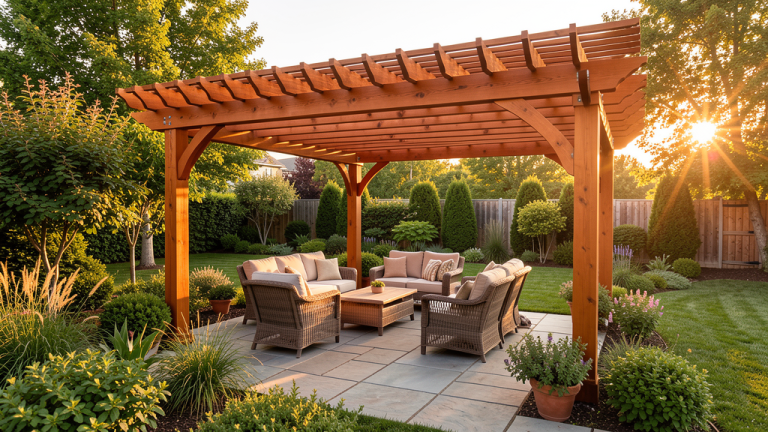
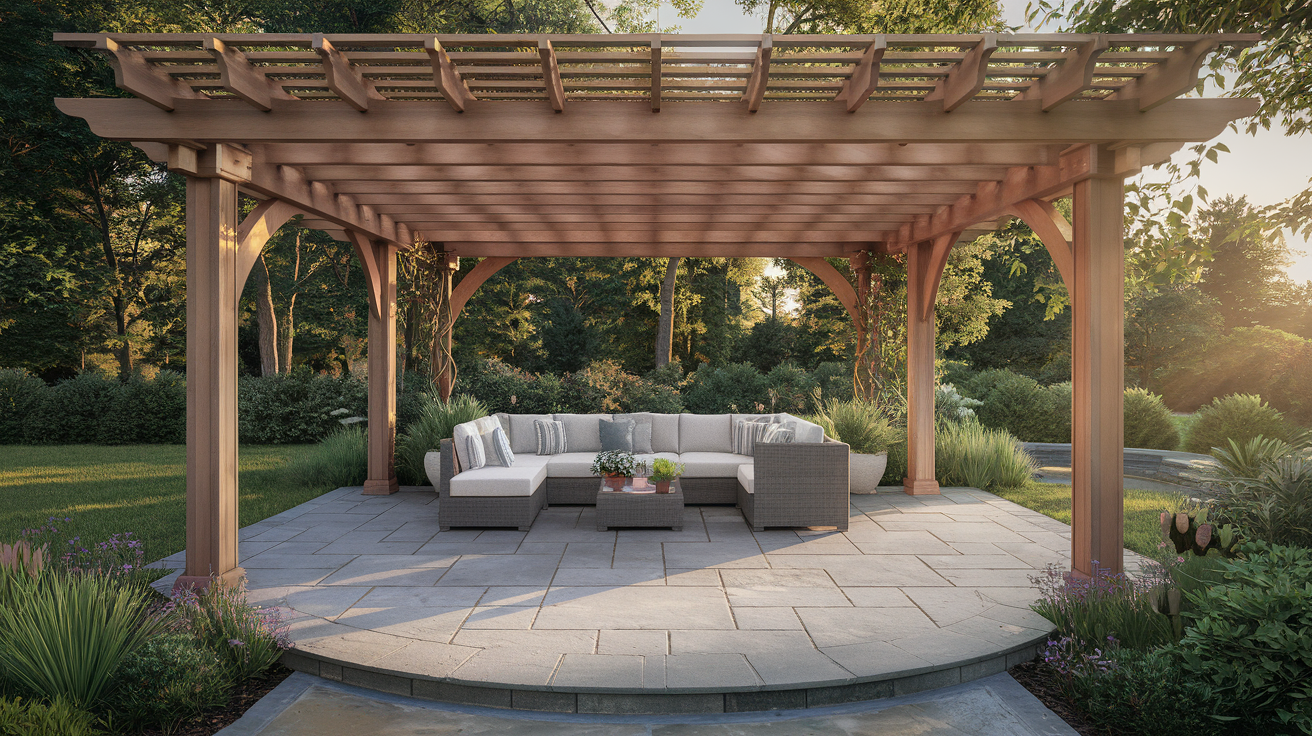
Cedar is the most popular pergola material for good reason. It’s naturally rot-resistant without chemical treatment, lighter than pine, and has a beautiful warm grain that stains up beautifully. Cedar runs $20–$40 per square foot installed — roughly double PT pine but substantially less than aluminum.
For a 12×16 cedar pergola, you’re looking at $5,000–$8,000 professionally installed. DIY kit options like the Backyard Discovery Cedar Pergola Kit bring that down to $2,500–$4,000 in materials. Cedar does need sealing every 2–3 years to maintain its color — left bare, it weathers to a silvery gray (which some homeowners actually prefer).
Vinyl/PVC: Maintenance-Free but Pricier Upfront
Vinyl pergolas cost $25–$45 per square foot installed, slightly more than cedar but with essentially zero maintenance. No staining, no sealing, no splinters. The trade-off is that vinyl has a more uniform, plastic appearance that doesn’t suit every home style, and it’s not as structurally rigid as wood or aluminum — you won’t be hanging heavy planters or a ceiling fan without reinforcing the rafters.
Vinyl makes the most sense for homeowners who genuinely will not maintain a wood structure. The Backyard Expressions vinyl pergola kits on Amazon are popular entry-level options in the $2,000–$4,000 range for a 10×12 structure.
Aluminum: The Premium Low-Maintenance Option
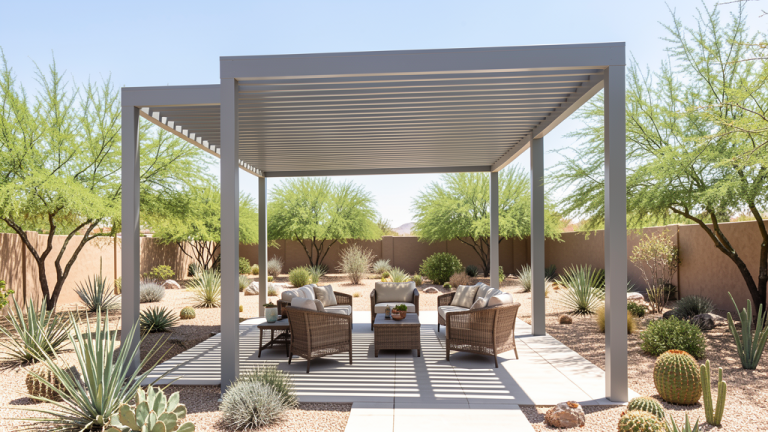
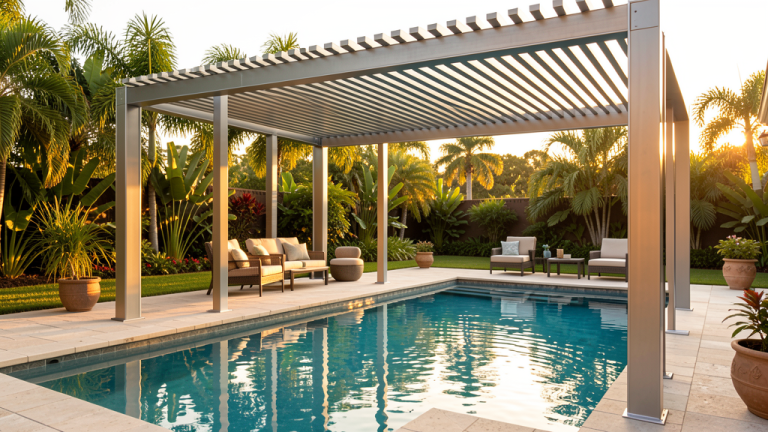
Powder-coated aluminum pergolas run $35–$75 per square foot installed and represent the top tier of the standard pergola market. Aluminum never rots, never splinters, holds color for decades, and is the only material practical for motorized louvered roof systems. The downside is cost and aesthetics — aluminum has a distinctly modern look that doesn’t always suit traditional homes.
For DIY, brands like Purple Leaf aluminum pergola kits and Sunjoy aluminum pergola kits offer assembled powder-coated structures in the $2,500–$5,000 range that go up in a day. These are flat-pack kits with pre-drilled components — no cutting required.
Also worth checking: VEVOR’s aluminum pergola lineup offers surprisingly solid powder-coated structures at competitive prices, often undercutting Amazon by 20–30% on comparable specs.
Motorized Louvered Pergolas: A Different Category Entirely
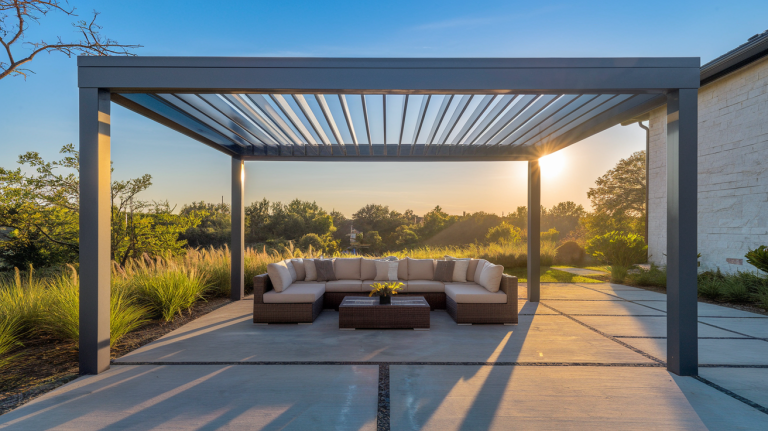
Motorized louvered aluminum pergolas — brands like StruXure, Equinox, Sundance Louvered Roofs, and Azenco — aren’t really in the same category as standard pergolas. They’re engineered outdoor rooms with rotating aluminum louvers that open and close via remote or app, integrated gutters that channel rain away from the structure, and optional add-ons like retractable screens, built-in lighting, and space heaters.
Pricing for motorized louver systems starts around $12,000 for a 12×14 and quickly reaches $20,000–$40,000 for larger premium installs. These require professional installation by certified dealers — not DIY territory. If you’re considering this category, our shade structure comparison guide covers the full range of options and what each delivers.
Pergola Cost by Size
Size is the most direct cost driver after material selection. Pergolas are typically priced per square foot, so the math scales fairly predictably:
| Size | Square Footage | PT Pine (Installed) | Cedar (Installed) | Aluminum (Installed) |
|---|---|---|---|---|
| 10×10 ft | 100 sq ft | $1,500–$3,000 | $2,500–$5,000 | $4,000–$7,500 |
| 12×12 ft | 144 sq ft | $2,000–$4,000 | $3,500–$6,500 | $5,500–$10,000 |
| 12×16 ft | 192 sq ft | $2,500–$5,000 | $5,000–$8,000 | $7,000–$12,000 |
| 16×20 ft | 320 sq ft | $4,000–$8,000 | $8,000–$13,000 | $11,000–$18,000 |
| 20×20 ft | 400 sq ft | $5,500–$10,000 | $11,000–$17,000 | $14,000–$22,000 |
Most homeowners building for a standard outdoor dining or seating area land in the 12×16 range. That size comfortably fits a 6-person dining set with room to walk around, or a sectional sofa setup with a coffee table.
What the Contractor Bill Actually Covers — Labor Breakdown
Labor typically runs 25–40% of total project cost for custom-built pergolas, and 20–30% for pre-fab kit installs. Here’s where that money goes:
Post Footings
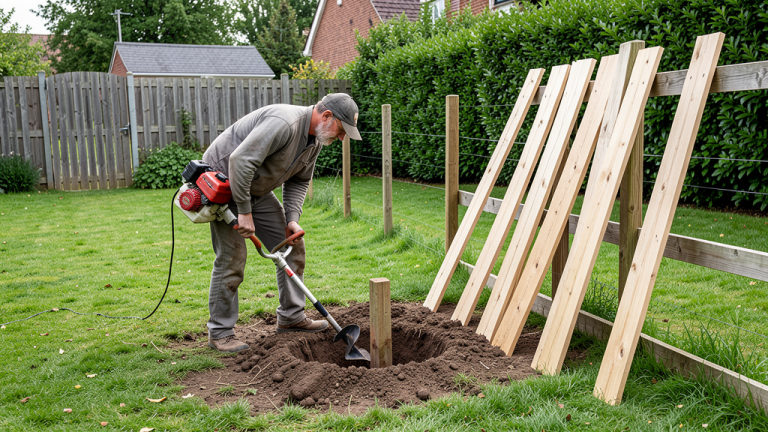
Post footings are the most labor-intensive part of any pergola install and the area most homeowners underestimate. A typical 12×16 pergola needs 4–6 footings. Each footing requires digging a hole to below the frost line (12 inches in the South, up to 48 inches in Minnesota), setting a concrete tube form, mixing and pouring concrete, and setting an anchor bracket level and plumb.
Professional footing cost: $200–$500 per footing. So $800–$3,000 just to set the posts — before a single board goes up. This is the line item that surprises most homeowners when they first see a contractor quote.
Framing and Assembly
Once footings are cured (typically 24–48 hours after pour), the actual framing goes fast. Posts, beams, and rafters for a 12×16 cedar pergola take an experienced two-person crew about 6–8 hours. Budget $8–$20 per square foot for framing labor.
Electrical Add-Ons
Running electrical to a pergola — for a ceiling fan, string lights, or outlets — requires a licensed electrician and typically adds $300–$800 to the project. In most jurisdictions, this also requires a permit and inspection separate from the structural permit.
Permits: When You Need One and What It Costs
Whether your pergola requires a permit depends on your municipality, the structure’s size, and whether it’s freestanding or attached to the house.
Generally requires a permit:
- Attached pergolas (connected to the house structure)
- Pergolas over 200 sq ft in most jurisdictions
- Any pergola with electrical work
- Pergolas in HOA communities (also need HOA approval)
Often permit-exempt:
- Freestanding pergolas under 100–200 sq ft (varies by city)
- Pergolas without electrical
- Temporary or anchored-to-deck-surface structures (some jurisdictions)
Permit costs: $50–$400 depending on your municipality. The bigger risk isn’t the permit fee — it’s building without one and having to tear down the structure at resale when a home inspector flags it. Always check with your local building department before you dig.
Regional Cost Differences
Labor rates vary significantly by region, and those differences show up in final installed costs:
| Region | Cost vs. National Average | Key Factors |
|---|---|---|
| South (TX, FL, GA, SC) | 10–15% below average | Shallow footings, year-round building season, competitive market |
| Midwest (IL, OH, MI) | At or near average | Deep frost footings add cost, strong DIY market keeps prices competitive |
| Northeast (NY, MA, CT) | 20–35% above average | Deep frost footings (36–48 in.), short build season, higher labor rates |
| West Coast (CA, WA, OR) | 25–40% above average | Highest construction labor costs, fire-resistant material requirements in some areas |
| Mountain West (CO, UT) | 5–15% above average | Snow load engineering requirements increase rafter sizing and hardware specs |
A $6,000 pergola in Atlanta runs $7,500–$8,500 in Denver and $9,000–$11,000 in the NYC metro. If you’re in a high-cost region, DIY kits close the gap significantly — labor savings of $2,000–$5,000 matter more when contractor rates are elevated.
DIY vs. Professional Installation — The Real Math
This is the decision most homeowners wrestle with longest. Here’s an honest breakdown:
DIY Pergola Kit: What It Takes
A quality DIY pergola kit for a 12×14 cedar structure runs $2,500–$4,500 on Amazon. Add:
- Post-hole digger rental: $50–$100/day
- Concrete (6 bags Quikrete at $7 each): $42
- Stain/sealer: $50–$120
- Hardware (if not included): $50–$150
- Total materials: $2,700–$4,900
Time investment: 1–3 weekends for a two-person team. The first day is footings and post setting. The second is beams, rafters, and finishing hardware. Allow an extra day if you’re staining.
The Backyard Discovery pergola kits are the most reviewed DIY option on Amazon — pre-cut cedar with detailed instructions, averaging 4.2 stars across thousands of reviews. Yardistry cedar pergola kits are another top pick, with slightly heavier lumber and metal hardware that holds up better over time.
For aluminum DIY kits, the Purple Leaf 10×13 aluminum pergola is consistently one of the best-selling freestanding structures on Amazon — powder-coated, includes canopy, installs in a day without post-hole digging (surface-mount anchors). It won’t match a custom-built cedar structure aesthetically, but for renters or homeowners who don’t want to commit to in-ground footings, it’s a smart option.
Also check VEVOR’s pergola kit lineup — they’ve improved significantly in quality over the past two years and often undercut Amazon brands on price for comparable aluminum structures.
When to Hire a Professional
DIY makes sense if you’re comfortable with concrete footings and basic carpentry. Hire out if:
- Your pergola attaches to the house (requires structural connections and usually a permit)
- You have a high frost line (Northern states — deep footing work is physically demanding)
- You want electrical run to the structure
- You’re building on a slope or uneven terrain
- You want a motorized louvered roof system (must be professionally installed)
For most attached pergolas and anything over 200 sq ft, the professional route isn’t just easier — it’s often required by code. Our post on backyard upgrades that add home value covers the ROI case for pergolas compared to other outdoor improvements.
Add-Ons That Affect Your Total Cost
Lighting: $200–$2,000
String lights hung from pergola rafters run $20–$80 for a quality set like the Brightown or ADDLON commercial-grade outdoor string lights. Hard-wired recessed lighting or integrated LED strips add $500–$2,000 with an electrician.
Ceiling Fan: $300–$800 installed
A damp-rated or wet-rated ceiling fan is a game-changer for summer pergola use. The Hunter Outdoor ceiling fans (52-inch) run $150–$300 for the fixture plus $150–$400 for electrical installation.
Privacy Screens: $150–$800
Shade screens, outdoor curtains, or lattice side panels add privacy and wind protection. Outdoor curtains for pergolas run $30–$80 per panel on Amazon and dramatically change the feel of the space.
Shade Canopy or Polycarbonate Roof: $400–$3,000
Traditional pergolas let in rain. If you want weather protection, a retractable shade canopy ($200–$600) or polycarbonate roof panels ($800–$3,000 professionally installed) convert your pergola into a usable space on rainy days. This is a significant upgrade that changes what a pergola can do — see our three-season room vs. four-season room guide if you’re considering a fully enclosed upgrade.
Concrete Patio Under the Pergola: $1,500–$4,000
If your pergola footprint isn’t already on a paved surface, adding a concrete or paver patio underneath adds $6–$20 per square foot to the project. A 12×16 concrete slab runs $1,150–$3,000 depending on your region.
Pergola ROI — What It Does to Your Home Value
Pergolas return 50–80% of their installation cost at resale according to remodeling industry surveys — meaning a $6,000 pergola adds roughly $3,000–$4,800 in appraised home value. The ROI is highest in:
- Warm-weather states where outdoor living is year-round (FL, TX, AZ, CA)
- Premium neighborhoods where buyers expect outdoor amenity spaces
- Homes where the pergola anchors a complete outdoor living setup (kitchen, seating, lighting)
The ROI drops in colder climates where outdoor space gets limited seasonal use. But the livability benefit — having a defined outdoor room you actually use — often justifies the investment regardless of the math.
If you’re building out a full pergola-anchored outdoor space, the poolside pergola ideas guide has specific recommendations for pergolas adjacent to pools, including material choices that handle the humidity and chemical exposure.
How to Get a Fair Contractor Quote
Getting 3 quotes is the baseline. Here’s what to look for beyond the bottom line:
- Itemized breakdown: Materials, labor, footings, and permit should be separate line items. A single lump-sum quote is a red flag.
- Footing depth specified: Your quote should state the footing depth based on your local frost line. A contractor who doesn’t mention this hasn’t thought about long-term stability.
- Lumber grade specified: “Cedar” isn’t enough — you want #2 or better cedar, kiln-dried. Ask for the lumber spec sheet.
- Hardware grade: Galvanized or stainless steel hardware only. Plated hardware will rust within 2–3 seasons.
- Timeline and payment schedule: Never pay more than 30% upfront. Progress payments tied to milestones (footings poured, framing complete, finishing done) protect you.
Frequently Asked Questions
How much does a pergola cost to install professionally?
A professionally installed pergola costs $3,000–$10,000 for a standard 12×16 ft structure in 2026. Cedar runs $5,000–$8,000, aluminum runs $7,000–$12,000, and vinyl falls in between at $5,500–$9,000. Motorized louvered aluminum pergolas are a different tier at $12,000–$25,000+.
Is a pergola worth the money?
Yes, for most homeowners. Pergolas return 50–80% of their cost at resale and deliver significant livability benefit by creating a defined outdoor room you’ll actually use. The ROI calculation improves in warm climates where the space gets 9–12 months of annual use.
Can I build a pergola myself?
Yes — pre-fab kit pergolas are a legitimate DIY project for homeowners comfortable with concrete footings and basic carpentry. Budget 1–3 weekends and expect to save $1,500–$4,000 vs. professional installation. Attached pergolas and motorized louvered systems should be professionally installed.
Do I need a permit to build a pergola?
It depends on your municipality and structure size. Attached pergolas almost always require a permit. Freestanding pergolas under 100–200 sq ft are often exempt, but always confirm with your local building department before you start. Building without a required permit creates problems at resale.
What is the cheapest material for a pergola?
Pressure-treated pine is the cheapest option at $10–$20 per square foot installed, followed by cedar at $20–$40 per square foot. Vinyl and aluminum cost more upfront but require less ongoing maintenance. For a minimal upfront spend, a pre-fab PT pine kit runs $800–$1,800 in materials for a 10×10 structure.
How long does a pergola last?
Cedar pergolas last 20–30 years with proper sealing every 2–3 years. Pressure-treated pine lasts 15–25 years with maintenance. Vinyl and aluminum pergolas can last 30–50 years with minimal upkeep. Motorized louvered aluminum systems are engineered for 25+ year lifespans.
What size pergola is right for my patio?
For a dining set: 12×14 minimum, 12×16 preferred. For a sectional sofa setup: 12×16 to 16×20. For an outdoor kitchen bar area: 10×12 to 12×16 depending on counter configuration. Leave 18–24 inches of clearance on all sides between the pergola posts and the patio edge.
How much does a Costco or Home Depot pergola cost?
Costco periodically carries cedar and aluminum pergola kits in the $1,500–$3,500 range. Home Depot and Lowe’s sell kits from brands like Hampton Bay, Yardistry, and Backyard Discovery ranging from $800 (basic vinyl 10×10) to $4,500 (cedar 12×16 with metal accents). These are the same brands available on Amazon, often at comparable pricing.
Disclosure: This post contains affiliate links. If you purchase through these links, we may earn a small commission at no extra cost to you. We only recommend products we genuinely believe in.