Best Pergolas for Texas Heat — DFW and Austin Buyer’s Guide (2026)
If you live in the Dallas-Fort Worth Metroplex or Austin area, you already know the deal: summers hit 100°F before noon, UV index reads “extreme” from May through September, and a standard wood pergola can warp, crack, or fade within a single season. The best pergolas for Texas heat are built from aluminum, powder-coated steel, or high-density polyethylene — materials that don’t absorb heat, resist UV degradation, and hold their structural integrity year after year in the Texas sun.
This guide is specifically for DFW and Austin homeowners. We’ll cover which pergola materials actually hold up, which brands are worth the money, what professional installation runs in the DFW and Austin markets, and how to add shade accessories that turn a baking backyard into a livable outdoor room.
Why Standard Pergolas Fail in Texas Heat
Most pergola content on the internet was written for people in Georgia or the Pacific Northwest. Texas is a different animal entirely. Here’s what you’re actually dealing with:
- Summer temperatures: DFW averages 38 days above 100°F per year. Austin is close behind. Heat index regularly pushes 110°F+.
- UV intensity: Texas sits at a lower latitude and higher elevation than most of the U.S. Sun exposure is intense enough to bleach untreated wood, fade vinyl, and crack cheap plastic within two seasons.
- Thermal expansion: Metal and composite materials expand significantly in heat. Cheap pergolas with poor fastener design come loose or buckle.
- Storm risk: North Texas averages 40+ severe weather days per year. Pergolas need to handle 60–80 mph wind gusts, hail, and rapid pressure changes.
- Humidity swings: Unlike the dry heat of Arizona, Texas has dramatic humidity swings — from 25% in winter to 85%+ during Gulf moisture events. Wood pergolas absorb and release moisture repeatedly, accelerating rot and splitting.
The short version: buy aluminum or powder-coated steel. Skip cedar, pine, and vinyl for Texas installations.
Best Pergola Materials for Texas Heat
Aluminum Pergolas (Best Overall)
Aluminum is the gold standard for hot-climate pergolas. It doesn’t warp, doesn’t rust, reflects radiant heat better than steel, and carries a mill-finish or powder-coat that resists UV fading for 10–15 years without repainting. The downside: true commercial-grade aluminum pergolas cost more upfront — budget $3,000–$8,000 for a quality 12×16 kit.
Powder-Coated Steel
Heavy-gauge powder-coated steel offers better structural rigidity than aluminum and handles hail better. More susceptible to rust at scratched or cut edges, so quality of the powder coat finish matters. Vevor’s steel pergola line is worth considering for budget builds — their steel pergola kits hold up better in Texas conditions than similarly-priced wood alternatives.
High-Density Polyethylene (HDPE)
HDPE lumber pergolas (brands like Polywood and Highwood) look like wood but won’t rot, warp, or fade. More expensive than pressure-treated lumber but far lower maintenance. Good choice for attached pergolas where you want a wood aesthetic without the upkeep.
Cedar and Redwood (With Reservations)
Naturally rot-resistant, but neither cedar nor redwood holds up to Texas UV without annual sealing. If you choose wood, budget for maintenance — stain or seal every 12–18 months minimum. A pergola at $2,000 in materials becomes a $4,000 pergola over five years when you factor in upkeep.
Top Pergola Picks for DFW and Austin Homeowners
1. Yardistry 12×16 Aluminum Pergola — Best Value Aluminum
Yardistry’s aluminum pergola line is a strong starting point for Texas installations. The extruded aluminum posts and beams won’t warp or crack in heat, the powder-coat finish resists fading, and the modular design allows for shade sail or screen add-ons. At around $2,200–$2,800 for a 12×16 footprint, it’s one of the best entry-level aluminum options available.
→ Shop Yardistry Aluminum Pergolas on Amazon
2. PURPLE LEAF 10×13 Retractable Canopy Pergola — Best for Instant Shade
If you want actual shade coverage (not just filtered sun), PURPLE LEAF’s aluminum pergola with a retractable canopy solves the problem that open-slat pergolas don’t. The canopy slides open on a track system, and the powder-coated aluminum frame handles Texas heat well. The polyester canopy fabric is rated UV50+. Great for patio dining areas where direct sun makes the space unusable from May through September.
→ Shop PURPLE LEAF Pergolas with Retractable Canopy on Amazon
3. Sunjoy Premium Louvered Pergola — Best for Year-Round Use
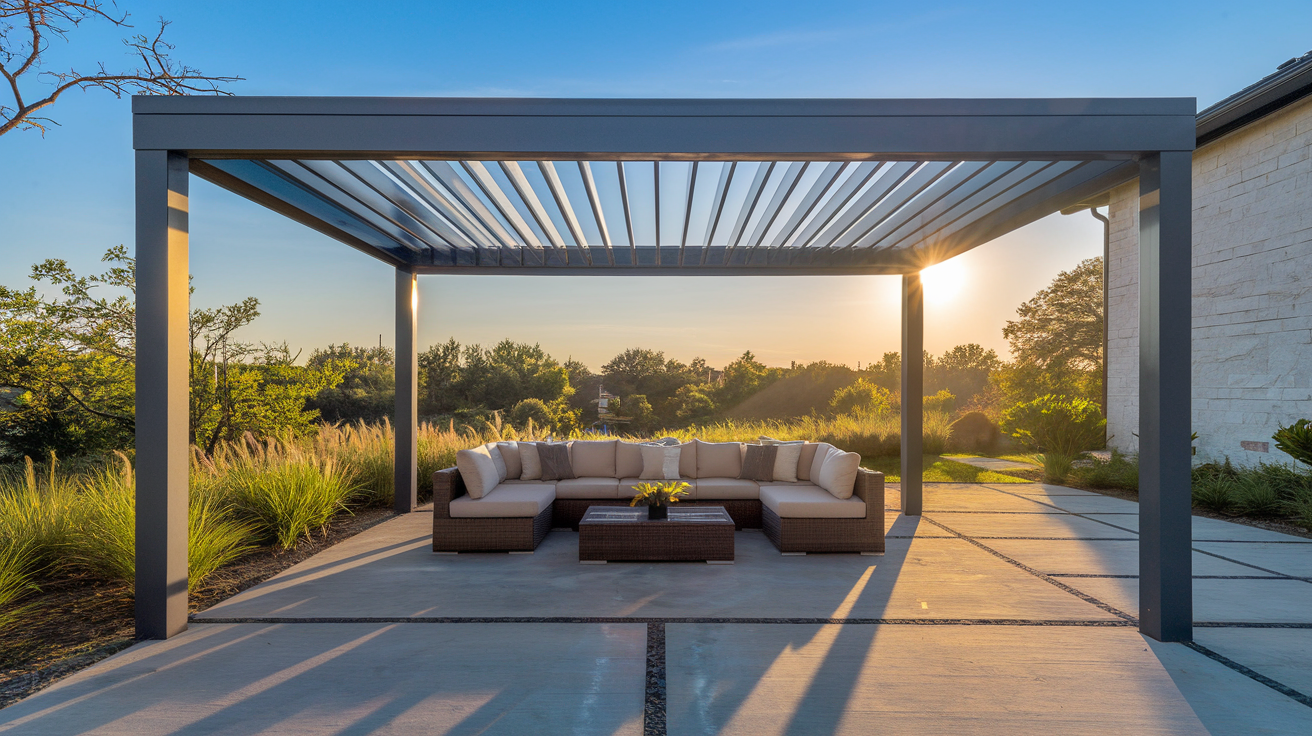
Sunjoy’s louvered pergola with adjustable aluminum louvers is the upgrade choice for Texas homeowners who want an outdoor space usable 10 months out of the year. Open louvers allow airflow in the shoulder seasons; close them during a rain event or mid-afternoon heat blast. Motor-operated louver systems eliminate the need to manually adjust during a storm. Pricing runs $3,500–$6,000 depending on size and motor package.
→ Shop Sunjoy Louvered Pergolas on Amazon
4. Vevor Heavy-Duty Steel Pergola Kit — Best Budget Option
For DFW homeowners working with a tighter budget, Vevor’s powder-coated steel pergola kits offer solid value. They’re available in 10×10, 10×13, and 12×16 configurations, rated for wind loads that meet most Texas HOA requirements, and priced $800–$1,400. Don’t expect the same durability as commercial aluminum, but they’re a legitimate step up from wood for Texas conditions.
→ Shop Vevor Steel Pergola Kits
5. Palram-Canopia Patio Cover with Polycarbonate Roof — Best for Rain Coverage
Texas doesn’t get consistent rain, but when it comes, it comes fast. A pergola with a polycarbonate roof panel system like Palram-Canopia’s Feria series gives you sun protection, rain coverage, and heat diffusion in one structure. The twin-wall polycarbonate panels block 99% of UV while still letting diffused light through — useful if you have a garden area underneath. Strong enough to handle Texas hail events better than most fabric canopy alternatives.
→ Shop Palram-Canopia Patio Covers on Amazon
6. Outsunny 10×10 Hardtop Gazebo Pergola — Best Compact Option for Austin Yards
Austin yards tend to run smaller than DFW suburban lots. For smaller patios (400–500 sq ft total yard), an Outsunny hardtop gazebo pergola hybrid is a smart compromise — provides a defined shade zone without dominating the space. The galvanized steel roof with polycarbonate panels handles Austin’s UV load well, and the aluminum posts stay cool to the touch unlike wrought iron alternatives.
→ Shop Outsunny Hardtop Gazebo Pergolas on Amazon
7. Christopher Knight Home Elaina Pergola — Best for Modern Aesthetic
For Austin homeowners who want a pergola that fits the region’s modern farmhouse and mid-century exterior styles, Christopher Knight’s Elaina aluminum pergola hits the right design notes. Clean lines, matte finish, minimal ornamentation. Available in 8×8 to 10×12 configurations. Not rated for extreme wind events, so we recommend pairing it with wind-rated shade sails rather than a fabric canopy.
→ Shop Christopher Knight Pergolas on Amazon
8. Azenco R-Blade Motorized Pergola — Best Premium Option
For DFW homeowners doing a full outdoor living renovation, Azenco’s R-Blade motorized louvered pergola is the top-tier option. The aluminum louvers are motorized and rain-sensor activated, the structure is rated for 130 mph winds, and the system integrates with home automation platforms. You can add LED strips, screens, and heaters. It’s not a DIY kit — Azenco pergolas are professionally installed. Pricing starts around $15,000 for a basic 10×12 configuration and goes up from there based on accessories and size.
This is the level of pergola that Cabana Theory specializes in installing across the DFW Metroplex. If you’re looking at premium motorized pergola installation in North Texas, get a quote from Cabana Theory’s team — they’re one of the few Texas installers with hands-on experience with commercial-grade pergola systems.
→ Shop Motorized Louvered Pergolas on Amazon
Essential Shade Add-Ons for Texas Pergolas
An open-slat aluminum pergola blocks maybe 30–40% of sunlight. In Texas, that’s not enough for comfortable outdoor use from 11am to 5pm. Here’s what to add:
Shade Sails
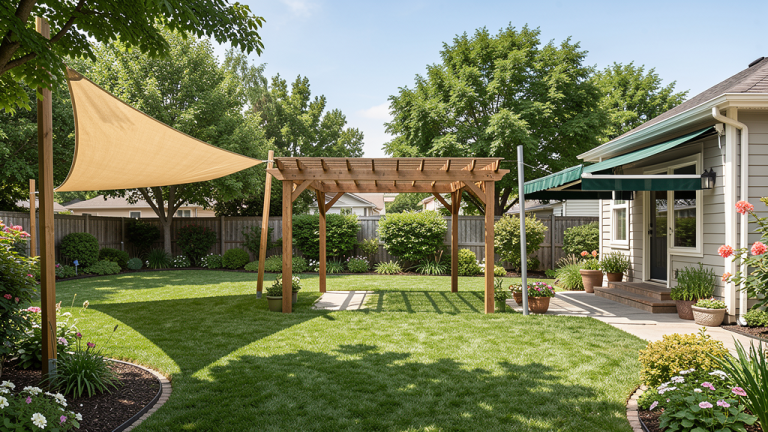
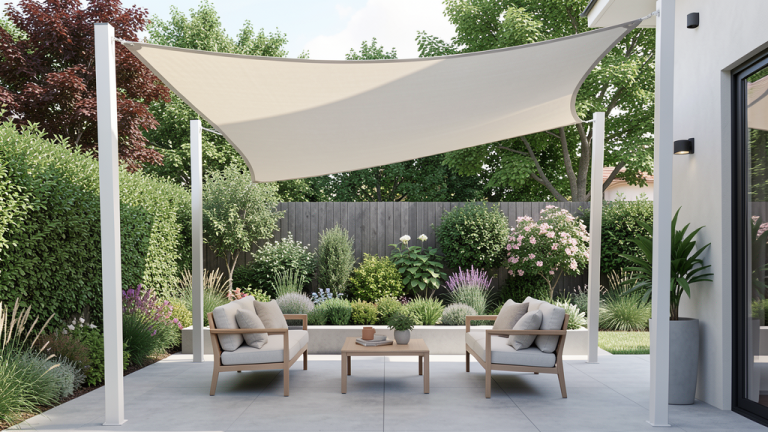
Triangle and rectangle UV-blocking shade sails attached to pergola posts or separate anchor points are one of the most cost-effective ways to dramatically cut sun load. Look for sails rated HDPE 185gsm or heavier with UV50+ ratings. ASTEROUTDOOR and Coolaroo make reliable options in the $80–$200 range that hold up to Texas wind reasonably well when properly tensioned.
→ Shop UV Shade Sails on Amazon
For a full rundown on shade options, check our shade sail vs pergola vs retractable awning comparison.
Outdoor Misting Systems
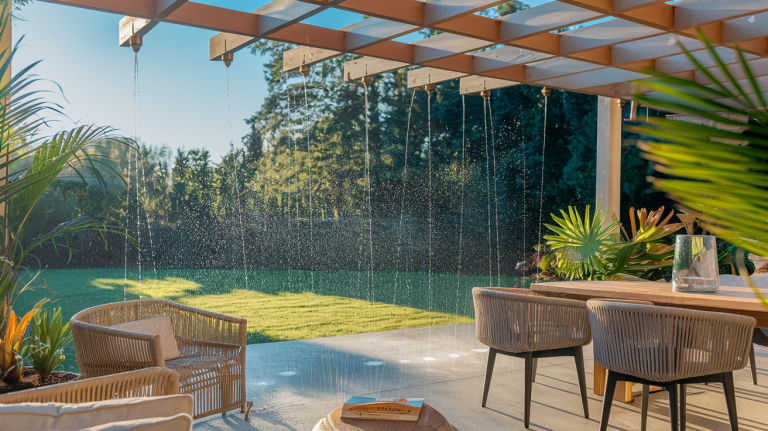
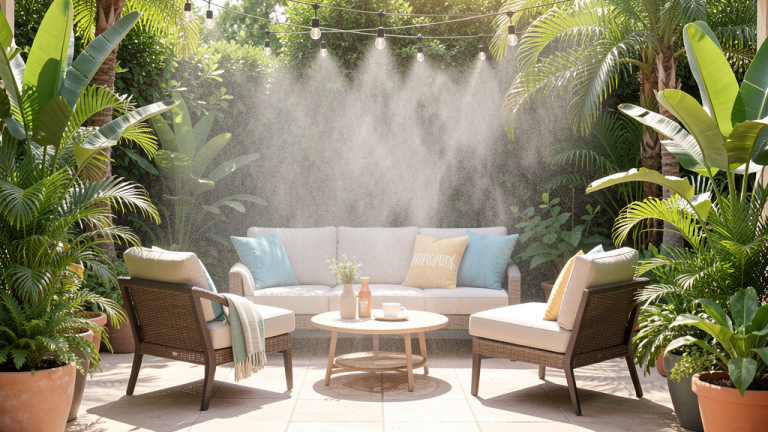
Even the best shade structure won’t make 105°F air comfortable. A high-pressure misting system (1000 psi+) can drop ambient temperature under a covered patio by 15–25°F. For Texas use, size up — you want a 12–20 nozzle system covering the full pergola perimeter, not a 6-nozzle starter kit. Orbit, Cool-Off, and Vevor all make patio misting kits worth looking at.
→ Shop High-Pressure Misting Systems on Amazon
We cover this in detail in our best patio misting systems guide.
Outdoor Ceiling Fans
A ceiling fan rated for wet or damp outdoor locations mounted under your pergola’s center beam makes a real difference in perceived temperature. For Texas, choose a fan rated for at least 55″ blade span and a minimum of 5,000 CFM airflow. Hunter, Big Ass Fans (Haiku), and Prominence Home all make fans that handle Texas heat and humidity cycles.
→ Shop Wet-Rated Outdoor Ceiling Fans on Amazon
Pergola Installation Cost in DFW and Austin (2026)
Material costs are only part of the picture. Here’s what to expect for professional pergola installation in the North Texas and Austin markets in 2026:
| Pergola Type | Materials | DFW Labor | Austin Labor | Total Estimate |
|---|---|---|---|---|
| DIY Kit (Aluminum, 12×16) | $2,200–$3,500 | $800–$1,500 | $900–$1,600 | $3,000–$5,000 |
| Custom Cedar/Wood | $3,500–$6,000 | $2,000–$3,500 | $2,200–$4,000 | $5,500–$10,000 |
| Commercial Aluminum (Fixed) | $5,000–$10,000 | $2,500–$4,500 | $2,800–$5,000 | $7,500–$15,000 |
| Motorized Louvered Pergola | $12,000–$25,000 | $3,500–$6,000 | $4,000–$7,000 | $15,000–$32,000 |
Note: DFW labor costs have increased 12–18% since 2023 due to construction labor market conditions. Austin costs run slightly higher than DFW average due to demand pressure and higher general contractor overhead.
For a detailed breakdown of what drives pergola installation costs, see our pergola installation cost guide for 2026.
HOA Considerations in DFW and Austin
Both metro areas are heavily HOA-governed. Before buying or installing any pergola, check these boxes:
- Permit requirements: Pergolas over 200 sq ft typically require a building permit in most DFW and Austin municipalities. Freestanding structures frequently need a concrete footing inspection.
- HOA approval: Even if permitted by the city, most DFW HOAs require separate architectural approval with submitted drawings and materials specs.
- Setback rules: Standard Texas residential setbacks are 5–10 feet from property lines for accessory structures, but HOAs often impose stricter rules (20+ feet in some cases).
- Height limits: Most residential HOAs cap structure height at 10–12 feet. Motorized pergolas with lighting masts can exceed this without planning ahead.
A reputable local pergola installer will pull permits and handle HOA submittals as part of their installation package. If you’re working with a contractor who wants you to handle permitting yourself, that’s a yellow flag.
Poolside Pergolas in Texas — Special Considerations
Adding a pergola to a pool area in Texas creates a beautiful outdoor space but comes with additional considerations:
- Electrical code: Any electrical outlets, fans, or lighting installed within 6 feet of a pool edge must be GFCI protected. Texas follows NEC 2020 for most jurisdictions.
- Chlorine exposure: Pool chemical off-gassing accelerates corrosion of ferrous metal. Aluminum outperforms steel here significantly — galvanized steel is a middle ground if steel is preferred.
- Slip-resistant flooring: Pergola shade doesn’t eliminate wet surfaces. Pair your pergola design with a deck surface that has traction in wet conditions.
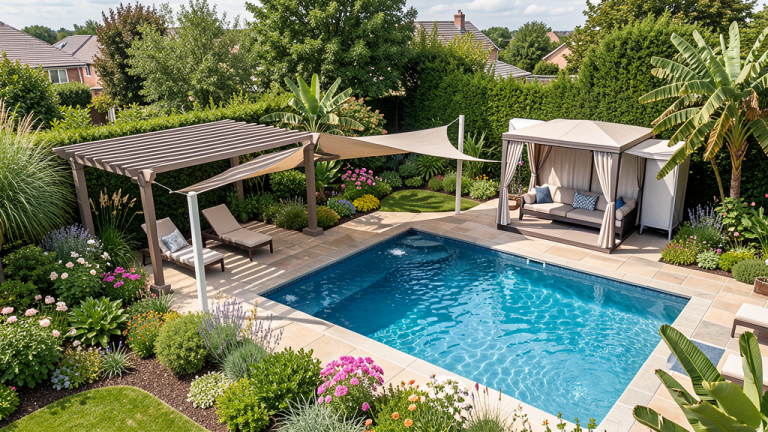
For pool-specific shade and cover ideas, our poolside pergola ideas guide covers the best combinations we’ve seen work in Texas backyards.
Professional Installation vs DIY in Texas
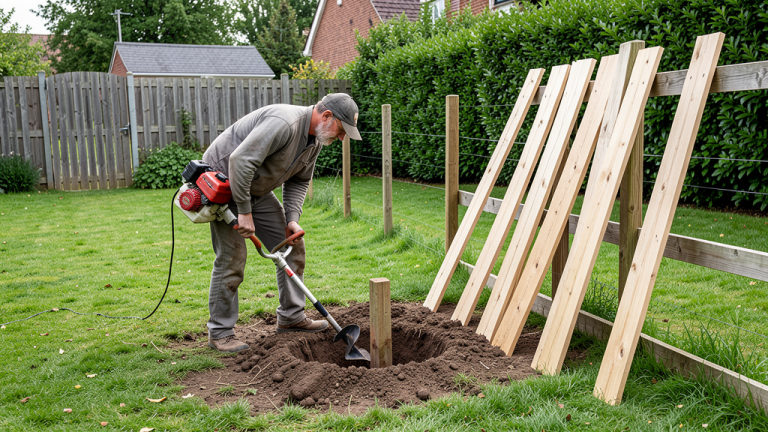
A 12×16 aluminum pergola kit from Yardistry or Palram is genuinely installable by two reasonably handy people over a weekend — assuming your pad is already poured. The Texas-specific complications are footing depth and wind anchoring. Most Texas soil types (clay expansive soils in DFW, limestone in Austin) require specific footing designs. A pergola that isn’t footed correctly in DFW clay can shift 1–2 inches over a wet season.
If you’re installing a pergola over a concrete patio, the anchoring method matters more than the footing depth. Use wedge anchors rated for the post load — don’t rely on surface-mount brackets that came with a kit if your pergola will see Texas wind events.
For motorized or premium louvered pergola systems (Azenco, StruXure, Equinox), professional installation isn’t optional — it’s required for the warranty to be valid. These systems also require electrical work for the motor drives and often integrate with outdoor audio and lighting, which needs a licensed electrician in Texas.
Cabana Theory — Professional Pergola Installation in DFW
Get a Professional Pergola Quote for DFW
Cabana Theory is a North Texas-based outdoor living contractor specializing in pergola and shade structure installation across the DFW Metroplex. They work with commercial-grade aluminum systems including Azenco and StruXure motorized pergolas, handle all permitting and HOA submittals, and have deep experience with the specific soil and wind conditions of North Texas.
If you’re considering a professional pergola installation in the Dallas-Fort Worth area, request a quote from Cabana Theory — they can walk you through options at every price point and provide a site-specific recommendation.
Frequently Asked Questions
What is the best pergola material for Texas heat?
Aluminum is the best overall material for Texas — it doesn’t warp, rust, or absorb heat the way wood and some composites do. Look for 6000-series aluminum with a powder-coat finish rated for UV exposure. Avoid untreated wood, vinyl, and cheap plastic pergola kits.
Do I need a permit for a pergola in Texas?
Most Texas municipalities require a building permit for pergolas over 200 square feet or attached structures. DFW cities (Plano, Frisco, McKinney, Arlington) and Austin each have their own permit thresholds. Budget 2–4 weeks for the permit review process and check with your HOA separately — they often have stricter rules than the city.
How much does a pergola cost in Dallas-Fort Worth?
Expect $3,000–$5,000 for a quality DIY aluminum pergola kit installed, $7,500–$15,000 for a commercial aluminum fixed pergola professionally installed, and $15,000–$32,000+ for a motorized louvered pergola with accessories. Material and labor costs in DFW have increased roughly 15% since 2023.
What’s the difference between a louvered pergola and a standard pergola?
A standard pergola has fixed slats or beams that provide filtered shade — typically blocking 30–40% of sunlight. A louvered pergola has adjustable angled slats (louvers) that can be rotated from fully open to nearly closed. Premium motorized louvered pergolas can go fully waterproof when closed, making them essentially an outdoor room usable in rain. See our motorized vs fixed pergola comparison for a full breakdown.
Can a pergola withstand Texas storms?
A properly anchored aluminum or powder-coated steel pergola from a reputable brand is rated for 60–90 mph wind loads — sufficient for most Texas severe weather events. Motorized louvered pergolas like Azenco’s R-Blade are rated for 130 mph. Fabric canopy pergolas and wood kit pergolas should have canopies removed before severe storms. Retractable canopy systems help here — you can close them in seconds via a remote or app.
Is a pergola worth it in Texas heat?
Yes — when built correctly. An open-slat aluminum pergola alone won’t make Texas summer afternoons comfortable, but paired with a UV shade sail or retractable canopy, a high-pressure misting system, and a large outdoor ceiling fan, you can drop perceived temperature by 20–30°F and reclaim your backyard for 8+ months of the year instead of 4–5.
Disclosure: This post contains affiliate links. If you purchase through these links, we may earn a small commission at no extra cost to you. We only recommend products we genuinely believe in.