Best Outdoor Patio Heaters 2026 — Propane, Electric and Fire Pit Options
The best outdoor patio heaters for 2026 are propane tower heaters for maximum BTU output, electric infrared heaters for enclosed spaces, and tabletop propane models for intimate gatherings. Whether you want to extend your patio season into October or heat a covered pergola year-round, there’s a right heater for every setup — and several that will waste your money if you pick wrong.
Patio heaters have gotten significantly better over the last few years. Infrared technology has improved efficiency, smart thermostats are now common on mid-range models, and the design options have gone from “eyesore gas mushroom” to genuinely attractive fixtures that complement your outdoor furniture. Here’s what actually works in 2026.
Types of Outdoor Patio Heaters — What Each Does Well
Propane Tower Heaters
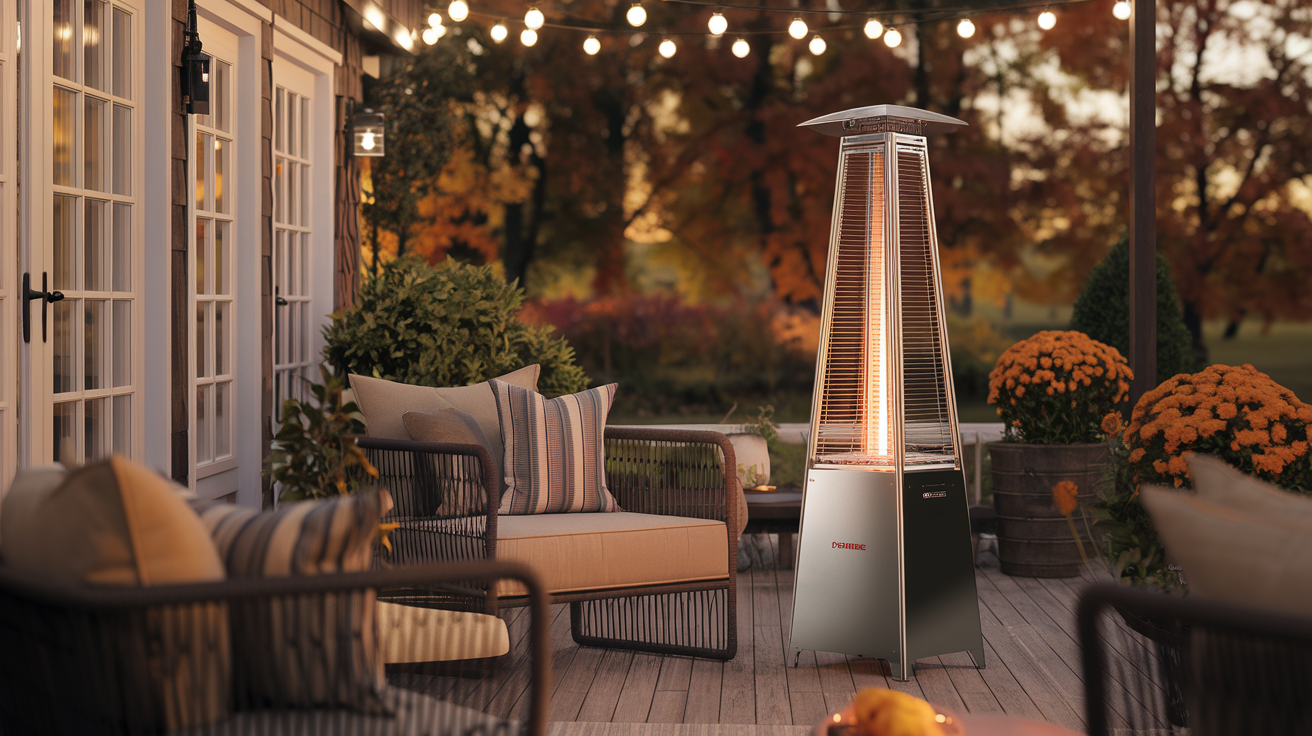
Propane mushroom-top and tower heaters are the workhorses of the outdoor heating world. They put out 40,000–48,000 BTUs, heat a radius of 10–15 feet, and require no wiring. The tradeoff: you need propane tanks, wind hurts their efficiency noticeably, and most don’t work well under low ceilings because the heat rises straight up.
Best use cases: open patios, restaurant-style setups, events, anywhere with good airflow and 8+ feet of clearance above the heater head.
Electric Infrared Heaters
Infrared patio heaters work fundamentally differently from propane — they heat objects and people directly rather than heating the air. That makes them dramatically more efficient in windy conditions and excellent under pergolas, covered patios, and awnings. They’re also safer indoors or in enclosed spaces since there’s no combustion and no CO risk.
The catch: you need a 240V outlet for anything above 1,500W, and installation can run $200–$500 if you don’t already have the circuit. For wall-mount or ceiling-mount models, you’ll also need solid mounting hardware — these aren’t light fixtures.
Tabletop Propane Heaters
Tabletop heaters run off 1-lb disposable propane canisters and put out 10,000–11,000 BTUs — enough to keep 3–4 people comfortable at an outdoor dining table. They’re portable, require no setup, and cost $40–$120. The ongoing cost of 1-lb canisters adds up fast if you use them frequently; most come with adapters for 20-lb tanks.
Natural Gas Patio Heaters
If you have a gas line running to your patio already (many homes do if there’s a gas grill hookup), a natural gas patio heater eliminates the tank-swapping hassle entirely. These are permanent installs — you’ll need a plumber for the gas line — but the operating cost is much lower than propane long-term.
Fire Pit Heaters and Tabletop Fire Bowls
Fire pits provide ambiance alongside heat and are more of a gathering-place heater than a targeted solution. A good propane fire pit puts out 50,000+ BTUs but most of that heat goes up. For serious warmth, you need an actual heater; for atmosphere, a fire pit wins every time. We covered fire pits in depth in our Best Outdoor Fire Pits for 2026 guide.
Best Propane Tower Patio Heaters 2026
1. AmazonBasics Commercial Patio Heater — Best Value Tower
AmazonBasics’ commercial-grade 46,000 BTU tower heater is the starting point for most buyers. It runs on a standard 20-lb propane tank (included placeholder — tanks are sold separately), has a push-button ignition, and covers roughly a 9-foot radius. The powder-coat finish holds up well after two seasons and the tip-over safety shutoff is genuinely sensitive — a good thing if you have kids or dogs on the patio.
At around $90–$110 shipped, it’s hard to beat for a first heater or secondary unit. Check current price on Amazon →
2. Hiland HLDS01-GTHG Pyramid Glass Tube Heater — Best Looking Propane
The Hiland Pyramid is the heater that changed patio heater aesthetics. The vertical glass tube with the flame visible through it looks genuinely good on a patio, and at 40,000 BTUs it’s no slouch for warmth. Assembly is straightforward and the stainless/hammered bronze finish options both age well.
One real downside: the glass tube needs careful handling and can crack if the heater tips hard. Keep it away from high-traffic areas. Around $180–$220. See it on Amazon →
3. Hampton Bay 48,000 BTU Stainless Steel Propane Heater — Highest BTU
If raw output is the goal, Hampton Bay’s 48,000 BTU stainless tower is the pick. It runs longer per tank than most competitors at similar output because of a more efficient burner design, and the stainless housing actually resists rust (unlike powder-coated steel that chips and corrodes by year three). Home Depot exclusive, typically $120–$160. Find current options on Amazon →
Best Electric Infrared Patio Heaters 2026
4. Dr. Infrared Heater DR-238 — Best Ceiling-Mount Electric
The Dr. Infrared DR-238 is a 1,500W/5,118 BTU ceiling-mount infrared heater that runs on standard 120V — no electrician required. That’s the key selling point. It installs in a ceiling joist in 20 minutes, covers about 150 square feet under a covered patio, and has a remote control with timer. It’s one of the few true ceiling-mount heaters that doesn’t require a dedicated 240V circuit.
Ideal for covered porches, screened-in patios, and garages. Roughly $130–$170. Check price on Amazon →
5. Bromic Tungsten Smart-Heat 4000W Electric — Best Premium Wall-Mount
Bromic is the brand you see at upscale restaurants and hotels, and the Tungsten 4000W is their flagship residential unit. At 13,648 BTUs from a sleek wall-mount enclosure, it outputs serious heat with zero visible flame and minimal light glow (important if you want ambiance without that harsh orange glow). It requires a 240V circuit and professional installation, but if you’re doing a full outdoor kitchen or serious pergola build, this is what the pros specify.
List price runs $800–$1,100. See Bromic options on Amazon →
6. VEVOR Electric Patio Heater Wall-Mounted 3000W — Best Value Wall-Mount
VEVOR’s 3000W wall-mount infrared heater punches way above its price point. It requires a 240V circuit but includes all the mounting hardware, a remote, and three heat settings. The IP55 weather rating means it handles rain and humidity without issue. For a covered pergola or carport, this is a 10,000 BTU solution at around 30% of the Bromic price.
Shop VEVOR electric patio heaters →
7. Infratech CD Series 1500W — Best Slimline Ceiling Infrared
Infratech’s CD Series is the most compact ceiling-mount electric heater that still produces useful heat. At 1,500W on 120V, it covers about 8×10 feet and runs completely silently — no fan, no combustion noise. The slimline design is 47″ long and under 4″ wide, making it virtually invisible when installed between ceiling joists. Around $350–$500. Check Infratech pricing on Amazon →
Best Tabletop Patio Heaters 2026
8. Cuisinart COH-500 Patio Heater — Best Tabletop Propane
The Cuisinart COH-500 is the tabletop propane heater that consistently gets ordered again when people move or buy a second home. It uses 1-lb canisters, puts out 11,000 BTUs, and the housing is solid cast aluminum with a wide stable base. Push-button ignition works first try, and the included reflector shield focuses heat outward rather than just up. Around $100–$130. See on Amazon →
9. AmazonBasics Tabletop Propane Heater — Budget Pick
If the Cuisinart is too much, AmazonBasics’ tabletop version does the same basic job for $40–$60. It uses 1-lb canisters, outputs 10,000 BTUs, and is perfectly usable for casual evenings. Build quality is noticeably lighter than the Cuisinart — the legs are thinner, the ignition is less reliable after 18 months — but for occasional use it’s fine. Check current price →
Best Natural Gas Patio Heaters 2026
10. Sunglo A244 Natural Gas Patio Heater — Best Permanent Install
The Sunglo A244 is what patio contractors install when a homeowner wants a permanent, professional-grade heat solution. It runs on natural gas, puts out 40,000 BTUs, and is built to commercial-grade standards — heavy steel, quality valves, reliable ignition. This is the heater you install once and forget. Requires a gas line and professional installation; unit itself runs $400–$600. Find Sunglo heaters on Amazon →
11. VEVOR Natural Gas Patio Heater 50,000 BTU — High Output NG
VEVOR’s 50,000 BTU natural gas tower is one of the highest-output residential heaters available and priced well below equivalent brand-name units. The CSA-certified burner and tip-over shutoff meet safety requirements for permanent residential use, and the stainless steel construction handles weather well. Best for large covered patios where you need real warmth across a 15-foot radius.
Shop VEVOR gas patio heaters →
How to Choose the Right Patio Heater
Calculate the BTUs You Actually Need
A rough rule: you need about 1,000 BTUs per square foot of outdoor space you want to heat. A 10×15 covered patio (150 sq ft) needs ~150,000 BTUs to heat it like an indoor room — but you don’t need that because it’s open air. Realistically, a 40,000 BTU heater will keep 6–8 people comfortable within a 10-foot radius on a 40°F night.
For larger spaces, multiple heaters work better than one massive unit. Two 40,000 BTU propane towers positioned at opposite corners of a 400 sq ft patio will outperform one 80,000 BTU heater in the center.
Covered vs Open Patio
Under a covered patio or pergola, infrared wall-mount or ceiling-mount heaters are dramatically more efficient than propane towers. The heat from a propane tower rises straight up and disappears through an open ceiling; an infrared heater mounted at 8–10 feet radiates heat directly at the people below. If you’re adding a pergola or covered structure, run the electrical while you’re building — it’s much cheaper than retrofitting later. See our guide on choosing the right backyard shade structure for more on planning these spaces.
Wind Exposure
Wind is the enemy of propane heaters. A 10 mph breeze reduces effective heat output by 30–40% on a standard mushroom tower because the flame tilts and the radiant reflector design is disturbed. If your patio is exposed, either go electric infrared (wind has minimal effect on radiant heat) or build a windscreen — a low masonry wall, a row of tall planters, or a privacy screen can make a massive difference. We have ideas in our small backyard design guide that apply to any patio layout.
Propane vs Electric Operating Cost
A 40,000 BTU propane heater burns about 1.5 lbs of propane per hour. At $4/lb ($25 for a 20-lb tank refill), that’s roughly $0.30–$0.35 per hour. A 4,000W electric heater at $0.15/kWh costs about $0.60/hour. Propane wins on operating cost in most markets, but only if you remember to swap tanks.
Natural gas patio heaters run about $0.06–$0.10/hour and are the clear operating cost winner for anyone with a gas line to their patio.
Safety Considerations
Every propane patio heater should have a tip-over auto-shutoff — verify this before buying. Keep propane heaters at least 3 feet from combustible surfaces and never use them indoors or in enclosed spaces. Electric infrared heaters are safer in covered spaces but should still maintain a 2-foot clearance from fabrics and low ceilings. If you have a pergola with a fabric canopy, keep all open-flame heaters below — not above — the canopy level.
Patio Heater Placement for Maximum Efficiency
Tower propane heaters work best positioned at the center or corners of a seating area, not pushed against a wall. The radiant heat radiates outward from the mushroom head in a cone pattern — you want people within the 8–12 foot effective radius, not behind the heater.
For ceiling-mount electric heaters, position them directly above the seating area at 8–10 feet for maximum comfort. Mounting too high (12+ feet) reduces perceived warmth significantly even though the BTU output is identical.
Pair your heater with outdoor rugs, insulated outdoor furniture cushions, and windscreens for a dramatically more comfortable space. A $150 infrared heater in a well-designed covered nook will outperform a $400 propane tower on an exposed windy patio. Check out how we approach full patio setups in our patio on a budget guide — the layout principles apply at any price point.
Patio Heater Covers and Maintenance
Most tower heaters come with no cover, and most people figure that out after their first winter. A properly fitting patio heater cover extends the life of powder-coat finishes and burner heads significantly. Look for a cover with a drawstring bottom and a vented top so moisture doesn’t trap inside.
Browse patio heater covers on Amazon →
For electric infrared heaters, the main maintenance is keeping the heating elements clean. Dust buildup reduces output and can create hot spots. A dry brush or compressed air every few months is all they need. Propane heaters benefit from an annual spider/debris check on the burner orifice — a spider nest in the burner line is a real thing and a real hazard.
Best Outdoor Patio Heaters for Specific Situations
Best for Apartments and Renters
Tabletop propane heaters win here. No installation, no landlord permissions needed, takes 30 seconds to set up. The Cuisinart COH-500 or even a basic AmazonBasics tabletop will handle an apartment balcony or rental patio perfectly.
Best for a Restaurant-Style Patio
Standard 48,000 BTU propane towers are the industry standard for restaurant patios — they’re the same units used commercially, they’re serviceable, and replacement parts are widely available. The Hampton Bay stainless or a commercial-grade unit from a restaurant supply company are both good choices.
Best for a Covered Pergola
Ceiling or wall-mount electric infrared is the right answer here. VEVOR’s 3000W wall-mount is the value pick; Bromic Tungsten if you want a premium product. Plan for a 240V circuit if you’re having a pergola built — it’s usually a $300–$500 add-on from an electrician and worth every dollar. Also consider outdoor ceiling fans for the summer months; we cover those in our outdoor ceiling fan buyer’s guide.
Best for a Screened-In Porch
Electric infrared only — never use combustion appliances in a screened enclosure. The Dr. Infrared DR-238 is perfect here: 120V, ceiling-mount, remote control, no combustion risk.
Quick Comparison: Top 2026 Patio Heaters at a Glance
| Model | Type | BTU | Power | Price Range | Best For |
|---|---|---|---|---|---|
| AmazonBasics Tower | Propane | 46,000 | 20-lb tank | $90–$110 | Open patio, budget |
| Hiland HLDS01 Pyramid | Propane | 40,000 | 20-lb tank | $180–$220 | Style-conscious |
| Hampton Bay Stainless | Propane | 48,000 | 20-lb tank | $120–$160 | Max BTU propane |
| Dr. Infrared DR-238 | Electric | 5,118 | 120V | $130–$170 | Covered porch, 120V |
| Bromic Tungsten 4000W | Electric | 13,648 | 240V | $800–$1,100 | Premium outdoor room |
| VEVOR 3000W Wall-Mount | Electric | 10,236 | 240V | $200–$280 | Value 240V wall-mount |
| Infratech CD 1500W | Electric | 5,118 | 120V | $350–$500 | Slimline ceiling |
| Cuisinart COH-500 | Propane | 11,000 | 1-lb canister | $100–$130 | Tabletop dining |
| Sunglo A244 | Natural Gas | 40,000 | NG line | $400–$600 | Permanent install |
| VEVOR 50K BTU NG | Natural Gas | 50,000 | NG line | $300–$450 | High-output NG |
Frequently Asked Questions
What is the most efficient outdoor patio heater?
Electric infrared heaters are the most efficient in enclosed or semi-enclosed spaces because they heat objects directly rather than warming air that blows away. In open outdoor environments, natural gas propane heaters provide the best cost-per-BTU, especially if you already have a gas line to your patio.
How many BTUs do I need for an outdoor patio heater?
Plan for 1,000 BTUs per square foot as a starting point, but for open-air patios a single 40,000–48,000 BTU tower heater handles most typical 200–300 sq ft patio seating areas adequately. In wind, reduce that estimate by 30–40% and position the heater to create a wind-protected zone.
Can I use a propane patio heater under a pergola?
You can use a propane heater under an open-roof pergola with adequate clearance (minimum 3 feet from the burner head to any overhead surface). Never use propane under a solid-roof pergola or in any enclosed space. For enclosed or covered outdoor structures, electric infrared is the safe choice.
How long does a 20-lb propane tank last on a patio heater?
A 40,000–48,000 BTU tower heater burns about 1.5–2 lbs of propane per hour at maximum output. A full 20-lb tank gives you roughly 10–13 hours of run time at full blast. Most people run at 60–70% output, which extends that to 15–18 hours per tank.
Do electric patio heaters work in the wind?
Yes — infrared electric heaters are much less affected by wind than propane heaters because they heat objects and people directly through radiant energy rather than warming air. A 15 mph wind that cripples a propane heater’s effective range has minimal impact on an electric infrared unit mounted overhead.
Are patio heaters safe on a wood deck?
Propane tower heaters are safe on wood decks if kept 3+ feet from any combustible surface and equipped with a tip-over shutoff. Never set them directly on dry wood without a heat-resistant pad underneath. Electric infrared heaters mounted overhead are the safer option for deck use — there’s no open flame and no risk of tipping.
What temperature is too cold for a patio heater?
Patio heaters work in any temperature, but their effective comfort range depends on BTU output and how exposed the space is. A 40,000 BTU heater will keep a small group comfortable down to about 25–30°F if the space has some wind protection. Below 20°F, even the most powerful residential units struggle unless the space is well-enclosed.
Disclosure: This post contains affiliate links. If you purchase through these links, we may earn a small commission at no extra cost to you. We only recommend products we genuinely believe in.