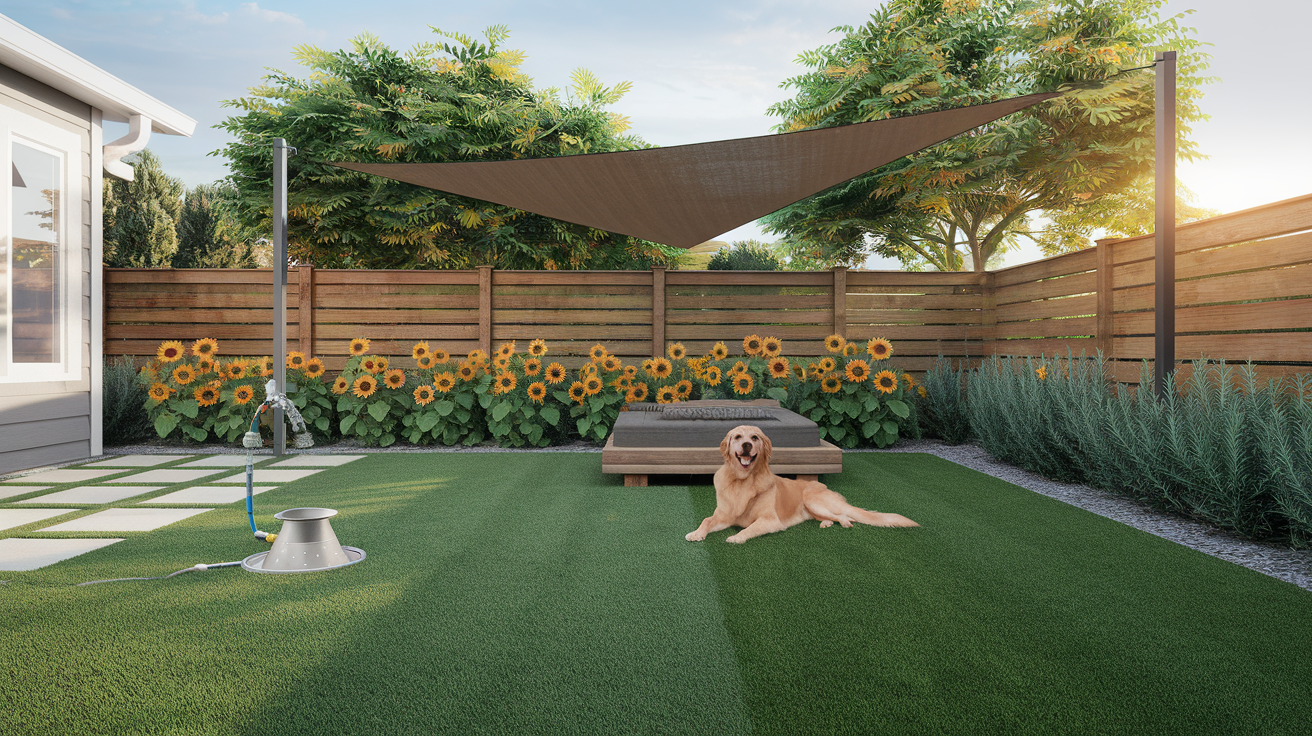
Pet-Friendly Backyard Design — Patio Ideas Safe for Dogs
A pet-friendly backyard isn’t just about keeping your dog from digging up the flower beds — it’s about designing an outdoor space where dogs can run, rest, and play safely while still looking sharp enough for humans to enjoy. The good news: most pet-safe upgrades are cheap, and several make the yard better for everyone.
This guide covers the materials, products, and layout strategies that work for dogs of all sizes, whether you have a 12-pound Frenchie or a 90-pound Lab mix with boundless energy and zero chill.
Why Standard Backyards Are Rough on Dogs (and Dog Owners)
Most backyard designs are built with aesthetics in mind, not four-legged residents. Common problems include sharp decorative rocks that cut paw pads, gravel that overheats in summer, toxic plants that look gorgeous but cause real harm, and fencing that’s more decorative than functional. Add invisible hazards like fertilizer runoff and standing water, and a standard patio can quietly be one of the most dangerous places for a dog.
The fix isn’t complicated. It’s mostly a matter of making deliberate material choices, building a proper perimeter, and giving your dog enough stimulation to stop looking at your garden bed like a buffet.
Ground Cover: The Most Important Decision You’ll Make
What covers the ground matters more than almost anything else for dog comfort and safety. Here’s how the main options stack up:
Artificial Turf
Artificial turf is the most popular choice for dog owners for good reason — it’s durable, drains well, stays green year-round, and won’t turn into a mud pit after rain. The catch is heat. Cheap turf can get scorching hot in direct afternoon sun, which is brutal on paw pads.
Look for turf with a high blade count and infill options like silica sand or zeolite (which neutralizes pet odor). The SYNLawn Pet Platinum and K9Grass by ForeverLawn are both purpose-built for dogs, with built-in antimicrobial protection and drainage rates that handle heavy rain without pooling.
For smaller installations or DIY projects, boxed artificial turf rolls on Amazon work well for runs and designated potty zones.
Pea Gravel
Smooth pea gravel (3/8″ size) is a solid budget option. It drains perfectly, stays cooler than turf or concrete, and doesn’t hold odor. Dogs tend to use gravel zones as natural potty spots, which makes cleanup easier. The downside is tracking — expect to find gravel inside occasionally.
Vevor’s garden edging panels do a great job containing gravel to a defined zone and preventing it from migrating into lawn or garden beds.
Natural Grass
Real grass is soft and cool, but it’s high maintenance in dog households. Large dogs will create dead patches within weeks from urine. If you want grass, plan for overseeding in fall, a urine-neutralizing soil treatment, and a designated “go zone” (gravel or turf) to protect the main lawn. Dog Rocks mineral stones placed in the water bowl reduce nitrogen in urine and help protect grass over time.
Rubber Mulch and Wood Chips
Rubber mulch lasts forever, drains well, and cushions joints — great for older dogs or large breeds prone to hip issues. However, it heats up badly in summer and some dogs chew it. Cedar wood chips are a safe, aromatic alternative that naturally deters fleas and ticks. Avoid cocoa mulch entirely — it contains theobromine, the same compound in chocolate, and is toxic to dogs.
Fencing That Actually Keeps Dogs In
Decorative fencing fails dogs. A motivated Border Collie or a Husky in escape mode will find every weakness. Here’s what works:
Height Requirements by Breed
- Small breeds (under 25 lbs): 4-foot fence minimum
- Medium breeds: 5-foot minimum
- Large, athletic breeds (Labs, Huskies, Belgian Malinois): 6 feet minimum — and consider a coyote roller on top if you have a jumper
Wooden privacy fence is the gold standard because dogs can’t see through it (no fence-fighting with neighbors’ dogs) and it’s impossible to climb. Pre-built privacy fence panels on Amazon make DIY installation achievable over a weekend. Check out our full best privacy fence panels guide for detailed picks by budget and style.
Dig Guard at the Base
Diggers need a physical barrier, not just depth. Bury a 12″ L-shaped wire mesh apron along the fence line — the horizontal section faces inward. When a dog starts digging and hits the mesh immediately, most give up. Dig Defence galvanized steel panels are the best-reviewed option for this — they install with a rubber mallet and handle determined diggers far better than chicken wire.
Invisible Dog Fence Systems
For large properties where traditional fencing isn’t practical, an underground wire system paired with a training collar gives dogs freedom while maintaining boundaries. The PetSafe Stay & Play Wireless Fence requires no buried wire and covers up to ½ acre. For larger properties, the PetSafe In-Ground Fence System is the most reliable buried-wire option on the market.
Note: invisible fences don’t prevent other animals from entering your yard. They work best as a secondary layer alongside physical fencing, not as a replacement.
Shade and Water: Non-Negotiables for Summer Safety
Dogs can’t sweat efficiently. Heat stroke in dogs happens fast — especially in brachycephalic breeds like Bulldogs, Pugs, and French Bulldogs. Every dog yard needs two things: shade and fresh water access.
Shade Structures
A pergola with a shade cloth top is the most attractive permanent solution, and it doubles as usable outdoor living space for the humans. Retractable shade sails give you flexibility — deploy when it’s hot, retract during storms. Check out our guide on best shade sails 2026 for top-rated picks across every price point.
For a quick, no-installation option, pop-up canopy tents with UV-blocking fabric give your dog a cool spot in minutes. Ruffland Performance Kennels and K9 Ballistics both make excellent heavy-duty outdoor dog canopies rated for sustained outdoor use.
Dog Water Stations
Standard water bowls tip over, attract mosquitoes, and go stale in heat. Elevated automatic dog waterers connected to a garden hose solve all of this. The K&H Pet Products Outdoor Automatic Waterer and the Lixit Outdoor Faucet Waterer mount directly to a hose bib — your dog presses the paddle and fresh water flows on demand. They never run dry, never breed mosquitoes, and require zero daily maintenance.
Dog Splash Pads and Pools
Water play is the fastest way to cool a hot dog. A simple sprinkler mat or small splash pad works for most breeds. The Paws & Pals Dog Splash Pad hooks to any garden hose and activates when your dog steps on it — no electricity required. For larger dogs or breeds that love to swim, a 10-foot Intex Easy Set pool set up in the yard gives them a real soaking spot for under $50.
Dog-Safe Plants for Your Landscape
This is where well-intentioned dog owners make the most costly mistakes. Many popular landscaping plants are toxic to dogs — some dangerously so. Here’s a quick reference:
Avoid These Common Plants
- Sago Palm — Extremely toxic, causes liver failure. Found everywhere in the South.
- Azalea and Rhododendron — Causes vomiting, weakness, and heart problems.
- Oleander — Highly toxic, can be fatal in small amounts.
- Lantana — Very common in Texas and the Southwest. Berries are toxic.
- Tulip bulbs — The bulb is the dangerous part.
- Foxglove — Causes cardiac issues.
- English Ivy — Commonly used as ground cover, toxic when ingested.
Safe Landscaping Alternatives
- Rosemary — Tough, drought-tolerant, dog-safe, and actually deters fleas naturally.
- Catnip — Safe for dogs (it just doesn’t do much for them).
- Sunflowers — Non-toxic and visual showstoppers.
- Snapdragons — Safe and colorful border plant.
- Basil, oregano, mint — All dog-safe herbs that double as kitchen garden material.
- Creeping thyme — Excellent ground cover alternative, handles foot (and paw) traffic.
- Spider plant — Non-toxic and grows in almost any condition.
The ASPCA maintains a comprehensive toxic plant database at aspca.org/pet-care/animal-poison-control — it’s searchable by plant name and worth bookmarking if you’re redesigning your landscape.
Hardscaping: Material Choices That Protect Paw Pads
Concrete, pavers, and natural stone all have different heat and texture profiles that matter for dogs.
Concrete
Plain concrete gets hot fast and stays hot. Light-colored or stamped concrete absorbs less heat than dark gray. If you already have concrete, an anti-slip outdoor rug or rubber mat near the dog door creates a cool transition zone. Avoid concrete sealers with harsh chemical solvents — water-based sealers are paw-safe once cured.
Natural Stone (Flagstone, Slate)
Flagstone heats up but cools down faster than concrete. The texture varies — rough-cut flagstone can be harsh on sensitive paws, while honed or tumbled stone is softer. Plant creeping thyme or Irish moss between flagstone gaps to cool the surface and soften the overall hardscape.
Composite Decking
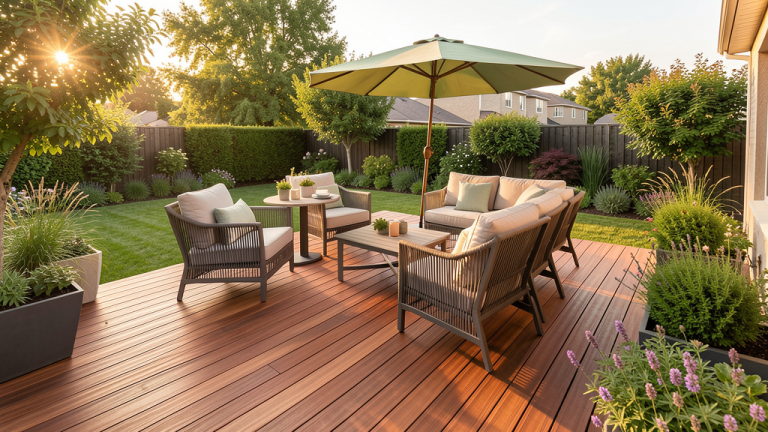
High-quality composite decking stays cooler than wood because of its lighter pigment options and hollow cell construction. Trex, TimberTech, and Fiberon all offer light-colored boards that stay manageable in summer. See our breakdown of best composite decking in 2026 for side-by-side comparisons.
Rubber Pavers
Rubber pavers are the softest walking surface available and stay the coolest of any hard material. They’re excellent around pools, in dog runs, or as a transition material between lawn and concrete. Vevor rubber paving tiles are available in multi-packs and install without adhesive — just interlocking edges.
Dog Runs and Dedicated Play Zones
Giving your dog a dedicated zone changes everything. They get a clear space to run and play; you protect your lawn and garden from the chaos.
Building a Dog Run
A proper dog run is at least 4 feet wide and 10–20 feet long, depending on your dog’s size. Key elements:
- Surface: Pea gravel or rubberized mulch (avoid dirt — it turns to mud)
- Shade: At least one covered section
- Water: Hose-connected waterer or shade to keep a bowl cool
- Gate: Double-gate airlock entry so the dog can’t bolt past you
Welded wire dog kennel panels from manufacturers like Lucky Dog on Amazon make it easy to build a custom-size run in a few hours. The Lucky Dog STAY Series uses 6-gauge welded wire that can’t be bent by large, determined dogs — unlike the flimsy chain-link panels sold at box stores.
Agility and Enrichment Features
Bored dogs are destructive dogs. Backyard enrichment doesn’t require a professional agility course — a few well-placed features go a long way. A simple A-frame tunnel, a sandbox dedicated for digging (to redirect the instinct), and a sniff garden with herbs and textured plants all give working breeds and high-energy dogs something to do besides excavate your flower beds.
The Outward Hound Zip & Zoom Agility Kit includes weave poles, a tunnel, a pause box, and two hurdles — it sets up in 15 minutes and works for dogs of all sizes.
Pet-Friendly Pest Control
Standard yard pesticides are some of the most dangerous substances for dogs. Organophosphates, pyrethroids, and certain herbicides cause neurological damage, organ failure, and cancer with repeated exposure. The good news is that most pest problems have pet-safe solutions that work just as well.
Mosquitoes
Mosquitoes transmit heartworm. Eliminate standing water (bird baths, low spots in the lawn, clogged gutters) and run a DynaTrap outdoor mosquito trap — it uses CO2 and UV light, no chemicals, and catches thousands of mosquitoes per night. For larger yards, a propane-based Mosquito Magnet is the industrial-strength version of the same concept.
Fleas and Ticks
Nematodes are microscopic organisms that eat flea larvae in the soil and are completely harmless to dogs, humans, and plants. Apply in spring and fall with a hose-end sprayer. Cedar oil sprays (like Wondercide Yard Spray) kill fleas, ticks, and mosquitoes on contact and remain safe after drying.
Weeds
Avoid glyphosate-based weed killers around dogs. A corn gluten meal application in early spring acts as a pre-emergent weed blocker and is safe for pets and children. For spot treatment, horticultural vinegar (30% acidity) kills broadleaf weeds on contact without toxic residue.
Outdoor Dog Furniture and Rest Zones
Dogs need a cool, comfortable place to rest outdoors — especially in summer. An elevated cot-style bed keeps dogs off hot ground and promotes airflow underneath. The K9 Ballistics TUFF Elevated Dog Bed uses a ballistic nylon surface that resists chewing, stays cool, and handles full exposure to rain and sun. Coolaroo’s elevated dog beds are a more affordable option with excellent airflow.
Position rest zones in naturally shaded spots, or add a small triangular shade sail directly above a dog’s favorite resting area. Our shade sail guide covers small triangle options starting at $25 that are perfect for exactly this use.
Pool Safety for Dogs
Not all dogs swim instinctively, and even good swimmers can drown if they can’t find an exit point. If you have a pool, you need two things: a dog-specific pool ramp and a reliable pool fence.
The Skamper-Ramp is the go-to for above-ground pools — it hooks over the edge and gives dogs a textured ramp to exit without help. For in-ground pools, the PAWZ Away Dog Pool Steps hang inside the pool wall and provide a gentler incline than standard pool ladders.
Pool fences add a secondary safety layer for times when you can’t supervise. Mesh pool fences are removable and transparent — they keep dogs out of the pool area while maintaining sight lines. Check out our deep dive on best automatic pool covers — a solid cover also prevents unsupervised pool access entirely.
Budget-Friendly Pet Yard Upgrades Under $200
You don’t need a full landscape renovation to make a yard significantly safer and more dog-friendly. Here are high-impact upgrades that cost very little:
- Pea gravel potty zone ($20–40): Redirect bathroom habits to one contained area
- Dig Defence panels ($40–60): Stop fence-line digging permanently
- Hose-connected automatic waterer ($25–40): Fresh water 24/7 with zero maintenance
- Dog splash pad ($20–30): Summer cooling in minutes
- Cedar wood chips in garden beds ($15–25): Flea deterrent and protected plant zones
- Elevated dog cot bed ($40–70): Cool resting surface off hot ground
- One triangle shade sail ($25–50): Shade over a rest zone or play area
Total for all seven: well under $300, and the effect on dog comfort and yard damage is dramatic.
FAQ: Pet-Friendly Backyard Design
What is the best ground cover for a dog-friendly backyard?
Purpose-built artificial turf (K9Grass, SYNLawn Pet Platinum) is the best long-term option — it drains well, doesn’t hold odors, and holds up to heavy use. Pea gravel is the best budget option and dogs naturally prefer it as a potty surface. Avoid bare dirt and cocoa mulch entirely.
What fence height do I need to keep my dog in the yard?
4 feet for small breeds, 5 feet for medium breeds, 6 feet for large or athletic breeds. Add a coyote roller along the top for known jumpers. Always bury dig protection along the fence line regardless of height.
Are pavers safe for dog paws?
Concrete and dark stone pavers get very hot in summer and can burn paw pads. Light-colored flagstone and tumbled stone are better. Rubber pavers are the safest and most comfortable option for dog-heavy areas. A useful rule: if you can’t hold your hand on it for 10 seconds comfortably, your dog shouldn’t walk on it.
What plants should I avoid if I have dogs?
The most dangerous are sago palm (extremely toxic), oleander, azalea, lantana berries, tulip bulbs, foxglove, and English ivy. Safe alternatives include rosemary, sunflowers, snapdragons, basil, and creeping thyme. Verify any new plant with the ASPCA’s toxic plant database before planting.
Do invisible dog fences work?
Yes, with proper training, for most dogs. They’re not reliable for highly prey-driven dogs that will run through a shock to chase a squirrel. They don’t prevent other animals from entering your yard. Use them as a secondary layer alongside physical fencing for best results.
How do I stop my dog from digging up the yard?
Provide a dedicated digging zone (sandbox filled with loose soil or sand) and redirect digging there. Bury L-shaped wire mesh apron along fence lines to stop escape digging. Remove the motivation where possible — dogs dig from boredom, heat, or prey scent. More exercise and enrichment solves most casual digging.
Disclosure: This post contains affiliate links. If you purchase through these links, we may earn a small commission at no extra cost to you. We only recommend products we genuinely believe in.