Best Backyard Saunas for 2026 — Barrel, Infrared & Outdoor Installation Guide
The best backyard sauna for most homeowners in 2026 is a barrel sauna — they heat up fast, drain naturally, and hold up through freeze-thaw cycles better than most box saunas. If budget is your primary concern, an infrared sauna delivers solid sweat sessions at lower upfront cost and minimal electrical work. Either way, you can have a real sauna in your backyard this season for anywhere from $1,500 to $12,000 depending on size and technology.
This guide covers every backyard sauna type, breaks down real installed costs, names the top brands worth buying, and tells you exactly what to look for before you spend a dollar.
Types of Backyard Saunas: What Actually Works Outdoors
Not every sauna is built for the outdoors. Backyard installation puts a sauna through temperature swings, UV exposure, humidity, and the occasional freeze. Here’s how the main types stack up:
Barrel Saunas
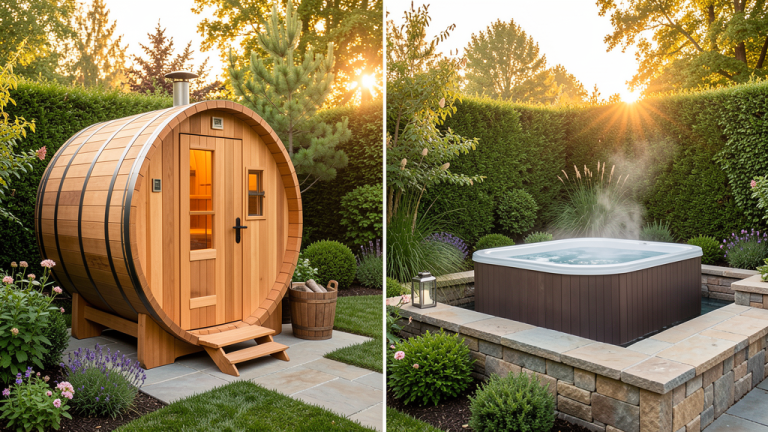
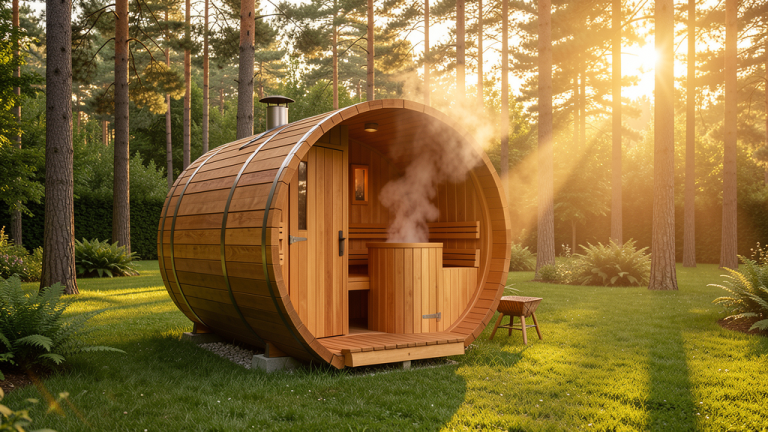
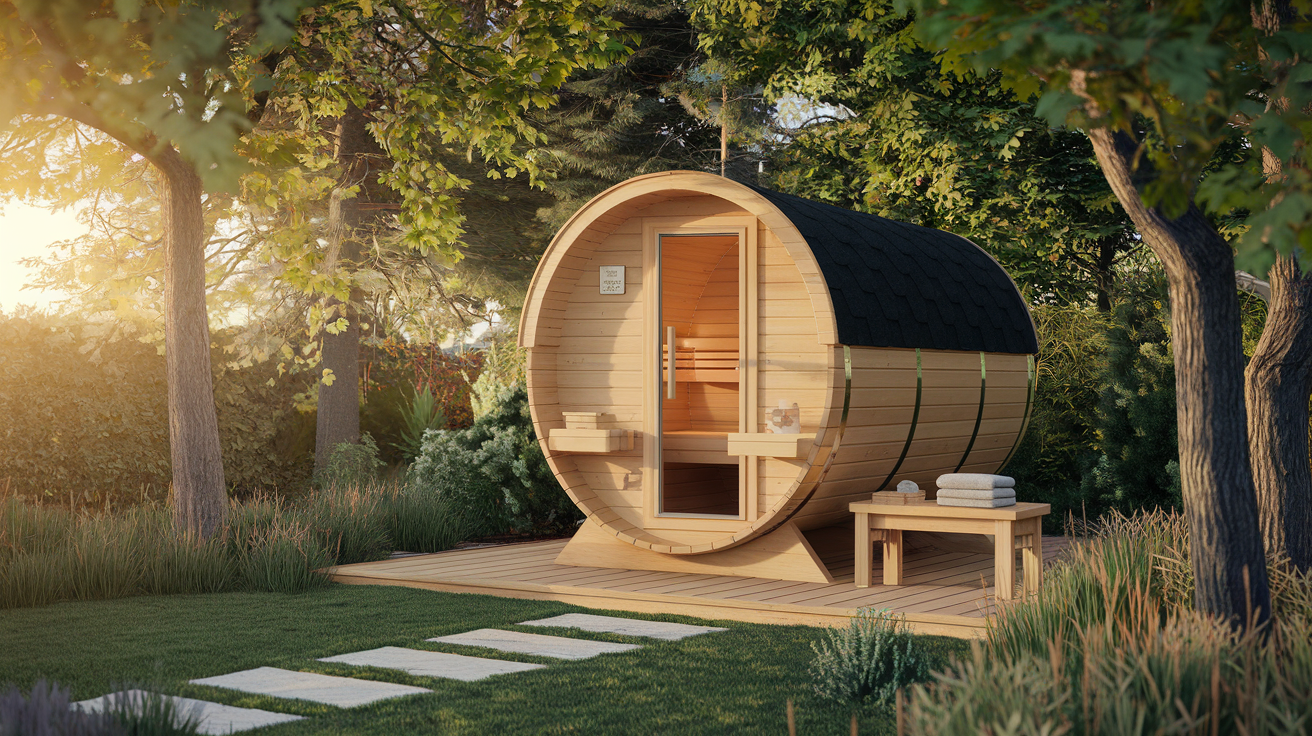
Barrel saunas are the gold standard for outdoor use. The round shape creates natural convection — hot air circulates from the heater up to the curved ceiling and back down without any dead corners. This means faster heat-up times (usually 30–45 minutes) and more even distribution than flat-ceiling box saunas of the same cubic footage. The curved construction also sheds rain and snow naturally, and the tongue-and-groove cedar panels handle expansion and contraction better than sheet materials. Most serious outdoor sauna buyers end up here.
Infrared Saunas
Infrared saunas heat your body directly via radiant panels rather than heating the air around you. Operating temperatures run 120–140°F versus 160–195°F for traditional saunas, making them more accessible for people who find conventional sauna heat overwhelming. Power draw is lower (typically 1,500–2,400 watts versus 4,800–9,000 watts for traditional heaters), and many plug into a standard 240V outlet. The main downside outdoors: most infrared cabins are not designed for moisture exposure and require a covered, protected location.
Traditional Box Saunas
Flat-ceiling cedar or hemlock box saunas are the most common prefab option. They’re cheaper per square foot than barrels, easier to configure as 2-person or 4-person rooms, and often available with optional steam generators. They work fine outdoors if properly sealed and maintained, but they don’t shed water as naturally as barrel designs and need a level foundation.
Wood-Burning Outdoor Saunas
If you want the most traditional sauna experience — and you don’t mind splitting firewood — a wood-burning sauna is unmatched in ambiance. Many barrel sauna kits offer the option to use a wood-burning kiuas (Finnish heater) instead of electric. Operating cost is essentially zero, and they work off-grid. The drawback: 60–90 minute heat-up time, and you need a dry wood supply.
Best Barrel Sauna Kits for 2026
We covered barrel sauna kits in depth in our Best Barrel Sauna Kits 2026 guide, but here are the top picks for backyard buyers:
1. Almost Heaven Saunas — Pinnacle 6-Person Barrel Sauna
Almost Heaven is one of the most trusted names in residential barrel saunas in North America. The Pinnacle 6-person barrel sauna uses 1.75-inch thick Canadian white cedar, comes with a Harvia KIP-60 6kW heater, and includes bench boards, backrest, and floor boards. The 7-foot diameter barrel is large enough for a real gathering without feeling cramped. Assembly takes a weekend with two people and hand tools — no special skills required.
Price range: $4,500–$5,500 delivered to most US addresses.
👉 Shop Almost Heaven Barrel Saunas on Amazon
2. Dundalk LeisureCraft — Canadian Timber Georgian Cabin Sauna
Dundalk’s Georgian Cabin Sauna bridges the gap between barrel and box sauna — it’s a traditional cabin shape built from white cedar with a peaked roof and large window. Fits 4–6 people comfortably, comes in electric or wood-burning configuration, and has a genuinely premium cedar aroma right out of the box. The peaked roof handles snow load better than true barrel designs, making it a smart choice for northern climates.
Price range: $5,800–$7,200 depending on configuration.
👉 Shop Dundalk LeisureCraft on Amazon
3. ALEKO Outdoor Barrel Sauna — Best Budget Barrel
ALEKO’s barrel saunas have become a popular entry point for buyers who want the barrel experience without the Almost Heaven price. The ALEKO SBRB400 is a 4-person barrel sauna built from Canadian hemlock with a 4.5kW heater included. It’s not as thick-walled as the Almost Heaven, but for mild-to-moderate climates it performs well and the price — typically $1,800–$2,400 — is hard to argue with.
👉 Shop ALEKO Barrel Saunas on Amazon
4. Vevor Outdoor Barrel Sauna
Vevor offers well-priced barrel sauna kits in hemlock and pine that punch well above their price point. Their 2-person and 4-person configurations start around $1,500 and include the heater, stones, and all hardware. If you’re comfortable with a more hands-on assembly process, Vevor delivers good value for the cost — especially for buyers who want to try sauna ownership before committing to a premium kit.
👉 Shop Vevor Outdoor Barrel Saunas
Best Infrared Saunas for Backyard Use in 2026
1. Dynamic Saunas — Maxxus 2-Person Carbon Far-Infrared Sauna
Dynamic Saunas (and their Maxxus line) is the most reviewed brand in the residential infrared space on Amazon. The Maxxus 2-person carbon infrared sauna uses low-EMF far-infrared carbon heating panels on the back wall and floor area, operates on a standard 120V outlet (no special wiring), and heats to temperature in about 15 minutes. The hemlock cabinet is attractive and the digital control panel is intuitive. Best suited for a covered patio or garage — not bare outdoors.
Price range: $1,200–$1,800.
👉 Shop Dynamic Saunas Maxxus on Amazon
2. Sunlighten mPulse Believe — Best Premium Infrared
If budget is not a constraint, Sunlighten makes the best infrared saunas on the market. The mPulse Believe 3-person model combines near, mid, and far infrared panels with a touchscreen Bluetooth-enabled control system and chromotherapy lighting. The full-spectrum approach delivers different wavelength benefits depending on your session goal. Built in the USA with sustainably harvested basswood. Price: $5,500–$8,000 depending on configuration and current promotions.
👉 Shop Sunlighten Saunas on Amazon
3. SereneLife SLSAU35 Portable Infrared Sauna
Not ready to commit to a full cabin? The SereneLife portable infrared sauna is a heated blanket-style enclosure that you sit inside on a portable chair. It’s not a “real” sauna in any traditional sense, but it delivers meaningful infrared heat therapy for under $200 and stores in a closet when not in use. Good proof-of-concept purchase before going all-in on a full unit.
👉 Shop SereneLife Portable Infrared Sauna on Amazon
Backyard Sauna Costs — What to Realistically Budget
There are three cost buckets to plan for: the sauna itself, site preparation, and electrical/installation.
Sauna Unit Costs
| Sauna Type | Size | Price Range |
|---|---|---|
| Infrared cabin (plug-in) | 1–2 person | $800–$2,500 |
| Budget barrel sauna (hemlock) | 2–4 person | $1,500–$3,000 |
| Mid-range barrel sauna (cedar) | 4–6 person | $3,500–$6,000 |
| Premium barrel or cabin sauna | 4–8 person | $6,000–$12,000 |
| Custom-built outdoor sauna | Any | $10,000–$30,000+ |
Site Preparation
Every outdoor sauna needs a level, stable foundation. Options include:
- Gravel pad: $200–$600 DIY. Easiest and most common for barrel saunas.
- Pressure-treated lumber deck: $800–$2,000 DIY. Creates an elevated platform and helps with drainage.
- Concrete slab: $1,500–$4,000 installed. Best for heavy cabin saunas and permanent installations.
- Existing deck or patio: $0 if load-rated. Have a structural engineer confirm for anything over 600 lbs.
Electrical
Traditional sauna heaters (4.5kW–9kW) require a dedicated 240V circuit, typically 30A–50A depending on the heater. Electrician cost: $300–$800 for a standard panel-to-sauna run under 50 feet. Budget more ($800–$1,500+) if your panel is far from the installation site or needs an upgrade. Infrared saunas with 120V plug-in operation skip this cost entirely, which is part of their appeal for renters and budget-conscious buyers.
Sauna Installation: DIY vs. Professional
Most barrel and cabin sauna kits are designed for DIY assembly — and most buyers complete the process over a weekend. That said, there are a few points where professional help pays off:
- Foundation work: If you’re pouring concrete or building an elevated deck, professional work saves you from expensive redos if anything is out of level.
- Electrical: This is non-negotiable in most jurisdictions. A licensed electrician must run the 240V circuit and connect the heater. Some areas require permit and inspection.
- Assembly: Barrel saunas go together with a rubber mallet and basic tools. Budget 6–12 hours for a 4-person barrel with two people working. Premium brands like Almost Heaven include detailed instruction manuals and video tutorials.
Vevor also sells complete sauna installation accessories if you need additional mounting hardware or weather-sealing materials:
👉 Shop Vevor Sauna Accessories
The Best Sauna Heaters for Outdoor Saunas
The heater is the heart of any traditional sauna. Here are the most reliable options for residential outdoor use:
Harvia KIP Series
Harvia is a Finnish company with over 70 years of sauna heater manufacturing. The Harvia KIP-60 (6kW) is the most common heater bundled with premium barrel sauna kits, and for good reason — it’s robust, runs quietly, and has a simple single-dial thermostat that’s more reliable than complex digital systems. The KIP-80 (8kW) is better for saunas over 250 cubic feet.
👉 Shop Harvia KIP Sauna Heaters on Amazon
Finnleo Pure Series
Finnleo is another Finnish brand with a long residential track record. The Pure Series heaters are particularly well-suited to North American voltage and come with a digital control panel included in the purchase price (Harvia often sells the control unit separately). Good choice if you want a cleaner, more modern control interface.
👉 Shop Finnleo Sauna Heaters on Amazon
Mika Wood-Burning Sauna Stove
For off-grid or wood-burning setups, the Mika sauna stove is a popular choice. It’s a compact cast-iron firebox designed specifically for sauna use, with a large stone capacity for impressive löyly (steam). Requires a proper flue and chimney installation.
👉 Shop Mika Wood Burning Sauna Stoves on Amazon
Backyard Sauna Accessories Worth Buying
Once your sauna is in, a few accessories dramatically improve the experience:
- Sauna bucket and ladle set: Essential for throwing water on rocks (löyly). Cedar buckets are traditional and don’t retain odors. 👉 Shop Sauna Bucket Sets on Amazon
- Sauna thermometer/hygrometer: Know your actual temperature and humidity — dual-dial wooden sauna thermometers are the standard. 👉 Shop Sauna Thermometers on Amazon
- Sauna stones: Kiln-dried sauna stones (olivine diabase or peridotite) hold heat better than random rocks. Replace heater stones every 2–3 years. 👉 Shop Sauna Stones on Amazon
- Sauna towels and bench cushions: Absorbent cotton or linen sauna towels protect the benches and make sitting more comfortable. 👉 Shop Sauna Accessories on Amazon
- Essential oil sauna concentrate: Eucalyptus and birch sauna oils added to water before pouring on rocks create an aromatherapy effect that takes the experience to another level.
Pairing Your Sauna with a Cold Plunge
The hottest trend in backyard wellness right now is contrast therapy — alternating between sauna heat and cold water immersion. The research behind it is solid: the contrast triggers a cardiovascular response that improves circulation, reduces muscle soreness, and delivers a mood-elevating dopamine release that regular sauna use alone doesn’t match.
We covered cold plunge costs in detail in our Contrast Therapy Backyard Setup Guide — but the short version: a basic cold plunge can be set up for $300–$800 using a stock tank and a chiller, or you can spend $2,000–$8,000 on a dedicated cold plunge unit from brands like Ice Barrel, Plunge, or Renu Therapy.
For most people, the barrel sauna + stock tank cold plunge combination delivers the full contrast therapy experience for under $6,000 all-in — and the wellness ROI is exceptional. You can also read our Backyard ROI Guide for a broader look at which outdoor upgrades add real home value.
Climate Considerations for Outdoor Saunas
Backyard saunas are used year-round across a wide range of climates, from Florida to Minnesota. Here’s how climate affects your buying decision:
- Cold climates (USDA Zone 5 and below): Prioritize thick-walled saunas (1.5″+ walls), and consider a 7.5kW or larger heater to compensate for cold ambient temperatures. Almost Heaven and Dundalk saunas are engineered for Northern use. Ensure the foundation accounts for frost heave — a gravel pad on compacted base gravel is better than bare ground.
- Hot climates (Zone 8+): Site your sauna in afternoon shade if possible — entering a sauna that’s been pre-heated by the Texas sun all day is unpleasant, and sustained UV exposure accelerates cedar oxidation. A pergola or shade sail over the sauna extends cedar life noticeably.
- High-humidity climates (Southeast, Pacific Northwest): Use a high-quality exterior finish (like Sansin Renew or Cabot Australian Timber Oil) annually to prevent mold and graying. Ensure the sauna has ventilation gaps at the base to allow airflow underneath.
Sauna Maintenance: What Nobody Tells You
The single biggest maintenance task is keeping the exterior wood looking good. Untreated cedar weathers to a gray-silver patina within a year or two — which some people love, but others don’t. A UV-protective penetrating oil applied in spring and fall is the standard maintenance protocol. Interior wood should never be stained or painted — cedar’s natural oils are part of what makes it appropriate for sauna use.
Other maintenance tasks:
- Clean sauna stones every 2–3 years (rinse, inspect for cracks, replace any crumbled stones)
- Wipe down benches with a mild sauna cleaner after heavy use
- Check door gaskets and hinges annually
- Inspect the heater wiring connections at the start of each season
- Leave the door cracked open after each use to allow the interior to dry out
Frequently Asked Questions
How long does a backyard sauna take to heat up?
Most electric barrel saunas reach 170–185°F in 30–45 minutes. Infrared saunas heat to their lower operating temperature (120–140°F) in 15–20 minutes. Wood-burning saunas take 60–90 minutes from a cold start.
Do I need a permit for a backyard sauna?
In most jurisdictions, an outdoor sauna qualifies as an accessory structure and may require a building permit above a certain square footage (commonly 120 sq ft). Electrical permits are almost always required for the 240V circuit. Check with your local building department before breaking ground — the answer varies widely by city and county.
How much does it cost to run a sauna per month?
A 6kW electric sauna heater running at full power for 1.5 hours costs roughly $0.75–$1.10 per session at typical US electricity rates ($0.12–$0.16/kWh). Using your sauna 3x per week works out to about $12–$18/month in electricity — far less than a gym or spa membership.
Can I put a sauna on a wood deck?
Yes, provided the deck is structurally rated for the load. A 4-person barrel sauna with stones and benches typically weighs 600–900 lbs. Have a contractor or structural engineer confirm your deck’s load capacity before placing one on it. For new deck builds, add 25–30% extra load rating to your design if you plan to place a sauna.
What’s the best sauna for a small backyard?
A 2-person barrel sauna (4-5 foot diameter, 6 feet long) fits in most small backyards without overwhelming the space. The Almost Heaven Pinnacle 2-person and the ALEKO 2-person barrel are both well-suited to tight spaces. For the smallest possible footprint, a 1–2 person infrared cabin is another option.
Is it worth buying a sauna kit vs. hiring a builder?
For most buyers, a quality pre-made kit (Almost Heaven, Dundalk, or similar) delivers a better result than hiring a general contractor to build a custom sauna from scratch. Sauna manufacturers engineer the ventilation, wood species selection, and heater sizing into their designs. Unless you want a custom aesthetic or have unusual site constraints, a kit is the better value.
How long do backyard saunas last?
A properly maintained outdoor cedar sauna can last 20–30 years. The biggest enemies are UV exposure, moisture intrusion at joints, and neglected wood maintenance. Annual oiling of the exterior, immediate repair of any cracked caulk or failed gaskets, and leaving the door cracked after use will keep your sauna performing decade after decade.
Disclosure: This post contains affiliate links. If you purchase through these links, we may earn a small commission at no extra cost to you. We only recommend products we genuinely believe in.