Pergola Installation in DFW — What It Costs and Who Does It Right
Pergola Installation in DFW — What It Costs and Who Does It Right
If you live in the Dallas-Fort Worth area and you’ve been thinking about adding a pergola to your backyard, you’ve probably already figured out one thing: there’s no shortage of companies willing to take your money. What’s harder to find is honest information about what professional pergola installation actually costs, what separates a good installation from a mediocre one, and who the right company is for your specific situation. This guide covers all of it — from material choices and real price ranges to the questions you should ask before signing any contract in DFW.
affiliate linkWhy DFW Pergola Installation Requires a Different Approach
Texas heat is genuinely punishing. In DFW, summer temperatures regularly exceed 100°F, UV exposure is intense, and the humidity in summer creates conditions that accelerate wear on outdoor structures. A pergola that works fine in the Pacific Northwest will show its weaknesses fast here. That means material selection matters more in Texas than almost anywhere else in the country.
The second factor unique to DFW is the wind. North Texas gets significant spring storms — the kind that test every anchor point, every fastener, and every post footing you pour. A pergola that’s undersized in terms of post depth or cross-member gauge will move in those storms. A professionally installed pergola, properly footed and braced, won’t.
This is why the “buy it on Amazon and hire a handyman” approach frequently disappoints DFW homeowners. The difference between a backyard structure that lasts 20 years and one that’s wobbling after two seasons often comes down to installation quality, not just product quality.
What Does Pergola Installation Cost in DFW in 2026?
Cost varies significantly based on material, size, and scope. Here’s a realistic breakdown based on what DFW homeowners are paying in 2026:
Aluminum louvered pergola (10×12 to 12×16), professional installation: $4,500–$9,000. This is the most popular category for DFW buyers because it handles rain, provides real shade, and requires zero ongoing maintenance. The louvered design lets you adjust sun/rain exposure by hand or via remote. Top brands include Azenco, PURPLE LEAF (retail), and manufacturer-direct options from local installers.
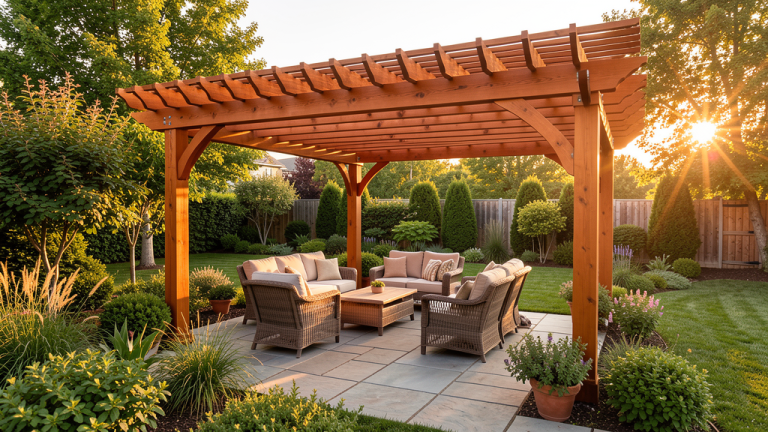
Cedar or pressure-treated wood pergola, professional installation: $2,800–$6,500. Wood remains the most aesthetically flexible option — it can be stained, painted, or left natural, and integrates beautifully with traditional home styles. The tradeoff: it needs resealing every 2–3 years and will show wear over time if neglected. Still an excellent choice for the right home and the right budget.
Vinyl or composite pergola, professional installation: $3,200–$7,000. Low maintenance, consistent appearance, and good UV resistance. Less structural character than wood, but holds color well and won’t rot. A reasonable middle-ground option.
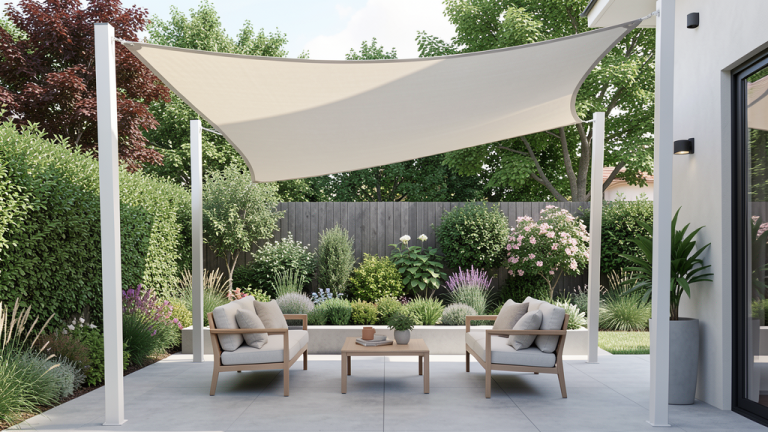
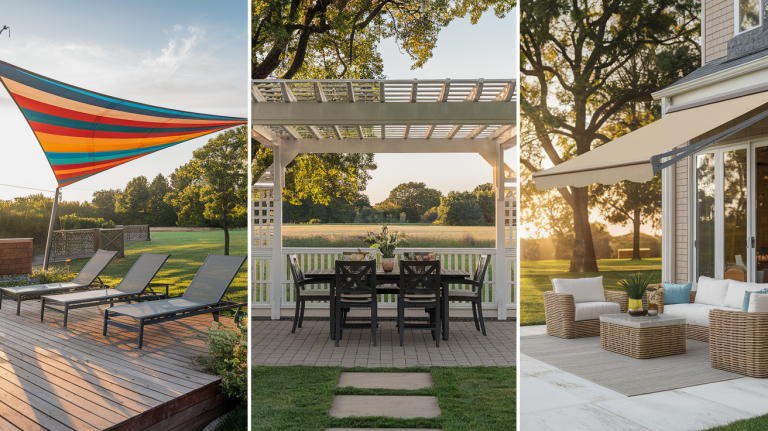
Steel pergola or custom fabricated shade structure: $6,000–$15,000+. For larger footprints, attached structures, or fully custom designs, steel fabrication is the most durable and architecturally impressive option. Typically the territory of companies like Cabana Theory that specialize in custom outdoor living projects.
Installation labor in DFW typically adds $800–$2,500 to the product cost, depending on scope, footing requirements, and site conditions. Permit costs (required for most structures over 150 sq ft in most DFW cities) add $150–$500.
🌿 Need a Professional Shade Structure in Texas or Oklahoma?
Cabana Theory specializes in premium pergolas, shade sails, and custom outdoor living structures across DFW, Austin, and Southern Oklahoma.
affiliate linkThe DIY vs. Professional Installation Question
Let’s be direct: for DFW specifically, professional installation is usually the right call — and not just because it’s easier. Here’s why the math works out that way:
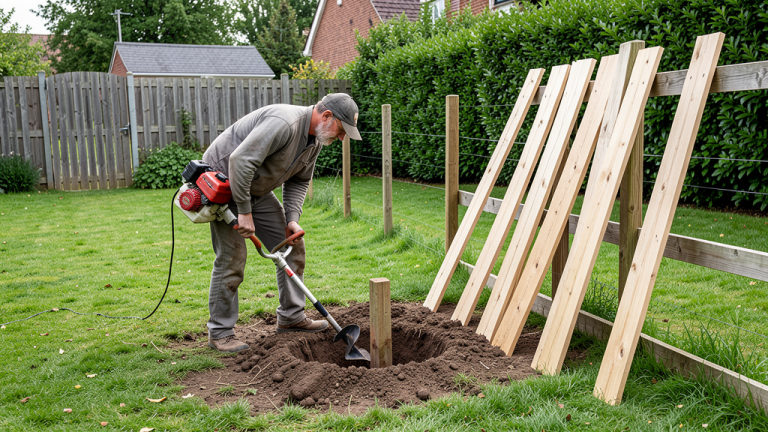
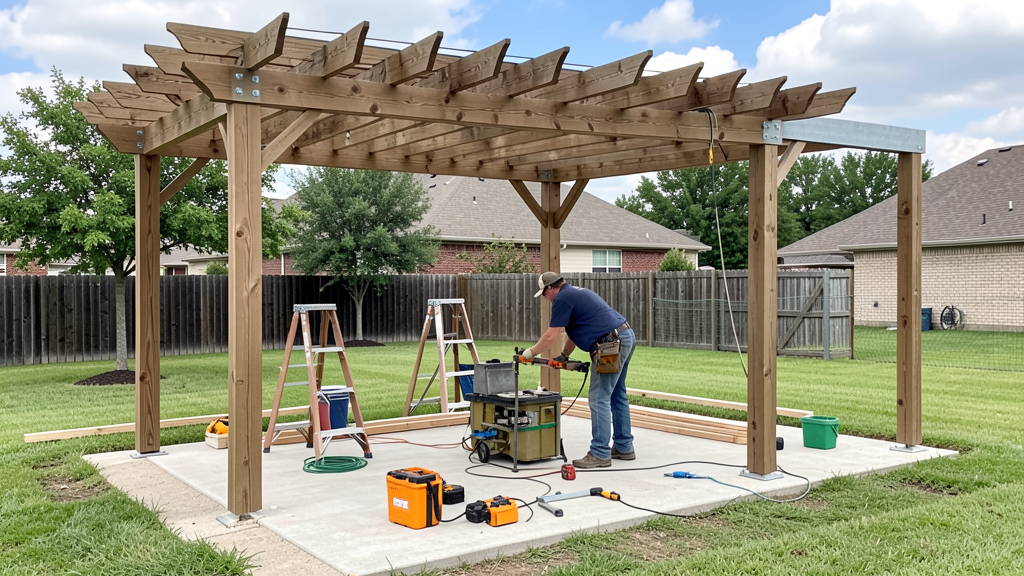
A quality aluminum pergola kit that you can order online runs $1,200–$2,800. Professional installation of that same kit typically costs $800–$1,500 more. But a professional installer brings a post-hole digger for proper concrete footings, the right fasteners for masonry or deck anchoring, and — importantly — the experience to get it done without the two weekends of frustration most DIY installs cost homeowners. They also pull the permit if required, which protects you if you ever sell the home.
That said, DIY makes sense for smaller structures (8×8 or smaller), experienced builders, and homeowners who genuinely enjoy the project. The key is using a kit rated for Texas wind loads and not cutting corners on post depth — 18 inches minimum for small structures, 24–30 inches for anything 10×12 or larger.
For reference, here are a few top-rated pergola kits that DFW homeowners commonly use for DIY installs:
Shop Aluminum Pergola Kits on Amazon →
Shop Wood Pergola Kits on Amazon →
What to Look For in a DFW Pergola Installer
Not all outdoor structure companies are equal. Here are the specific things worth vetting before you commit:
Licensing and insurance: Any company doing structural work in Texas should carry general liability insurance (minimum $1M per occurrence) and workers’ compensation. Ask for certificates before work begins. Uninsured contractors are a liability exposure for homeowners if anyone is injured on the job.
Permit experience: DFW municipalities vary in their permit requirements. Allen, Plano, Frisco, and McKinney all have slightly different rules. A contractor who routinely works in your specific city will know the process cold. Ask: “Have you pulled permits in [your city] recently? What did that process look like?”
Material sourcing transparency: Where are the materials coming from? A company that sources quality aluminum extrusions domestically or from established suppliers will have a better product than one importing the cheapest available option. Ask to see samples or specifications, not just photos.
affiliate linkPortfolio and references: Ask for 3–5 completed projects in DFW you can actually see — either in person or via a detailed photo portfolio with addresses. Recent work in your area tells you how they handle local conditions and permit processes.
Warranty: What does the installation warranty cover, and for how long? A quality installer will warranty their labor for at least 1 year. Premium companies like Cabana Theory typically stand behind their work for longer. Material warranties vary by product — aluminum structures typically carry 10–15 year manufacturer warranties.
Attached vs. Freestanding Pergolas in DFW
This is a meaningful decision that affects both cost and the installation process. Attached pergolas connect to your home’s structure — typically to a ledger board mounted on the house — and feel like a natural extension of your interior living space. They require proper flashing to prevent water intrusion at the connection point and almost always require a permit in DFW cities. Cost is typically 20–40% higher than freestanding due to the additional structural work.
Freestanding pergolas are independent structures that can go anywhere in your yard. They’re more flexible, typically don’t require permits under a certain size, and can be repositioned if you reconfigure your outdoor space. Most DFW homeowners opt for freestanding first, particularly when they’re not sure exactly where they want permanent structures.
If you’re adding outdoor dining, a kitchen area, or a hot tub underneath, attached is usually worth the additional cost — the visual integration with the home is significantly better and the structure feels intentional rather than placed.
Shop Attached Pergola Kits on Amazon →
Buying Guide: Choosing the Right Pergola for North Texas
Prioritize real shade: A traditional open-lattice pergola is beautiful but provides minimal UV protection — maybe 30% sun block. In DFW, where you’re fighting 103°F afternoons, a louvered roof, shade sail insert, or retractable canopy is not optional if you want to actually use the space. Factor this into your material selection from the start rather than adding it later at additional cost.
Post depth is critical: DFW clay soil is notorious for shifting seasonally. Posts set in concrete at 18–24 inches provide real stability; posts surface-mounted with hardware alone will move over time. Any professional installer in DFW should know this — if they’re proposing surface mounts for anything over a small structure, ask why.
Size up slightly: The most common regret from pergola owners is that they went too small. An outdoor dining set needs a minimum 12×14 footprint to feel comfortable. A seating grouping plus dining together needs 16×16 or larger. Measure twice before committing.
Consider future additions: If you think you might add outdoor lighting, a ceiling fan, or a misting system later, make sure the structure you choose can accommodate them. Aluminum pergolas with integrated wire channels are the easiest to wire for electrical. Wood pergolas allow more customization after the fact but require more planning.
affiliate linkFrequently Asked Questions
Do I need a permit for a pergola in DFW cities?
Most DFW cities require permits for permanent structures over 150–200 square feet. This includes Dallas, Fort Worth, Plano, Frisco, McKinney, Allen, Arlington, and most surrounding municipalities. Rules vary — some cities exempt freestanding structures under certain heights; others require permits for anything attached to a home regardless of size. A professional installer will handle permit filing as part of the project. If you’re DIYing, contact your city’s permit office before you begin — fines for unpermitted structures can be significant, and they create issues at resale.
How long does professional pergola installation take in DFW?
For a standard 12×16 freestanding pergola, professional installation typically takes 1–2 days once permits are approved. Permit approval in DFW cities typically takes 1–3 weeks for residential projects. Budget 3–5 weeks from contract signing to finished installation for most projects. Custom or larger structures take longer. Rush timelines are possible but typically add cost.
What’s the best pergola material for Texas heat?
Powder-coated aluminum is the best performer in Texas heat and humidity — it won’t warp, rot, or rust, and the coating holds color through years of intense UV exposure. Cedar and redwood are the best wood options because they’re naturally rot-resistant; they require resealing every 2–3 years but look beautiful and age gracefully. Avoid pine unless it’s pressure-treated, and avoid vinyl that isn’t specifically rated for high UV environments — cheaper vinyl will fade and become brittle in Texas within 5–7 years.
Can a pergola increase my home’s value in DFW?
Yes — a well-built, professionally installed pergola in DFW typically returns 50–80% of its cost in home value, according to most real estate professionals in the market. The real estate benefit is highest for attached structures, aluminum louvered systems, and pergolas that create a complete outdoor living space (with lighting, seating area, outdoor kitchen). A wobbling, DIY-assembled structure in poor condition does not add value and may actually be a negotiating point against you in a sale. Quality and professional installation are the deciding factors.
Bottom Line
Pergola installation in DFW is a meaningful investment — one that, done right, transforms your outdoor space and holds its value. The DFW market has no shortage of contractors willing to pour quick footings and assemble a kit-style pergola. The companies worth working with are the ones who understand Texas conditions specifically: the heat, the UV exposure, the wind loads, and the clay soil that shifts seasonally under your footings.
If you’re still evaluating materials or DIY options, a few quality aluminum pergola kits give you a good starting point:
Shop Top-Rated Pergola Kits on Amazon →
If you’re ready for professional installation across DFW, Austin, or Southern Oklahoma, Cabana Theory is the right call.
🌿 Need a Professional Shade Structure in Texas or Oklahoma?
Cabana Theory specializes in premium pergolas, shade sails, and custom outdoor living structures across DFW, Austin, and Southern Oklahoma.
Disclosure: This post contains affiliate links. As an Amazon Associate and Vevor affiliate, Cabana Culture earns from qualifying purchases at no extra cost to you. See our full affiliate disclosure.