Best Outdoor Fitness Equipment for Backyards in 2026
Best Outdoor Fitness Equipment for Backyards in 2026
Your backyard might be the best gym you’ve never built. Outdoor fitness equipment has advanced significantly — weatherproofed power racks, rust-resistant pull-up bars, UV-stable cardio machines, and functional training rigs designed to live outside year-round. Whether you’re after a serious strength setup, a cardio station for the family, or a compact functional fitness corner that takes up minimal space, 2026 offers better options at better price points than ever before. This guide covers the top outdoor fitness equipment picks for backyards, what to look for before buying, and how to build a setup that actually gets used.
affiliate link1. Rogue Monster Lite Half Rack — Best Premium Power Rack
Rogue’s Monster Lite Half Rack is the gold standard for serious backyard strength training. Powder-coated steel construction, laser-cut numbering on the uprights, and compatibility with Rogue’s full ecosystem of attachments make this the anchor piece for a real outdoor lifting setup. At roughly 5 feet deep and 4 feet wide, it’s compact enough for most backyard patios while still accommodating full-range squats, pull-ups, bench press, and overhead work.
The key to outdoor durability is Rogue’s zinc-plated hardware and high-density powder coat finish — both resist moisture and UV breakdown significantly better than cheaper coated steel alternatives. Pair this with rubber stall mats on your patio and you have a legitimate commercial-quality training environment for a fraction of gym membership cost over 5 years.
Shop Outdoor Power Racks on Amazon →
2. Titan Fitness T-3 Squat Rack — Best Value Power Station
Titan’s T-3 is the workhorse for backyard lifters who want power rack functionality without the Rogue price tag. The 11-gauge steel frame is meaningfully heavier than budget alternatives, and the included J-hooks and safety bars are functional out of the box — no need to buy upgrade packages just to use it safely. Rated to 1,000 lbs, it handles serious training loads without flex or rattle.
For outdoor use, Titan recommends applying a light coat of oil or paste wax to any exposed steel surfaces seasonally. The included plastic feet keep the rack elevated off concrete, reducing moisture contact at the base. Users in humid climates (Texas, Florida, Gulf Coast) report no significant rust issues after 2–3 years with basic maintenance. It’s one of the best dollar-per-pound-of-steel values in the market.
Shop Titan Fitness Racks on Amazon →
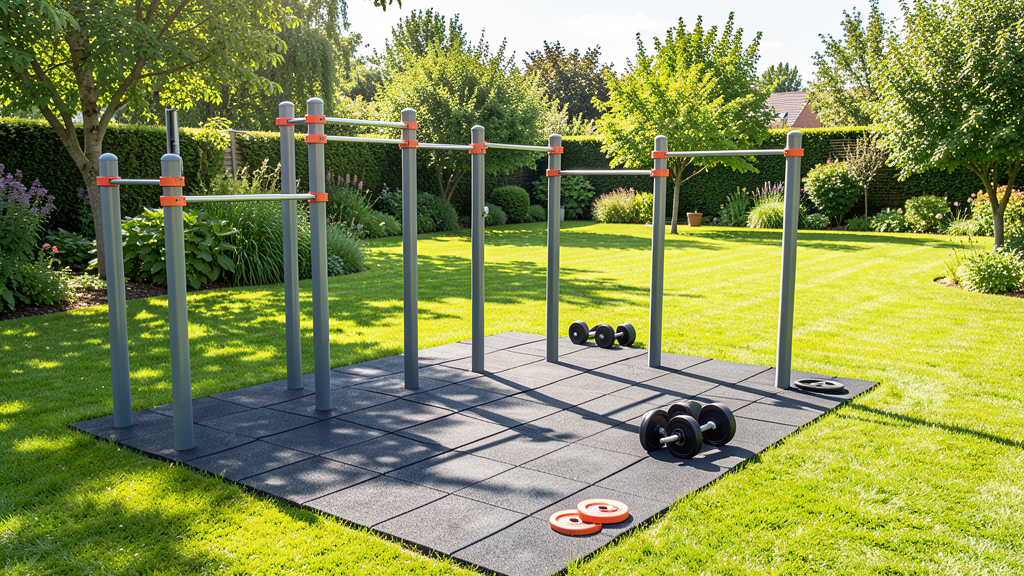
3. Ultimate Body Press Outdoor Pull-Up Bar System — Best Freestanding Bar
A freestanding pull-up station is the most versatile piece you can add to any backyard setup — no mounting required, no wall damage, and endlessly useful for pull-ups, hanging leg raises, dips (with the right add-on), and ring work. The Ultimate Body Press wall mount and freestanding options are the most consistently reviewed for outdoor use, with powder-coated steel frames that hold up through rain and sun without the surface degradation you see on cheaper chrome-finished alternatives.
Key spec to check: weight capacity and footprint. A freestanding bar needs to be rated for at least 300 lbs to handle kipping movements safely — go higher if you’re a larger athlete or plan to load the rings. A wider base footprint is actually more stable outdoors where uneven terrain can create rocking. Rubber feet help significantly on concrete or paver patios.
Shop Freestanding Pull-Up Bars on Amazon →
4. Marcy Outdoor Stationary Bike & Cardio Machines — Best Outdoor Cardio
Not every outdoor cardio machine is built to survive the elements, but a category of weather-resistant bikes, rowers, and ski ergs have been specifically engineered for outdoor use. Marcy’s outdoor stationary bikes use UV-stabilized plastics and galvanized steel components that tolerate direct sun and rain exposure. For row machines, Concept2’s RowErg can go outdoors with a basic cover — the monorail and flywheel handle humidity well, and the PM5 display is protected enough for normal covered patio use.
The smarter long-term play for outdoor cardio: buy a high-quality indoor machine and cover it with a purpose-built equipment cover when not in use. A $30–60 waterproof equipment cover extends the life of a $600–1,200 cardio machine by years. Most rowing machine and bike covers on Amazon are rated for outdoor UV and moisture — far cheaper than buying a dedicated outdoor unit.
Shop Weather-Resistant Cardio Equipment on Amazon →
5. Yes4All Battle Ropes — Best Outdoor Functional Training
Battle ropes are arguably the highest-return outdoor fitness purchase per dollar. A 40-foot, 1.5-inch poly dacron rope anchored to a post, tree, or ground stake gives you a full conditioning tool — explosive power training, HIIT intervals, shoulder endurance, and grip strength — for under $80. Poly dacron handles moisture and UV far better than manila or cheaper synthetic ropes, making it the correct outdoor choice.
Other functional training pieces that earn their outdoor spot: plyo boxes (solid wood or UHMW plastic, not hollow foam-top), adjustable kettlebells with powder-coated cast iron (avoid chrome in humid climates), and resistance bands stored in a sealed container when not in use. Together these add tremendous variety to any backyard training setup at a fraction of machine cost.
6. Rubber Stall Mats — The Non-Negotiable Foundation
No outdoor fitness setup discussion is complete without addressing flooring. Standard 4×6-foot rubber stall mats (4E horse stall mats from Tractor Supply, Rural King, or Amazon) are the most cost-effective flooring solution for backyard gyms — $50–70 each, 3/4-inch thick, heavy enough to stay flat, and durable enough to survive years of dropped barbells, bare feet, and Texas sun without degrading. Four mats create a solid 8×12-foot lifting platform for well under $300.
For concrete patios, stall mats go directly on the surface with no adhesive — their weight keeps them in place. On grass or dirt, you’ll want a base layer of compacted gravel or pavers first. Rubber mats insulate your feet from hot concrete in summer (critical in Texas heat) and protect the concrete from barbell drops over years of use.
Shop Rubber Gym Mats on Amazon →
Buying Guide: What to Look for in Outdoor Fitness Equipment
Weather resistance first: The single biggest differentiator between outdoor-viable fitness equipment and gym equipment that will rust and fade is the surface finish. Powder-coated steel is the minimum standard — look for high-density powder coat or zinc-plated hardware on any load-bearing components. Avoid chrome finishes for anything that will be exposed to rain or humidity. Stainless steel hardware (bolts, pins, springs) is significantly better than regular steel for outdoor longevity.
Weight capacity with margin: Whatever your bodyweight, buy equipment rated for significantly more. A 200 lb athlete should be on equipment rated for 350+ lbs — the rating leaves room for dynamic loading (jumping, kipping, dropping weights) that multiplies effective force. Budget equipment rated for “300 lbs” is often engineering for static loads, not the dynamic forces of real training.
Footprint vs. function: Map your backyard space before purchasing. A full power rack needs roughly a 6×8-foot footprint plus overhead clearance. A pull-up station needs 4×4 minimum plus clearance. Be realistic about available space — a smaller setup you’ll use consistently beats an oversized one you maneuver around. For small spaces, a wall-mounted folding rack eliminates the footprint entirely when not in use.
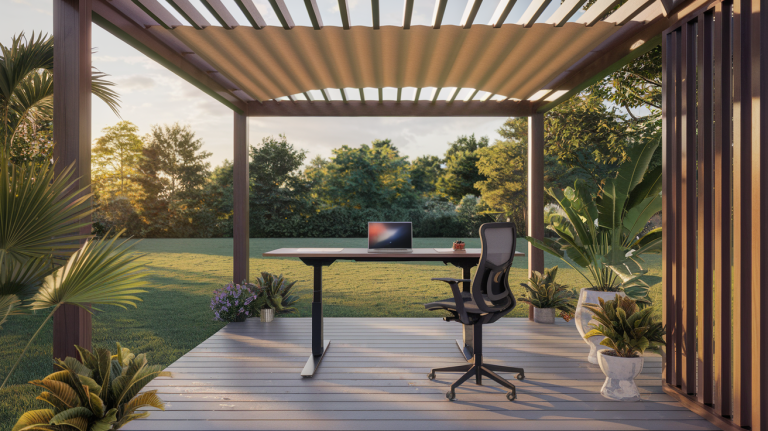
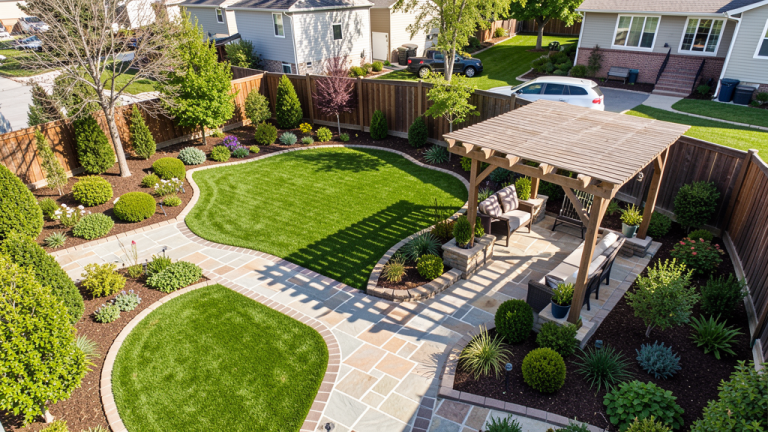
Covered storage vs. all-weather rating: Even “outdoor” fitness equipment benefits from being under a pergola, awning, or shade structure. UV exposure is the primary cause of plastic and rubber degradation; direct rain accelerates steel corrosion. A basic covered patio or pergola extends equipment life by years and makes the setup usable year-round rather than just in ideal weather conditions.
Frequently Asked Questions
Can I leave outdoor fitness equipment outside year-round?
With quality powder-coated or galvanized steel equipment, yes — with basic maintenance. Apply a light coat of car wax or paste wax to bare metal surfaces once or twice a year. Cover cardio machines and any equipment with electronic components when not in use. In areas with harsh winters, storing barbells, dumbbells, and resistance bands indoors seasonally will extend their life significantly. Structural pieces like power racks and pull-up stations can stay outside year-round in most climates with minimal maintenance.
What’s the best outdoor gym setup for a tight budget?
For under $500, a compelling outdoor setup is genuinely achievable: a quality pull-up bar ($80–150), a set of adjustable dumbbells or cast iron kettlebells ($100–200), two or three rubber stall mats ($120–180), and a set of resistance bands ($30–50). This setup covers pulling, pressing, hinge, carry, and conditioning work — all the fundamental movement patterns — without a single machine. Scale up from here as budget allows, starting with a barbell and bumper plates if strength training is the priority.
How do I protect my outdoor gym equipment from the elements?
Three habits cover most of it: (1) Apply wax or a light oil coat to bare steel surfaces twice per year — once in spring before heavy summer use and once in fall before winter. (2) Use weatherproof covers on any cardio or electronic equipment when not in use. (3) Keep equipment under a roof or pergola where possible to limit direct UV and rain exposure. For weight storage, a simple weather-resistant storage box or deck box protects dumbbells, kettlebells, and bands from the worst of the elements between sessions.
Do I need a concrete pad for backyard gym equipment?
A concrete pad is ideal but not required. An existing concrete patio works perfectly with rubber stall mats on top. Compacted gravel or decomposed granite is a serviceable alternative — level, well-drained, and firm enough for most equipment. Grass or soft soil is the least ideal surface: it allows equipment to shift and sink over time, creates mud issues around high-traffic areas, and makes barbell work inconsistent. If you’re starting fresh, a 12×12 or 12×16-foot concrete pad is a meaningful long-term investment that makes any outdoor gym setup more functional and safer.
Bottom Line
A backyard gym pays for itself faster than most home improvements — no monthly fee, no commute, no wait for equipment, and available at 5 AM or 10 PM whenever your schedule demands it. Start with the right foundation: rubber mats, a quality pull-up station, and a barbell with bumper plates cover the full range of effective strength training. Layer in cardio equipment and functional accessories as your space and budget allow. The single best upgrade you can make to an outdoor gym setup is getting it under a covered structure — a pergola or shade structure not only protects your equipment investment but turns the space into somewhere you actually want to train.
Shop Outdoor Gym Equipment on Amazon →
Disclosure: This post contains affiliate links. As an Amazon Associate and Vevor affiliate, Cabana Culture earns from qualifying purchases at no extra cost to you. See our full affiliate disclosure.