Best Shade Structures for Your Backyard in 2026 — Pergolas, Sail Shades & More
Cabana Culture participates in Amazon Associates. See our affiliate disclosure.
affiliate linkQuick Answer
The best backyard shade structures in 2026 are freestanding pergolas, shade sails, and retractable awnings. For most homeowners, a wood or aluminum pergola offers the best balance of aesthetics, durability, and value — costing between $800 and $5,000 DIY or $3,000–$15,000 installed.
Why Backyard Shade Structures Matter in 2026
With summers getting hotter across the Sun Belt — particularly in Texas, Oklahoma, and the Southwest — a quality shade structure has shifted from a luxury to a near-necessity. Studies show that proper outdoor shade can reduce surface temperatures by 20–30°F, making the difference between a patio you actually use and one that sits empty from May through September.
Beyond comfort, shade structures add measurable home value. According to the National Association of Realtors, well-designed outdoor living spaces return up to 80 cents on the dollar at resale. A pergola, shade sail, or motorized awning checks all the boxes: functionality, curb appeal, and ROI.
In this guide, we’ll walk through the top product picks available on Amazon, what to look for when buying, and how to decide which type of shade structure is right for your backyard.
Top Shade Structure Picks for 2026
1. PURPLE LEAF 12 x 16 ft Aluminum Pergola with Retractable Roof
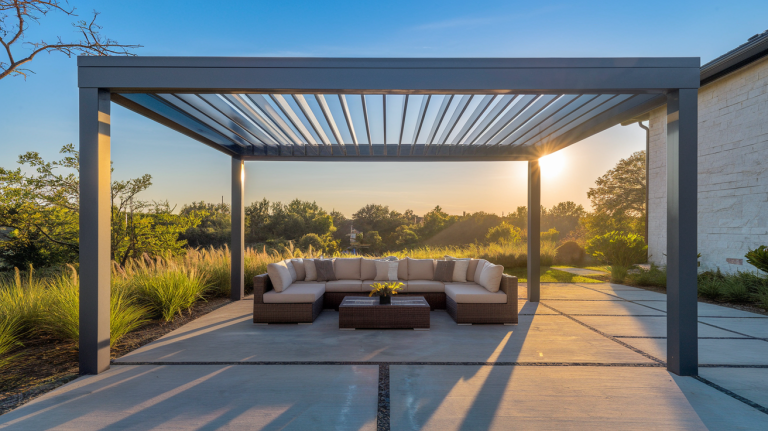
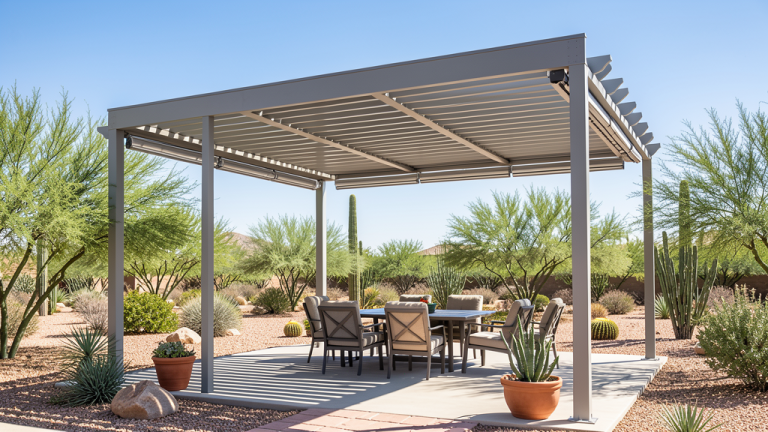
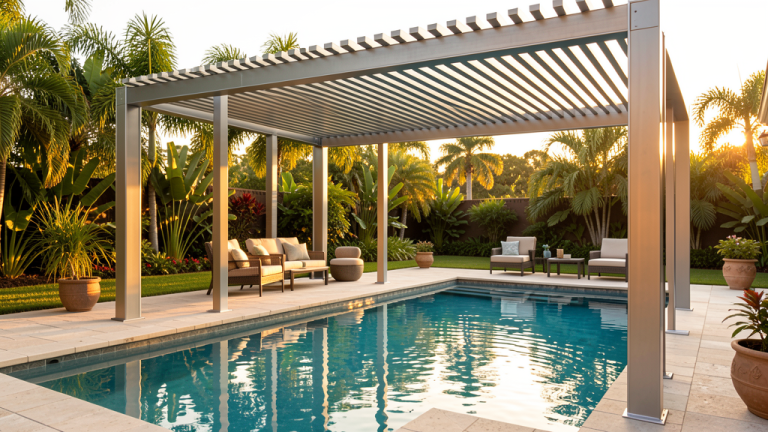
This is our top overall pick for homeowners who want a premium, permanent-feeling shade solution without a contractor. The powder-coated aluminum frame resists rust and UV damage, and the retractable canopy slides open in seconds so you can catch the sun when you want it. The adjustable louver design also doubles as rain protection.
Best for: Large patios, permanent installs, all-weather use
Price range: $1,200–$1,800
2. Coolaroo 16 ft Triangle Shade Sail — Steel Wire Edge
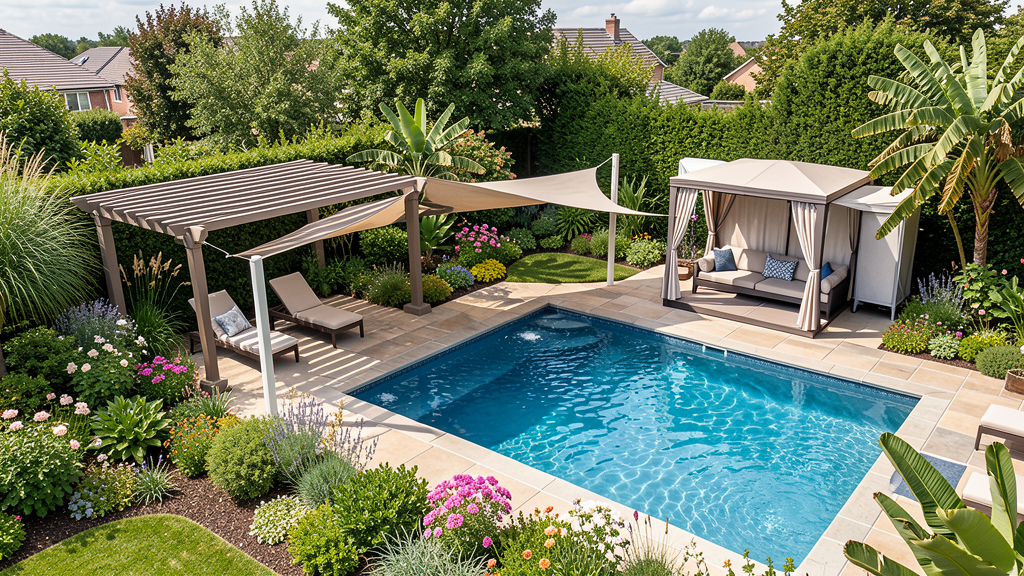
For budget-conscious shoppers or renters who can’t install a permanent structure, the Coolaroo shade sail is a crowd favorite with over 15,000 Amazon reviews. The high-density polyethylene (HDPE) fabric blocks up to 95% of UV rays while allowing airflow — crucial in humid climates. Available in multiple colors and sizes.
Best for: Small yards, renters, budget builds
Price range: $60–$130
3. Sunjoy 10 x 12 ft Cedar Framed Gazebo with Netting
A cedar gazebo brings warmth and charm that aluminum can’t match. The Sunjoy model includes both a hard canopy roof and mosquito netting panels — so you get shade, bug protection, and a defined outdoor room all in one. Assembly takes about half a day for two people.
Best for: Dining areas, entertaining spaces, classic aesthetics
Price range: $700–$1,100
4. Kamhoot 16 ft x 16 ft Pergola Kit — Galvanized Steel
If you want the look of a custom pergola at a fraction of the cost, the Kamhoot galvanized steel kit delivers. It ships flat with pre-drilled hardware and assembles in under four hours. The open-lattice roof is ideal for adding climbing vines or fabric curtains for added shade customization.
Best for: DIYers, mid-size patios, vine gardens
Price range: $350–$600
5. Diensday 13 x 10 ft Retractable Patio Awning — Manual Crank
For homeowners who want shade that disappears when not needed, a retractable awning is the answer. The Diensday model mounts directly to your home’s exterior wall and cranks open in seconds. Waterproof polyester fabric and a wind-resistant frame make it a durable choice for the long haul.
Best for: Decks, wall-mount applications, renters who own
Price range: $200–$450
Backyard Shade Structure Buying Guide
Material: Aluminum vs. Wood vs. Vinyl
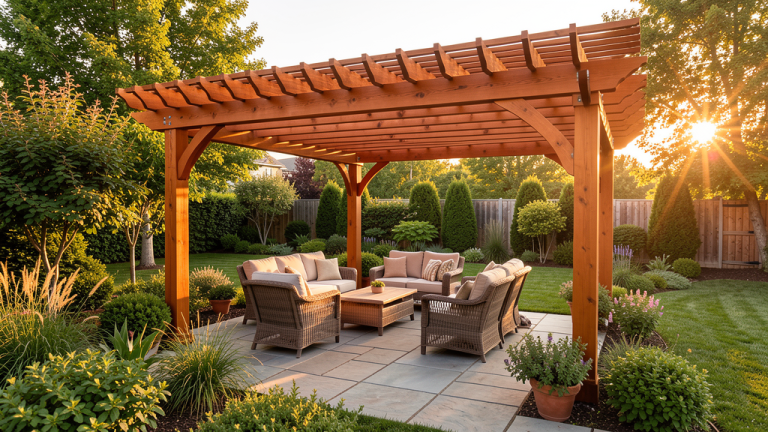
Your frame material is the biggest long-term decision. Aluminum wins on maintenance — it won’t rot, warp, or need annual staining. Cedar or redwood looks gorgeous but requires sealing every 2–3 years. Vinyl is the easiest to clean but can look plastic-y and doesn’t hold up as well in extreme heat. For hot climates, powder-coated aluminum is almost always the smart call.
affiliate linkCoverage Type: Open Lattice vs. Solid Roof vs. Retractable
Think about when you want shade. An open lattice pergola provides dappled shade — nice aesthetically but won’t block a Texas afternoon sun effectively. A solid or louvered roof gives full shade on demand. Retractable options (canopy or awning) give you the most flexibility. If your patio gets direct sun from 2–6pm, go solid or retractable.
Size and Footprint
A common mistake is buying too small. If you plan to seat 6–8 people, you need at minimum a 12 x 14 ft footprint. For a dining table plus lounge chairs, 14 x 16 ft is ideal. Measure your patio and add 2 ft on each side as a buffer — shade structures look best with a little breathing room around the edges.
Anchoring and Permitting
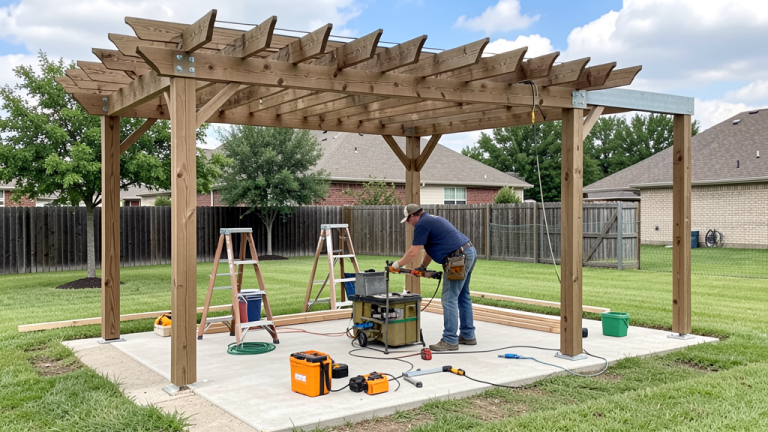
Most permanent pergolas require footings — either in-ground concrete anchors or heavy surface-mount plates. Check with your local municipality about permit requirements before you build. Many cities require permits for structures over 200 sq ft or attached to the home. Shade sails and freestanding canopies are generally permit-free, but confirm locally. Hiring a professional installer ensures both structural integrity and code compliance.
Frequently Asked Questions
What is the cheapest way to add shade to a patio?
The most affordable option is a shade sail. A quality triangle sail from Coolaroo or similar brands runs $60–$130 on Amazon and can be installed in an afternoon with just a few eye bolts. For larger coverage, a 16 ft square sail or a layered two-sail setup can cover most patios under $300 total.
How long does a pergola last?
A well-built aluminum pergola can last 20–30 years with minimal maintenance. Cedar pergolas last 10–15 years if properly sealed. Vinyl pergolas fall in the 15–20 year range. Key factors: climate, sun exposure, and whether it’s properly anchored. Annual inspections and cleaning extend lifespan significantly.
Do I need a permit to build a pergola?
It depends on your city and county. Most jurisdictions require a permit for permanent structures exceeding 200 square feet, or any structure attached to the home. Freestanding pergolas under 200 sq ft are often permit-free, but rules vary widely. Always check with your local building department before starting construction.
What shade structure works best in high-wind areas?
For windy areas, avoid large shade sails with lightweight corner anchors — they act like kites. Go with a louvered aluminum pergola with in-ground footings, or a motorized retractable awning with a built-in wind sensor that auto-retracts at high speeds. Both are engineered for wind resistance and will stay put in gusty conditions.
Professional Installation in DFW, Austin, or Southern Oklahoma? Looking for expert help designing and building a shade structure? Cabana Theory specializes in premium pergolas, shade structures, and complete outdoor living setups across the DFW metroplex, Austin, and Southern Oklahoma. Get a quote and bring your backyard vision to life.
Cabana Culture participates in Amazon Associates. See our affiliate disclosure.
Disclosure: This post contains affiliate links. As an Amazon Associate and Vevor affiliate, Cabana Culture earns from qualifying purchases at no extra cost to you. See our full affiliate disclosure.