Best Patio Umbrellas for 2026 — Large, Tilting and Wind-Resistant Picks
Quick answer: For a standard dining table, a 9-ft aluminum market umbrella with a tilt mechanism is the sweet spot. For larger patios, go cantilever — no center pole blocking the table.
A good patio umbrella is one of the single best investments you can make for your outdoor space. It extends the usable hours of your patio on hot afternoons, protects guests and furniture from UV damage, and makes the whole setup feel more intentional — like a real outdoor room rather than just a deck with chairs. The trick is matching umbrella type, size, and fabric to how you actually use your space.
Market vs. Cantilever: Which Do You Need?
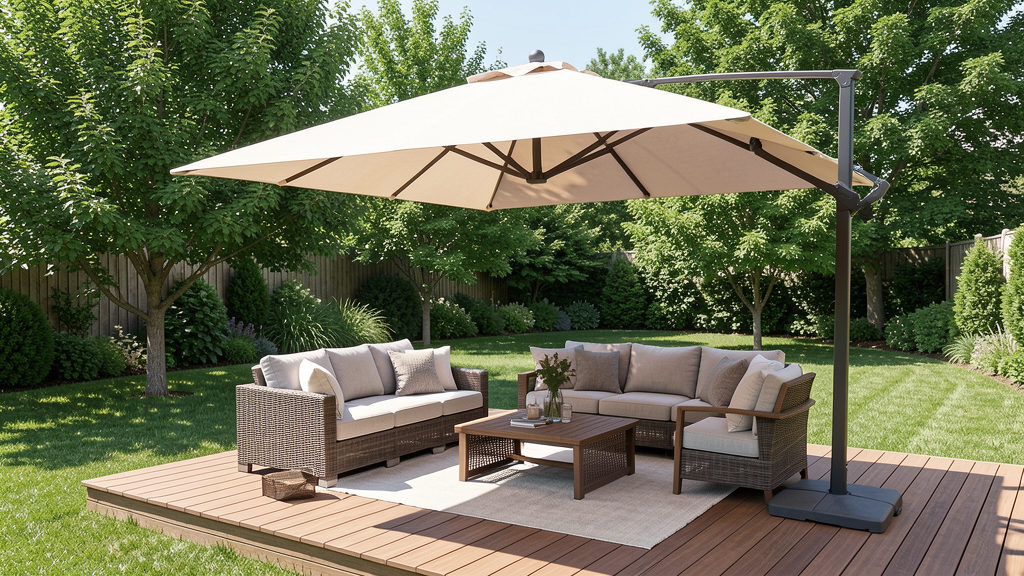
Market umbrellas go through the center of your table and require a weighted base. They’re less expensive and work great for dining setups. Cantilever umbrellas have an offset pole — they hang over the space without touching the table, which gives you more freedom and looks more resort-like. Cost 2–3x more but worth it for lounge areas or larger setups.
If you’re primarily shading a dining table with four to six people, a market umbrella is almost always the right call — it’s easier to set up, easier to find replacement canopies for, and won’t break the budget. Cantilever umbrellas shine when you’re covering a lounge area, a hot tub surround, or any spot where a center pole would be in the way. They’re also the better pick if you want to reposition shade coverage without physically moving furniture.
Top Picks for 2026
1. PURPLE LEAF 10ft Cantilever Patio Umbrella — Best Cantilever
Size: 10 ft | Material: Aluminum pole, Sunbrella-grade fabric | 360° rotation
This is the best-selling cantilever umbrella on Amazon and for good reason. The 360° rotation means you can follow the sun all day. The fabric is fade-resistant and the base (sold separately) is solid once filled with sand or water. Assembly takes about an hour.
This is the best fit for homeowners who want a premium look without a custom build — it suits lounge areas, large dining tables, and pool-deck setups where a center pole just isn’t an option. If you’re furnishing a high-traffic outdoor entertaining space, this is the one to get.
2. ABCCANOPY 9ft Aluminum Market Umbrella — Best Value Market Umbrella
Size: 9 ft | Material: Aluminum pole, polyester canopy | Tilt: Push-button
At under $60, the ABCCANOPY is a best-seller for a reason. Solidly built for the price, easy tilt mechanism, and available in 20+ colors. The polyester fabric won’t last as long as Sunbrella-grade material but it’s a great seasonal option that’s easy to replace.
This is perfect for renters, seasonal users, or anyone who wants solid shade coverage without a major investment. It’s also a smart “first umbrella” if you’re still figuring out how you use your patio — replace the canopy every few seasons or upgrade to Sunbrella once you know what size and placement work best.
3. Sunbrella 9ft Market Umbrella — Best Premium Fabric
Size: 9 ft | Material: Sunbrella acrylic fabric | Fade warranty: 5 years
Sunbrella fabric is the gold standard for outdoor outdoor textiles — it resists fading, mold, and moisture far better than polyester. The 5-year fade warranty is real. Pair with an aluminum or teak pole for a setup that looks great for years. More expensive but cost-per-season is comparable.
This pick is ideal for homeowners who keep their patio furniture year-round and want something that holds its color and structure through multiple seasons. If you’ve bought a budget canopy before and watched it fade and fray within two summers, stepping up to Sunbrella fabric is immediately worth it.
4. Blissun 10ft Large Patio Umbrella with Base — Best Complete Package
Size: 10 ft | Includes: Base | Features: Tilt + crank
For people who want everything in one box, the Blissun 10-footer comes with its own weighted base. The crank open and push-button tilt make daily operation effortless. At 10 feet it covers a 6-person dining table comfortably even at a tilt angle.
Best for buyers who don’t want to source a separate base or research compatibility — this combo ships together, works together, and takes the guesswork out of setup. It’s also a great gift option for a new homeowner who’s building out their patio from scratch.
5. SUNNYGLADE 9ft Heavy-Duty Umbrella — Best Wind Resistance
Size: 9 ft | Wind vents: Double venting | Material: Fiberglass ribs
If you live somewhere with regular afternoon wind, the SUNNYGLADE with double-vented canopy and fiberglass ribs is built for it. The vents let wind pass through instead of catching it, and the fiberglass ribs flex instead of snapping. A meaningful upgrade from the all-aluminum options.
This is the go-to pick for anyone in coastal areas, open plains, or anywhere that sees consistent afternoon gusts. It’s also a smart upgrade for Texas and Southwest patios where summer storms can roll in fast — the vented canopy and flex ribs mean your umbrella survives what other ones don’t.
What Size Do You Need?
For a 4-person dining table, 9 ft is plenty. For 6 people, go 10–11 ft. For a lounger or pool area, a 13-ft cantilever gives you real resort coverage. Always buy a weighted base rated for your umbrella size — undersized bases are the #1 reason umbrellas blow over.
What to Look For When Buying a Patio Umbrella
Shopping for a patio umbrella is more nuanced than just picking a size and color. Here are the factors that actually matter for long-term satisfaction:
Pole Material
Aluminum is the most common and a solid choice — it’s lightweight, rust-resistant, and holds up through seasons without rotting or oxidizing badly. Wood poles (usually teak) look beautiful and are a great premium option but require occasional oiling. Fiberglass poles are the strongest and most flexible, making them the best choice for windy environments. Avoid plain steel poles unless they’re heavily galvanized — they’ll rust.
Canopy Fabric
Polyester canopies are cheap and widely available but fade noticeably after 1–2 seasons in direct sun. Solution-dyed acrylic (Sunbrella being the most recognized brand) is the upgrade worth making — the color is baked into the fibers, not surface-applied, so it resists UV degradation for years. If you’re buying a mid-range umbrella, at minimum look for a canopy with a UV protection rating of 50+ and some kind of water-resistance treatment.
Vent Design
Single-vented canopies allow some airflow and are fine for calm climates. Double-vented canopies are significantly better in windy areas — the second vent creates pressure equalization that prevents the whole umbrella from acting like a sail. If you’ve ever watched an umbrella invert in a gust and damage itself, this is the feature that prevents it. For any patio that sees regular afternoon wind, double-vent is non-negotiable.
Base Weight and Stability
The base is the most under-appreciated part of any patio umbrella setup. A 9-ft market umbrella needs at least 50 lbs of base weight; a 10-ft cantilever can require 150+ lbs. Fillable plastic bases (sand or water) are popular but check the actual filled weight rating. Concrete-filled steel bases are heavier and more stable but less portable. When in doubt, go heavier — a tipped umbrella can damage furniture, hurt guests, or simply ruin the canopy.
Frequently Asked Questions
How do I stop my umbrella from blowing over?
The most common fix is adding more base weight. Most people underestimate how much weight a patio umbrella needs — especially on days with afternoon gusts. Use a fillable base and make sure it’s completely full of sand (heavier than water). For cantilever umbrellas, consider anchoring the base to a concrete pad or using a specially rated cantilever base with a cross-foot design. You can also tie the ribs together when it’s closed on windy days.
What’s the difference between a tilt and a rotating umbrella?
A tilt mechanism lets you angle the canopy to block the sun at different times of day without moving the base. Push-button tilt is the most common and easiest to use; crank-tilt is slightly more precise. A rotating umbrella (most common in cantilever designs) lets you swing the entire canopy 360° around the pole — far more flexible and the better option when you need to reposition shade throughout the day without adjusting the base.
Can I leave my patio umbrella out year-round?
It depends on climate and fabric. Sunbrella and other solution-dyed acrylics handle UV, rain, and light frost very well. That said, no umbrella should stay open during heavy wind or storms — close it and strap it down. In harsh winter climates, removing the canopy and storing the pole flat or upright in a garage dramatically extends the umbrella’s life. At minimum, use a breathable canvas storage bag to protect the canopy from mold and UV between uses.
How do I clean a faded or mildewed canopy?
For general dirt and dust, a mild soap-and-water scrub followed by a rinse works fine. For mildew, a solution of 1 cup bleach and 1/4 cup mild dish soap per gallon of cold water is the standard fix — apply, let it sit 15 minutes, scrub gently, rinse thoroughly. For Sunbrella fabric, the manufacturer specifically approves this bleach method without damaging the material. Never machine wash a canopy or put it in a dryer — the heat degrades the UV coating and can warp the seam tape.
What’s the best umbrella for a hot climate like Texas?
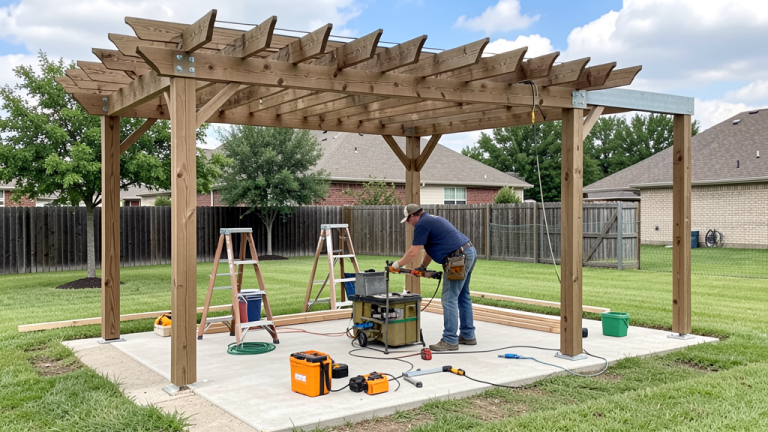
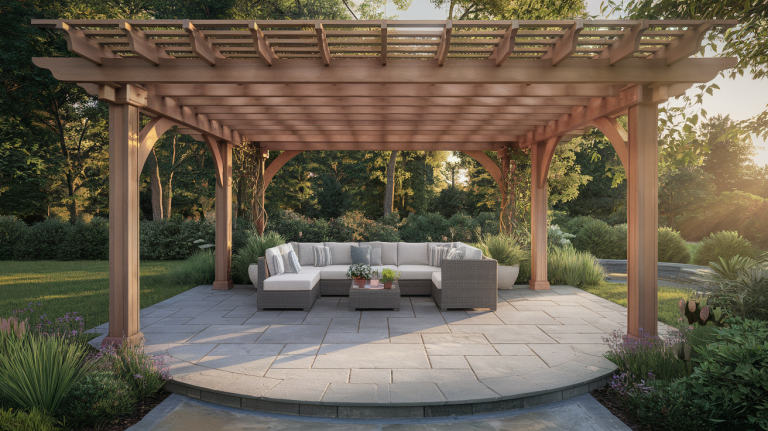
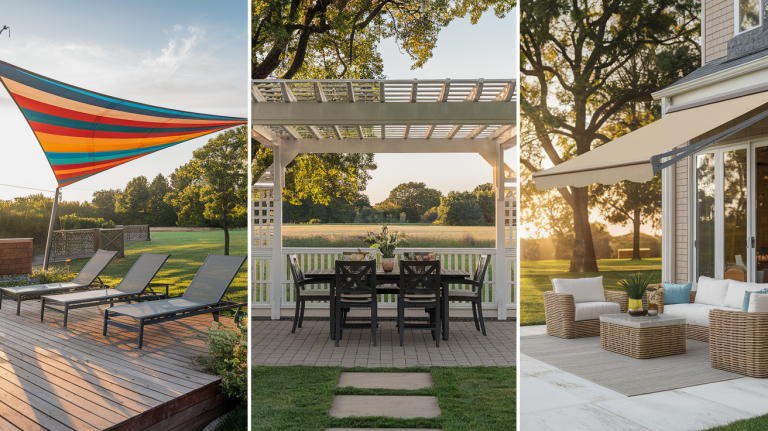
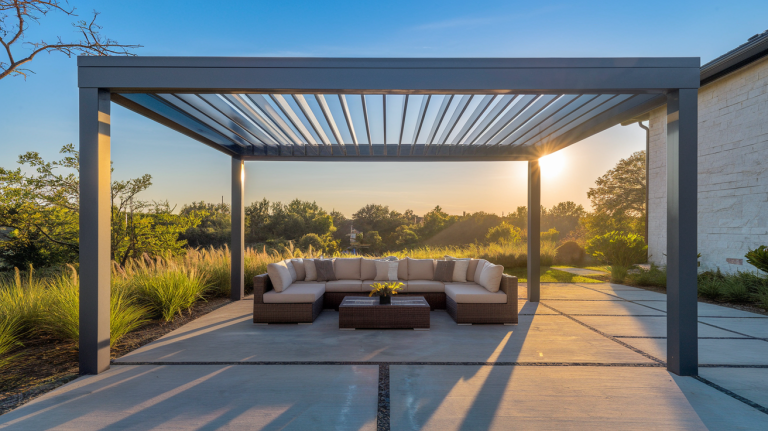
In Texas and the Southwest, UV resistance, wind tolerance, and overall structural durability matter more than anywhere else. You want a solution-dyed acrylic canopy (at minimum 50 UPF), fiberglass or aluminum ribs, and a double-vented design. The SUNNYGLADE wind-resistant option and any Sunbrella-fabric model on this list are both strong choices. If you’re in DFW, Austin, or Southern Oklahoma, also consider a professional shade structure consultation — sometimes a pergola with a shade sail provides better coverage than any umbrella for large outdoor areas.
Bottom Line
The right patio umbrella comes down to three decisions: market vs. cantilever, fabric quality, and base weight. Get the type wrong and you’ll constantly be working around a pole or missing coverage. Skimp on fabric and you’ll be replacing it in two seasons. Underestimate base weight and you’ll be chasing it across the yard on a windy day. Start with the ABCCANOPY if you’re budget-conscious and just need reliable shade. Step up to a Sunbrella canopy model or the PURPLE LEAF cantilever if you’re furnishing a space you plan to love for years. Either way, the right umbrella transforms how much you actually use your outdoor space — and that’s the whole point.
Related Guides
🌿 Need Professional Installation in Texas?
If you’re in the DFW, Austin, or Southern Oklahoma area, Cabana Theory specializes in premium shade structures — pergolas, shade sails, retractable awnings, and custom outdoor living builds. Professional installation, top-tier materials, designed for the Texas heat.
Disclosure: This post contains affiliate links. As an Amazon Associate and Vevor affiliate, Cabana Culture earns from qualifying purchases at no extra cost to you. See our full affiliate disclosure.