Biophilic Backyard Design — How to Create a Calming Outdoor Sanctuary
Biophilic backyard design reconnects your outdoor space to the natural world using plants, water, natural materials, and sensory elements that reduce stress and restore focus. The result isn’t just a pretty yard — it’s a genuine retreat that delivers real psychological benefits backed by environmental psychology research.
If your backyard feels like a chore rather than a sanctuary, this guide walks you through the specific plants, features, materials, and products that make biophilic design work — from $30 planters to full water features.
What Is Biophilic Design (and Why Your Backyard Needs It)
Biophilia literally means “love of living things.” In design terms, it’s the practice of weaving natural elements into built environments to satisfy our hardwired need for connection to nature. Studies from the University of Exeter found that people living near green spaces report significantly lower mental distress. Rachel and Stephen Kaplan’s Attention Restoration Theory shows that natural environments help the brain recover from directed-attention fatigue — the kind of depletion you feel after hours of screens and decisions.
Your backyard is arguably the easiest place in your life to apply these principles. You don’t need a landscape architect or a big budget. You need intention and the right materials.
Biophilic backyard design has six core pillars:
- Living plants — the foundation of any biophilic space
- Water elements — moving water engages the senses and masks noise
- Natural materials — wood, stone, rattan, bamboo over plastic and metal
- Sensory layering — sound, scent, texture, light, and temperature variation
- Shelter and prospect — defined, sheltered areas with views outward
- Biodiversity — birds, pollinators, and wildlife invited in
Start with a Plant Strategy, Not Just Random Pots
The biggest mistake homeowners make with biophilic design is buying plants impulsively and scattering them around. A sanctuary requires layering — tall canopy, mid-height structural plants, and low ground-level coverage working together.
Canopy Layer: Create a Green Ceiling
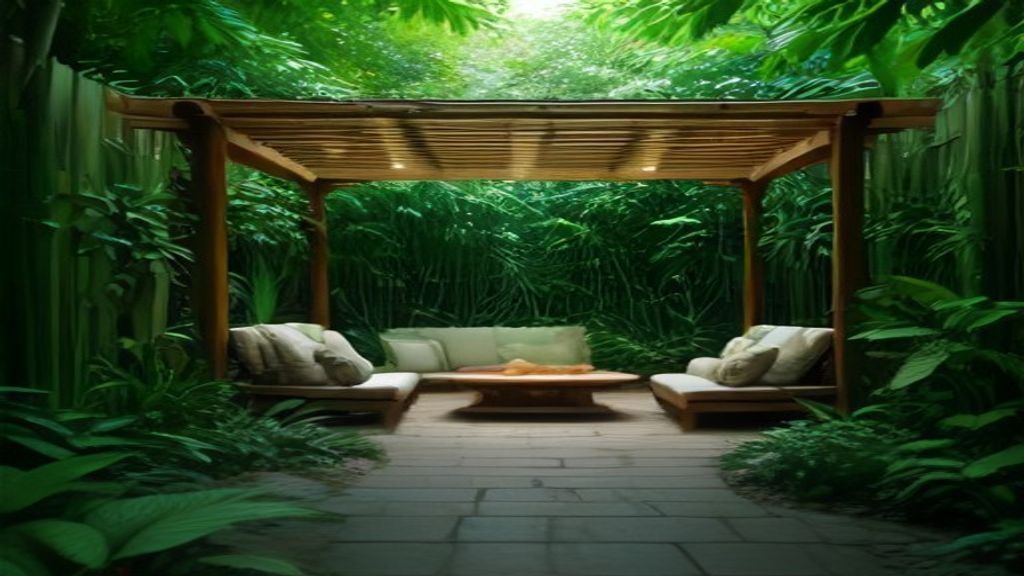
A natural pergola draped in climbing plants does two things at once: provides shade and creates the enclosed, sheltered feeling that’s central to biophilic shelter design. Wisteria, climbing hydrangea, and clematis are the workhorses here.
For the structure itself, a cedar or wood pergola is dramatically more effective than aluminum for biophilic design because it weathers naturally and supports climbing plants better. The cedar pergola kits on Amazon range from $800–$2,500 for DIY-friendly options. If you’re comparing structure types, our post on shade sails vs. pergolas vs. retractable awnings breaks down what works best for different yard sizes.
For climbing plants, the Wisteria Blue Moon variety is cold-hardy to Zone 4 and blooms multiple times per season. Pair it with a cedar lattice panel for immediate structure while the vine establishes.
Mid-Layer: Privacy Walls from Bamboo and Tall Grasses
Bamboo is the fastest-growing privacy plant on the planet, but running bamboo will take over your yard. Stick with clumping varieties — Fargesia rufa (Fountain Bamboo) stays contained, grows to 8 feet, and sways beautifully in breeze. For containers on a patio, container clumping bamboo works well in large 25-gallon pots.
Ornamental grasses like Karl Foerster Feather Reed Grass (Calamagrostis x acutiflora) grow 5–6 feet tall and rustle audibly in wind — that sonic texture is a key biophilic element. Plant them in drifts of 3–5 for visual impact.
For large planters that can handle mature bamboo or tall grasses, VEVOR makes excellent heavy-duty raised garden beds and large planters: VEVOR raised garden planters are galvanized steel and hold up far better than plastic over time.
Ground Layer: Texture Underfoot Matters
Avoid a monoculture lawn under your sanctuary area. Ground-level biophilic design uses varied textures: a mix of decomposed granite, stepping stones, creeping thyme between pavers, and low ornamental plants like hostas, ferns, and mondo grass.
Creeping thyme releases fragrance when walked on — that’s sensory layering at its simplest and most effective. Creeping thyme plugs are inexpensive and establish quickly between flagstone pavers.
Water Features: The Single Biggest Impact Element
Moving water is the most powerful biophilic tool available to a homeowner. It masks urban noise, activates the auditory sense, reflects light dynamically, and attracts birds and beneficial insects. Research from the Blue Mind Movement (Dr. Wallace J. Nichols) consistently shows that proximity to water — even small features — measurably reduces cortisol levels.
Fountain Options by Budget
Entry level ($50–$150): A self-contained tabletop or pedestal fountain is the fastest way to add moving water. The Kenroy Home outdoor stone fountains and the Alpine Corporation tiered basin fountain are perennial bestsellers. Look for models with adjustable flow pumps and include a UV-resistant finish.
Mid-range ($300–$800): A millstone or urn fountain with a recirculating pump gives you the sound of flowing water without a pond to maintain. VEVOR also carries compact water feature kits: VEVOR garden water fountains offer solid value for larger patio installations.
High-end ($1,500+): A pondless waterfall or stream bed using natural boulder stone. This requires a professional installer but produces the most naturalistic result. The sound profile of water tumbling over real stone is categorically different from a pump-driven fountain — it’s broadband white noise rather than a single-tone drip.
Bird Baths as Dual-Purpose Water Features
A quality heated pedestal bird bath (important if you’re in Zones 5–7 for year-round use) serves as a water feature and actively invites avian visitors. The Allied Precision Industries heated bird bath runs year-round and keeps water from freezing down to -20°F.
Position your bird bath 10–15 feet from dense shrubs so birds can escape predators, and within view of your primary seating area so you actually get the viewing benefit.
Natural Materials: What to Use and What to Avoid
Biophilic design lives and dies on material authenticity. Plastic Adirondack chairs and vinyl fencing immediately undercut the natural atmosphere you’re building. Here’s a practical material hierarchy:
Seating and Furniture
Teak: The gold standard for outdoor wood furniture. Teak naturally contains oils that repel water and insects, and it weathers to a silver-gray patina that actually looks more beautiful over time. The teak outdoor bench from brands like Amazonia or TRDX is a long-term investment that a biophilic sanctuary earns back in daily use.
FSC-Certified Eucalyptus: A more affordable alternative to teak with similar durability. Eucalyptus furniture maintains the natural wood aesthetic without the teak price point.
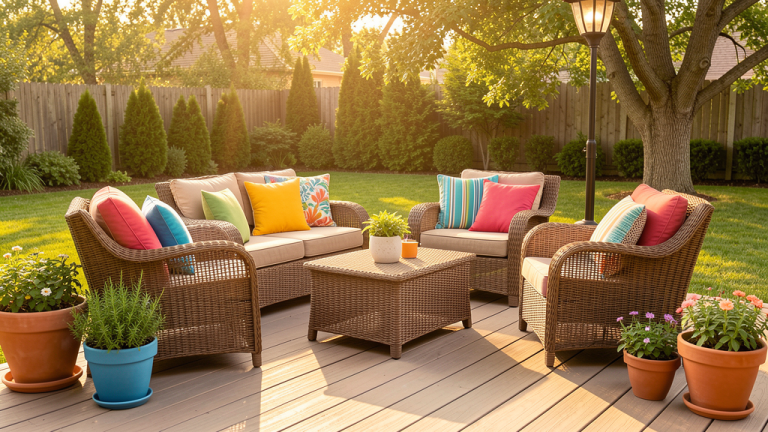
Rattan/Wicker with all-weather resin cores: Visually organic while being weather-resistant. Avoid natural rattan in wet climates — it molds. Synthetic resin wicker over aluminum frames (all-weather wicker outdoor sets) offer the biophilic aesthetic with practical durability.
Flooring and Pathways
For a true biophilic floor, consider:
- Flagstone or irregular stepping stones — natural variation in stone is more calming than perfect uniformity
- Decomposed granite with stabilizer — permeable, natural-looking, low maintenance
- Ipe or cedar decking — hardwood decks warm up in sun and smell like a forest when wet
- Gravel with moss pockets — Japanese garden influence, minimal maintenance
For a budget-friendly deck upgrade, composite decking in earthy tones (not gray) can approximate the look. Check our guide on pet-friendly backyard design for patio surface options that work for families with dogs too.
Sensory Layering: Sound, Scent, Texture, and Light
A true sanctuary engages all five senses. Most homeowners nail visual beauty but forget the others.
Scent: Plant a Fragrance Garden
Scent is the most emotionally powerful of the senses — it connects directly to the limbic system and bypasses cognitive filtering. These plants deliver meaningful fragrance without overwhelming a small space:
- Gardenia jasminoides — evening fragrance, stays under 4 feet
- Lavender (Hidcote variety) — calm-inducing, drought-tolerant, attracts bees
- Chocolate mint in containers — keeps it contained, releases scent when touched
- Star jasmine (Trachelospermum jasminoides) — climbing vine with intense sweet fragrance
- Roses (David Austin shrub roses) — modern disease resistance, old-fashioned fragrance
Place fragrant plants along pathways and beside seating — anywhere you’ll brush against them or sit near them in the evening.
Sound: Beyond the Water Feature
Wind chimes are divisive, but the right material matters enormously. Bamboo wind chimes produce a soft, percussive sound that reads as natural. Metal chimes tend toward a more industrial tone. Large bamboo wind chimes in the 36–48 inch range produce a deeper, more resonant sound that blends with garden ambiance rather than punctuating it.
Beyond chimes, planting ornamental grasses near your seating area creates passive sound as wind moves through them. This is far more effective than most people realize.
Lighting: Mimic Natural Light Patterns
Harsh overhead lighting destroys biophilic atmosphere immediately. The goal is to layer low-level ambient light that mimics moonlight and firefly patterns.
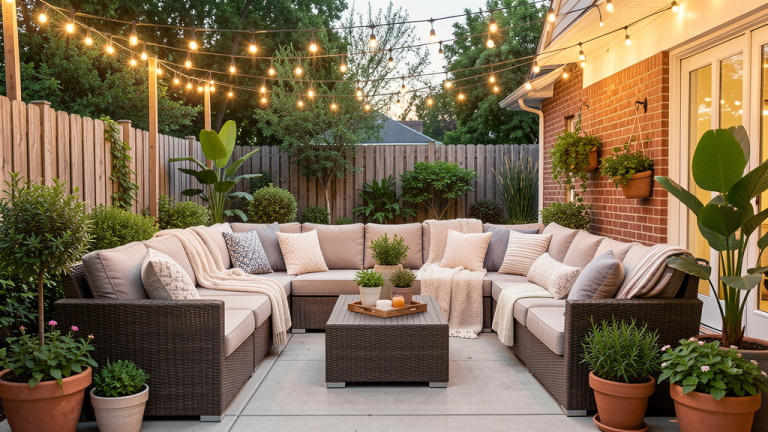
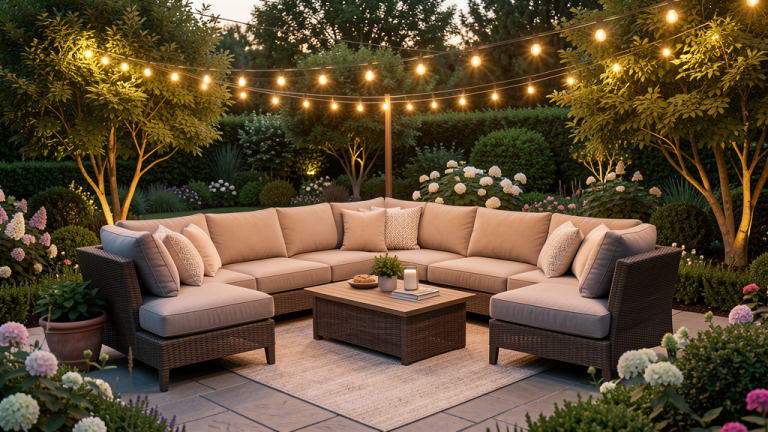
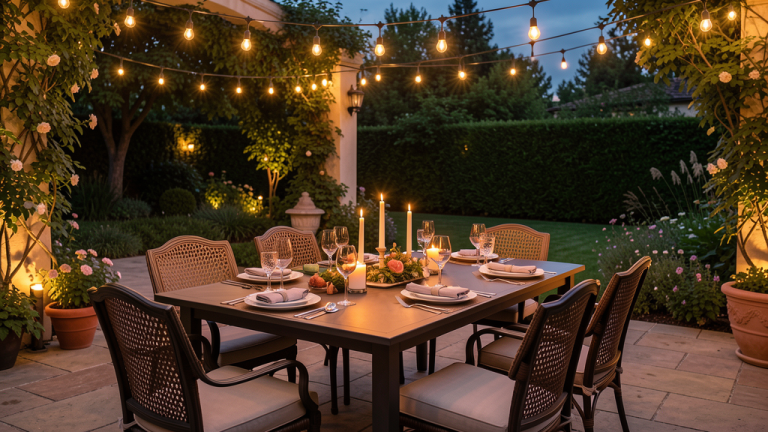
String lights: Warm white (2700K or lower) Edison-style bulbs over a pergola or between posts. Outdoor cafe string lights in the 48-foot range cover most patios and create instant atmosphere. Avoid cool white or blue-toned LEDs — they disrupt circadian rhythm and feel institutional rather than natural.
Ground-level path lights: Solar-powered stake lights along pathways keep guests safe while keeping the light source low and warm. The Solpex 8-pack solar pathway lights are a reliable budget option.
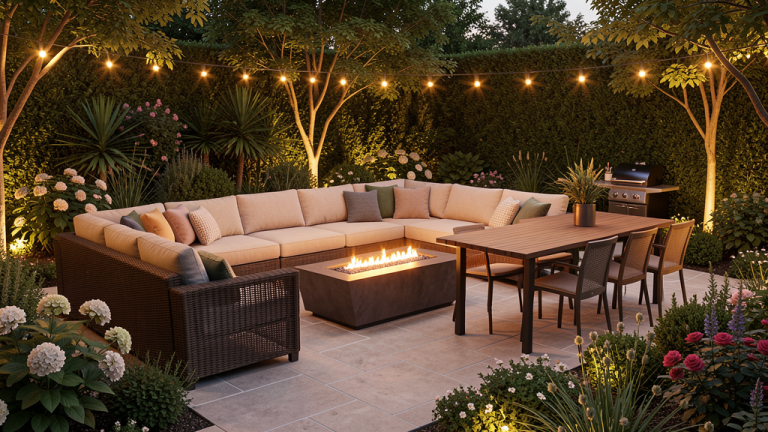
Candles and fire features: Nothing replicates the circadian warmth of real fire. A well-placed fire pit or tabletop fire bowl integrates a primal biophilic element — fire. Our detailed breakdown of outdoor patio heaters and fire features covers both functional heating and ambiance options.
Shelter and Prospect: The Psychology of Space
Environmental psychologist Jay Appleton’s Prospect-Refuge Theory explains why humans feel most comfortable in spaces that offer both outlook (prospect) and shelter (refuge). Think of how instinctively comfortable a booth at a restaurant feels versus an exposed table in the center of the room.
Your backyard sanctuary should have a defined “refuge” area — typically a pergola, gazebo, or large tree canopy — with views outward into the garden. This can be as simple as positioning your seating under a pergola that opens onto the rest of the yard, rather than having chairs scattered randomly in the open.
Creating Enclosed Seating Areas
Vertical elements that create the sense of enclosure without full walls:
- Trellises with climbing plants on two or three sides — creates walls without blocking air
- Outdoor curtains or shade sails — can be drawn closed or left open depending on mood
- Tall ornamental grasses or bamboo in large containers — mobile walls
- A pergola with lattice sides partially covered in vine — overhead shelter + partial enclosure
For privacy screens that double as plant supports, VEVOR’s metal garden screens and trellises are heavy-duty enough for mature climbing plants: VEVOR metal garden privacy screens.
Attracting Biodiversity: Birds, Bees, and Butterflies
A sanctuary feels alive because it is alive. Planting for pollinators and birds transforms your backyard from a static space into a dynamic ecosystem you can observe and participate in.
Pollinator Plant Palette
The most effective pollinator plants for most of North America:
- Coneflower (Echinacea purpurea) — feeds bees, butterflies, and goldfinches
- Black-eyed Susan (Rudbeckia hirta) — easy, drought-tolerant, long bloom
- Bee balm (Monarda) — hummingbirds go wild for it
- Joe Pye Weed — underrated, 6-foot tall, covered in monarch butterflies in late summer
- Native milkweed — essential monarch habitat
Nesting and Habitat Features
A mason bee house installed on a south-facing fence post introduces native pollinators without the management demands of a beehive. Mason bees are non-aggressive and dramatically more efficient pollinators than honeybees — a single mason bee pollinates as much as 120 honeybees.
For birds, layer feeding stations at different heights: ground feeders for towhees and sparrows, mid-height tube feeders for finches and chickadees, and platform feeders for larger birds like cardinals and blue jays. Multi-station bird feeder poles let you offer different foods at different heights from a single anchored post.
Putting It All Together: A Biophilic Backyard Layout
Here’s a practical layout framework that works for a typical 20×30 foot backyard patio area:
Zone 1 — Refuge (10×12 ft): Pergola or shade sail overhead. Teak or rattan seating for 4. String lights above. Bamboo or tall grasses on two sides for enclosure. Fountain nearby for sound. This is your primary sanctuary anchor.
Zone 2 — Sensory Garden (6×10 ft): Raised beds or in-ground planting with fragrant herbs, lavender, and roses along the edges. Pathstone walkway through it. Fragrant plants at nose-height (container lavender on a shelf, for example).
Zone 3 — Wildlife Habitat (8×8 ft): Native pollinator plants in naturalistic drifts. Bird bath. Mason bee house on fence. Allow some organized “messiness” — overly manicured spaces support fewer species.
Zone 4 — Transition: Ground cover plants, decomposed granite or stepping stones linking the zones. Soft solar path lighting. This is where a water feature works especially well if not in Zone 1.
Biophilic Design on a Budget: $500 Transformation Plan
You don’t need to spend thousands. Here’s a realistic $500 budget that delivers genuine biophilic impact:
| Item | Est. Cost |
|---|---|
| Small recirculating water fountain | $80 |
| String lights (48 ft warm white) | $35 |
| 3x clumping bamboo in containers | $90 |
| Lavender, coneflower, black-eyed Susan flats | $60 |
| Creeping thyme ground cover | $25 |
| Bamboo wind chimes | $30 |
| Mason bee house + bird bath | $65 |
| Stepping stone path (10 stones) | $50 |
| Potting mix and soil amendment | $45 |
| Miscellaneous (hooks, plant ties, stakes) | $20 |
| Total | $500 |
This covers all six biophilic pillars at a starter level and creates a meaningfully different outdoor experience than a bare patio. Scale up from here as budget allows.
Seasonal Maintenance for a Living Sanctuary
Biophilic spaces require more maintenance than hardscape-only patios, but far less than most people fear. The key is choosing low-maintenance plants and building care into your routine rather than doing marathon sessions twice a year.
Spring: Cut back ornamental grasses to 4-6 inches. Divide perennials that have spread. Refresh mulch in planting beds. Clean and restart water features. Check fountain pump impellers for debris.
Summer: Water deeply and infrequently (encourages deep root growth). Deadhead spent blooms on coneflowers and bee balm to extend flowering. Keep bird baths clean — stagnant water breeds mosquitoes.
Fall: Leave seed heads on native plants for birds. Cut some stems for mason bee overwintering habitat. Plant spring-flowering bulbs for early-season pollinators. Bring tender plants (citrus, tropicals) indoors before first frost.
Winter: A heated bird bath keeps your sanctuary active and your connection to nature continuous even in cold months. The birding action in winter is often the best of the year as migratory birds pass through.
If your backyard doubles as a workspace, our outdoor home office setup guide has tips on making a biophilic garden compatible with a functional work-from-home space.
Frequently Asked Questions
What is the easiest biophilic element to add to a small backyard?
A small recirculating water fountain combined with 2–3 fragrant container plants gives you the biggest biophilic return for the least space and investment. Moving water engages sound and sight simultaneously, and fragrant plants activate the most emotionally powerful sense. You can execute this for under $150 in an afternoon.
Do I need a landscape designer for biophilic design?
No. The principles are straightforward and the plants are available at any garden center. A designer helps if you have a large, complex yard or want a fully integrated water feature, but the core pillars — plants, water, natural materials, sensory layering — are all DIY-accessible.
Is biophilic design the same as a Japanese zen garden?
Overlapping but different. Zen gardens use biophilic principles (natural stone, raked gravel, carefully placed plants) but are also specifically about minimalism and contemplation. Biophilic design is broader — it can be lush and layered rather than minimal. A cottage garden can be deeply biophilic; a sparse zen garden can also be biophilic. The common thread is intentional connection to natural elements.
What plants are best for biophilic design in hot climates like Texas or Arizona?
In hot climates, lean on native and adapted plants: Texas sage (Leucophyllum), agave, desert willow, vitex, lantana, and ornamental grasses like Gulf Muhly. Water features are even more important in hot climates for cooling and ambient sound. A misting system can be layered in as well — our post on the best patio misting systems covers the options in detail.
How long does it take for a biophilic backyard to look established?
Most perennial plants reach visual maturity in 2–3 seasons (“sleep, creep, leap” is the nursery saying). Bamboo clumps fill in within 2 years. Climbing vines reach meaningful coverage in 2–4 years depending on species. Water features and lighting are instant. Expect a genuinely established sanctuary feel by year 3, with the space continuing to improve for years beyond that.
Can biophilic design work on an apartment balcony?
Yes, with container plants, a small tabletop fountain, string lights, and fragrant herbs in window boxes. Scale down all the principles — a single large container bamboo, a small recirculating fountain, two or three scented plants, and warm lighting transforms even a small balcony into a genuine micro-sanctuary.
Disclosure: This post contains affiliate links. If you purchase through these links, we may earn a small commission at no extra cost to you. We only recommend products we genuinely believe in.