Best Misting Systems for Patios 2026 — Stay Cool All Summer
The best patio misting systems for 2026 are high-pressure brass-nozzle setups that operate between 800–1,000 PSI — they flash-evaporate water before it reaches you, dropping ambient temperatures by 20–30°F without leaving you damp. For most homeowners, a 25–50 foot misting line with a dedicated pump unit is the sweet spot between performance and price.
Whether you’re trying to make a sun-blasted Texas patio bearable in August or just extend your outdoor entertaining season by a few weeks on either end, a quality misting system is one of the highest-ROI upgrades you can make. Here’s what actually works, what doesn’t, and the specific products worth buying.
How Patio Misting Systems Work (And Why Pressure Matters)
All misting systems force water through tiny nozzles to create a fine spray. The difference is what happens next. Low-pressure systems (40–60 PSI, basically your garden hose) produce larger droplets that land on you and your furniture — cooling, sure, but you’ll feel wet. Mid-pressure systems (160–250 PSI) need a booster pump and get closer to true flash evaporation. High-pressure systems (800–1,000 PSI) use a dedicated pump to atomize water into droplets so fine (10–15 microns) they evaporate in less than a second of air contact.
For permanent patio installations where you want actual dry cooling, high-pressure is the right answer. For a temporary fix on a screened porch or a quick solution on a camping trip, low-pressure kits work fine.
Evaporative Cooling Efficiency by System Type
- Low-pressure (hose-fed): 5–10°F drop, noticeable wetness
- Mid-pressure (booster pump): 10–20°F drop, slight moisture
- High-pressure (dedicated pump): 20–35°F drop, no noticeable wetness
Humidity plays a role too. In Phoenix in July (10% relative humidity), you’ll get the full 30°F drop. In New Orleans in August (85% RH), you’ll get half that and more wetness. High-pressure systems still outperform in humid climates — they just don’t perform quite as dramatically.
Best High-Pressure Patio Misting Systems
1. HESSAIRE MC37M + Standalone Misting Line (Best for Covered Patios)
For large covered patios up to 700 square feet, pairing a dedicated misting pump with a brass nozzle line is the gold standard. The HESSAIRE MC37M portable evaporative cooler is a workhorse unit that moves 3,100 CFM and pairs well with a fixed misting perimeter.
For the misting line itself, the Orbit 20066 Brass Misting System is a reliable 26-nozzle kit that installs in a few hours with basic tools. It connects to a standard hose bib and works acceptably at low pressure — or significantly better with a booster pump.
2. MistyMate Cool Patio 20 (Best Budget Low-Pressure Pick)
If you just need something that works without any pump investment, the MistyMate Cool Patio 20 is the most popular entry-level misting kit on the market for a reason. It’s a 20-foot stainless-steel nozzle line that attaches to any standard garden hose. No pump, no installation headaches. You’ll feel some moisture on humid days, but on dry summer afternoons it’s genuinely refreshing.
It’s also a great temporary option for pool decks, outdoor dining, or kids’ play areas where occasional fine mist isn’t a problem.
3. Kohler Moxie Misting Fan (Best Fan-Mister Combo)
Fan-mister combos are the right call when you want targeted cooling for a specific seating area rather than a whole perimeter. Freestanding units that combine an oscillating fan with a misting ring give you both convective and evaporative cooling.
4. VEVOR Patio Misting System Kits (Best Value Mid-Pressure Setup)
VEVOR makes surprisingly solid misting hardware at a price point that’s hard to argue with. Their misting system kits include adjustable brass nozzles, UV-resistant tubing, and all the fittings you need. If you’re running a booster pump setup on a budget, this is where to start.
VEVOR’s nozzle kits run 30–50% less than comparable name-brand setups and hold up well in full-sun installations.
Best Misting System Pump Units
If you want genuine high-pressure performance, you need a dedicated pump. The pump pressurizes your line to 800–1,000 PSI, giving you true flash-evaporative misting. These are permanent installations — typically mounted on an exterior wall or inside a weatherproof enclosure.
1. Cool-Off Ultra Misting Pump (1,000 PSI)
The Cool-Off Ultra Pump is the residential standard for high-pressure misting. It’s quiet, runs on standard 120V, and includes a variable pressure dial so you can tune performance for your local humidity. Installation requires connecting to your home’s water supply (3/8″ OD tubing) and a weatherproof electrical outlet.
2. Mist King Starter/Intermediate Systems
Originally designed for reptile enclosures but widely adopted for residential patios, Mist King pumps are known for reliability and quiet operation. The Intermediate System handles up to 16 nozzles at 160 PSI — not true high-pressure, but a major step up from hose-fed systems without the $400+ cost of a full 1,000 PSI pump.
Misting Line Materials: Stainless, Brass, or Plastic?
The nozzles are where quality matters most. Here’s how materials break down:
| Material | Lifespan | Performance | Cost |
|---|---|---|---|
| Brass | 10+ years | Best (no clogging) | $$ |
| Stainless steel | 7–10 years | Very good | $$ |
| Plastic | 2–3 years | Adequate | $ |
Brass nozzles resist mineral deposits better than stainless, which resists them better than plastic. If you’re on hard water (most of the US Southwest), brass nozzles with a filter before the pump will save you significant maintenance time over the years.
For tubing, look for UV-resistant polyethylene or stainless-steel flex lines. Standard clear vinyl degrades quickly in direct sun, causing cracking and leaks within a season.
Installation: What You Actually Need to Know
Low-Pressure (Hose-Fed) Installation
These are genuinely plug-and-play. Attach the supply line to your hose bib, mount the misting tubing with the included clips along your pergola beam, patio cover, or fence, and turn on the water. Done in 30 minutes.
The only variable: water flow rate. Most residential hose bibs supply 2–5 GPM. A 20-nozzle low-pressure system at full flow uses about 0.5 GPM — well within range.
High-Pressure System Installation
This is a half-day project for someone comfortable with basic plumbing:
- Mount the pump unit near an exterior wall (ideally in a shaded, weatherproof spot)
- Run 3/8″ OD high-pressure tubing from the pump to your patio perimeter
- Install nozzles at 18–24 inch spacing along the perimeter tubing
- Add a sediment filter between your water supply and the pump
- Connect to a dedicated 20-amp circuit (most pump units draw 4–8 amps)
- Flush the system for 5 minutes before the first pressurized run
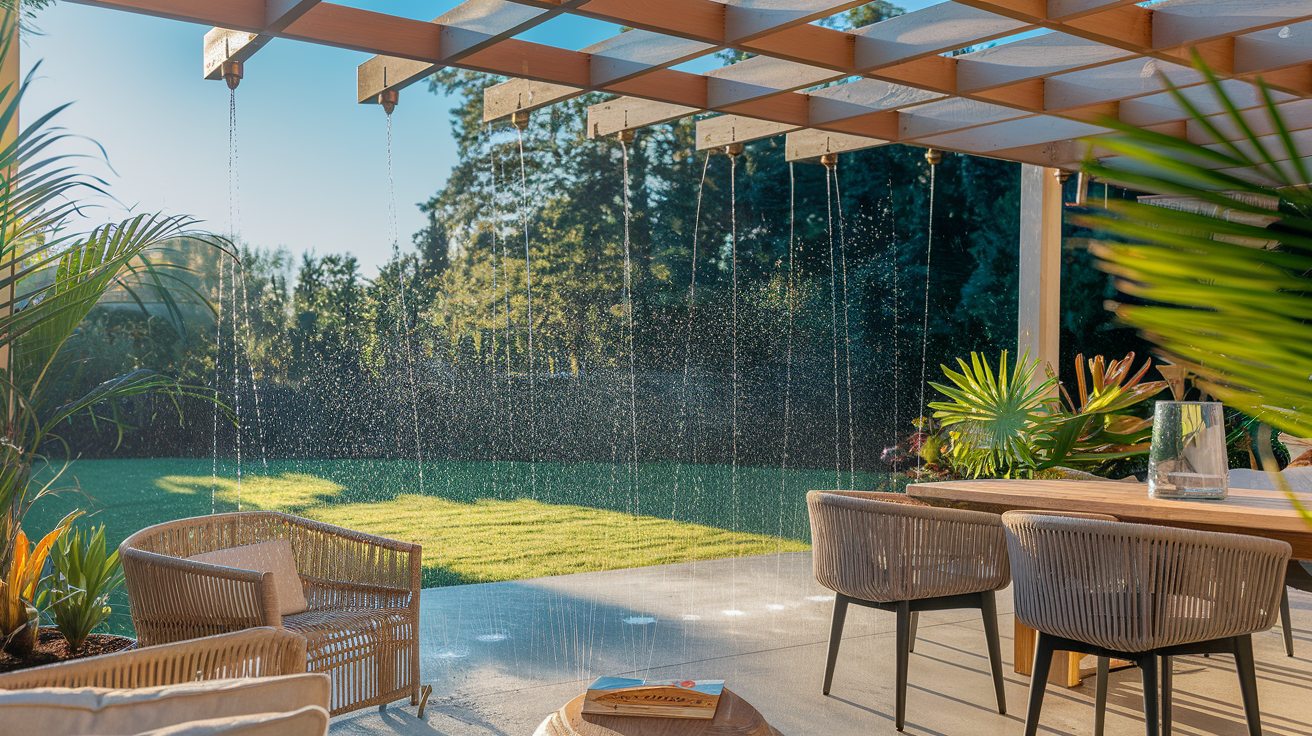
If you’re mounting nozzles on a pergola or shade structure, keep them at 8–10 feet above the ground for optimal mist dispersion. Lower mounting creates wetter mist that doesn’t evaporate before reaching seated guests.
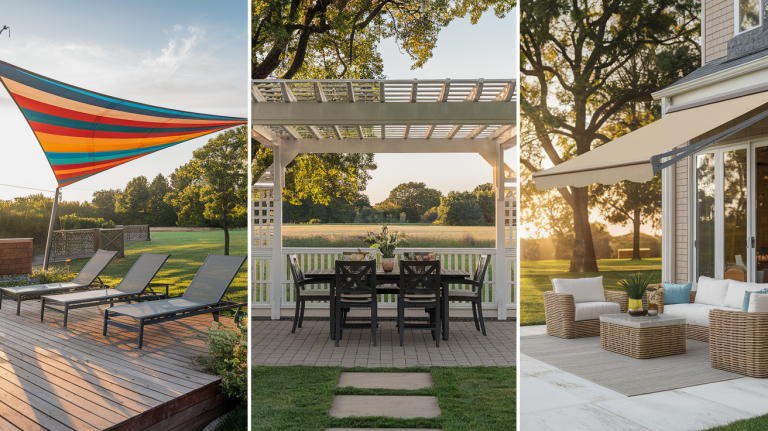
If you’re still planning your shade structure, check our guide to shade sails vs. pergolas vs. retractable awnings — the structure you choose affects where and how you’ll run your misting line.
Smart Misting: Timers, Automation, and Wi-Fi Controls
Running your misting system manually wastes water and means you forget to turn it on. Adding automation is cheap and makes a meaningful difference in both water use and convenience.
Basic Timer Control
A standard hose timer — the kind you use for irrigation — works perfectly for low-pressure systems. Set it to run during peak heat hours (11 AM–4 PM) and forget about it. Digital hose timers with multiple programs cost under $30.
Smart Valve Integration
For high-pressure systems, add a Melnor WiFi AquaTimer or similar smart valve between your water supply and the pump. Pair it with IFTTT to trigger your misting system when outdoor temperature exceeds 90°F — fully automated, no manual intervention needed.
For a full smart outdoor setup, pair your misting system with the outdoor lighting and climate controls we cover in our Best Smart Outdoor Lighting Systems 2026 post — everything runs through a single app.
Misting System Maintenance: Annual Checklist
High-pressure misting systems are low-maintenance if you stay ahead of mineral deposits and UV degradation. Here’s what to do before and after each season:
Spring Startup
- Replace the sediment filter cartridge (do this every season — a clogged filter kills pumps)
- Inspect all nozzles; remove any that show white mineral crust and soak in white vinegar for 30 minutes
- Check all tubing connections for leaks; re-tighten compression fittings if needed
- Flush the full system at low pressure before running the pump
Fall Winterization
- Drain all water from the tubing by removing end caps and blowing through with compressed air
- Remove and store brass nozzles indoors — they can crack from ice expansion
- Cover or remove the pump unit if temperatures drop below freezing
- Disconnect water supply and leave valves open to prevent trapped water from freezing
Mineral deposits are the top maintenance issue in hard-water areas. Consider a whole-house water softener or at minimum a sediment + carbon filter upstream of your misting system — it dramatically extends nozzle life.
Water Usage: What to Expect on Your Water Bill
This is a question almost no buying guide answers directly. Here are real numbers:
- Low-pressure 20-nozzle kit: ~0.4–0.6 GPM = about 24–36 gallons per hour
- High-pressure 20-nozzle kit: ~0.15–0.25 GPM = about 9–15 gallons per hour
High-pressure systems are actually more water-efficient because the fine mist evaporates completely — no runoff, no pooling. If you run your system 6 hours a day, 90 days a year:
- Low-pressure: ~16,200 gallons/season (~$65–80 additional water cost at average US rates)
- High-pressure: ~6,750 gallons/season (~$27–33 additional water cost)
For most households, the annual water cost of running a patio misting system is $30–80 — easily justified against a cooling bill difference of two to three times that.
Misting Systems for Specific Patio Types
Open Wood Deck Pergola
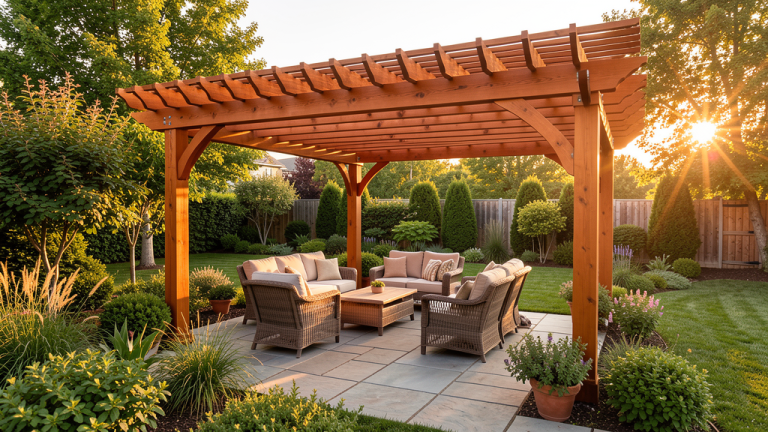
Install nozzles on the underside of the pergola beam at 8–10 feet height. Use anti-drip nozzles — they seal when pressure drops so water doesn’t drip on your deck boards between cycles. Anti-drip nozzles cost a few dollars more but are absolutely worth it for wood decks.
Covered Patio or Porch
Covered patios benefit most from misting because the shade keeps the misted air cooler longer. Mount nozzles at the perimeter of the overhang pointing slightly inward and downward. A timer that runs the system in 10-minute intervals with 20-minute breaks performs better than continuous operation.
Poolside Deck
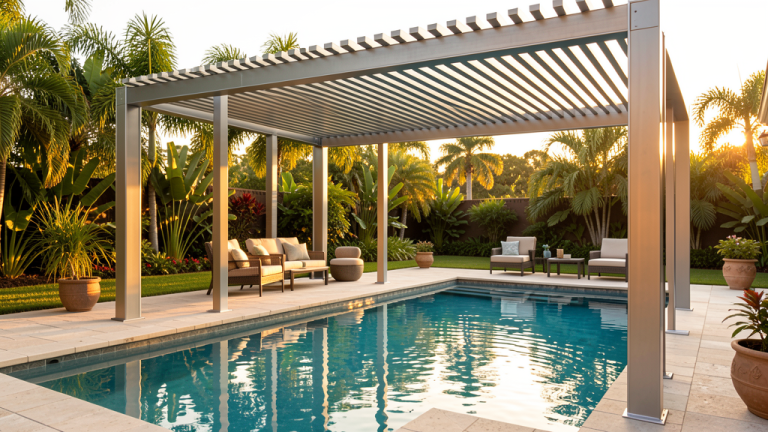
Misting around a pool is actually a great combination — ambient temperature drops while the pool itself stays refreshing. Use corrosion-resistant stainless or brass nozzles only (chlorine vapor accelerates aluminum oxidation). Aim nozzles away from the pool itself to avoid adding to chemical dilution.
For more on the full poolside setup, check out our guide to poolside pergola ideas for 2026.
Restaurant or Commercial Patio
Commercial applications need a pump rated for continuous-duty operation and larger-diameter supply lines (1/2″ vs. 3/8″). Look for stainless-steel pump heads with at least a 1-year commercial warranty. Budget $800–1,500 for a properly spec’d commercial system vs. $200–500 for residential.
Budget Guide: What You’ll Actually Spend
| Setup Type | Hardware Cost | Installation | Annual Maintenance |
|---|---|---|---|
| Low-pressure kit (hose-fed) | $25–60 | DIY, 30 min | $5–10 |
| Mid-pressure (booster pump) | $150–300 | DIY, 2–3 hrs | $15–25 |
| High-pressure (dedicated pump) | $350–700 | DIY, 4–6 hrs | $30–50 |
| High-pressure (pro install) | $800–2,000 | Pro, 1 day | $30–50 |
The sweet spot for most homeowners: a mid-pressure kit with a quality booster pump in the $200–350 range. You get 80% of the performance of a full high-pressure system at half the cost, and installation is straightforward enough for any handy homeowner.
Top Products at a Glance
- Orbit 20066 Brass Misting Kit (26 nozzles) — Best overall low-pressure kit
- MistyMate Cool Patio 20 — Best budget/temporary setup
- Outdoor Misting Fan (freestanding) — Best for targeted spot cooling
- High-Pressure Misting Pump Kit (1,000 PSI) — Best permanent install
- VEVOR Misting System Kits — Best value hardware
- Mist King Starter Pump System — Best mid-pressure pump
- Anti-Drip Replacement Nozzles (0.3 GPH) — Best accessory for decks
- Digital Hose Timers for Misting Systems — Best automation add-on
Frequently Asked Questions
Will a patio misting system work in humid climates?
Yes, but with reduced efficiency. In climates above 60% relative humidity, expect a 10–15°F drop instead of 20–30°F. High-pressure systems with finer mist droplets perform noticeably better than low-pressure kits in humid conditions because more of the water flash-evaporates rather than settling as droplets.
Can I leave my misting system installed all year?
In climates that freeze, no — water left in tubing and nozzles will expand and crack components. In frost-free climates (Florida, Southern California, Gulf Coast), year-round installation is fine with annual nozzle inspection and filter replacement.
How do I stop my misting system from making everything wet?
Three things: switch to high-pressure (smaller droplets evaporate faster), use anti-drip nozzles to stop dripping between cycles, and run the system in short bursts (5–10 minutes) rather than continuously. Continuous operation in any climate eventually saturates the air enough that evaporation slows and moisture accumulates.
Do misting systems work under a pergola without a roof?
Yes, and they work particularly well on open pergolas because the airflow assists evaporation. Mount nozzles on the underside of the pergola rafters or beams pointing slightly downward and inward. At 8–10 feet mounting height, the mist disperses evenly without concentrating in any one spot.
What’s the difference between a misting system and a fogging system?
The terms are often used interchangeably, but technically: fogging systems operate at 1,000+ PSI and produce droplets under 10 microns — similar to fog, near-instant evaporation, used commercially. Misting systems typically operate at 40–1,000 PSI with 10–40 micron droplets. For residential patios, the practical difference is minimal.
How many nozzles do I need for my patio?
A general rule: one nozzle per 4–5 linear feet of patio perimeter for a low-pressure system, or one nozzle per 18–24 inches for high-pressure. A 20×20 patio (80 linear feet perimeter) would need 16–20 low-pressure nozzles or 40–53 high-pressure nozzles. Most homeowners find that spacing high-pressure nozzles every 24 inches gives good coverage without overdoing it.
Common Misting System Mistakes to Avoid
After researching dozens of installations and talking to homeowners who’ve been through the process, the same mistakes come up again and again. Avoiding these will save you money and frustration.
Using the Wrong Nozzle Size for Your Pressure
Nozzle orifice size is measured in thousandths of an inch and must match your system’s operating pressure. A 0.012-inch nozzle designed for high-pressure operation will produce a dripping, ineffective spray at low pressure. Check the manufacturer’s nozzle sizing chart — most provide a simple PSI-to-orifice-size table. Mismatched nozzles are the number one reason people complain that misting systems “don’t work.”
Skipping the Sediment Filter
Municipal water supply contains dissolved minerals, sediment, and occasional particulates that clog nozzle orifices fast — especially at high pressure. A 5-micron sediment filter installed between your water supply and the pump extends nozzle life from months to years. This is a $20–40 investment that most installation guides mention but first-time buyers often skip. Don’t skip it.
Mounting Nozzles Too Low
Mounting height directly affects mist quality. At 6 feet, you’re getting large droplets that land on people and furniture before evaporating. At 10 feet, you get true ambient cooling — the mist has time and airspace to flash-evaporate before reaching anything below. The difference is dramatic. If your pergola or patio cover allows it, always mount at the highest practical point.
Running the System Continuously
Continuous operation works against you in two ways: it oversaturates the air so evaporation slows (making things wet rather than cool), and it wastes water. Interval operation — 10 minutes on, 15–20 minutes off — gives the air time to dry out between cycles and is more efficient in every climate. A basic hose timer handles this automatically for under $25.
Ignoring Winterization in Freeze Climates
Water expands approximately 9% when it freezes. Any water left in tubing, nozzles, or pump housing when temperatures drop below freezing will crack those components. End-of-season winterization takes 20 minutes: drain the lines, blow them out with compressed air, remove and store brass nozzles indoors, and disconnect the pump from water supply. Skipping this once can mean replacing $400–800 worth of hardware in spring.
Disclosure: This post contains affiliate links. If you purchase through these links, we may earn a small commission at no extra cost to you. We only recommend products we genuinely believe in.