How to Use Your Backyard in January Without Spending a Fortune on Heating
This post contains affiliate links. We may earn a commission at no extra cost to you.
Using your backyard in January without spending $400/month on propane requires thinking about warmth the same way you think about it when you’re camping — layered systems, not single solutions.
The Layered Warmth Approach
The reason outdoor heating fails in winter for most homeowners is the single-source approach: one big propane heater, run at full blast, fighting the open sky. At full output, a 48,000 BTU propane heater puts out real heat — but it’s losing that heat in every direction simultaneously in an uncovered, unenclosed space. You’re heating the atmosphere rather than the people in it.
The system that actually works is multiple smaller interventions that together create a warm zone: a windbreak to stop cold air movement, overhead radiant heat aimed at the seating area, and physical warmth from furniture (insulated cushions stay warmer than bare metal or wood). Each layer alone is inadequate. Combined, they let you use your patio comfortably in temperatures 15–20°F below what a single heater alone would handle.
Windbreak First
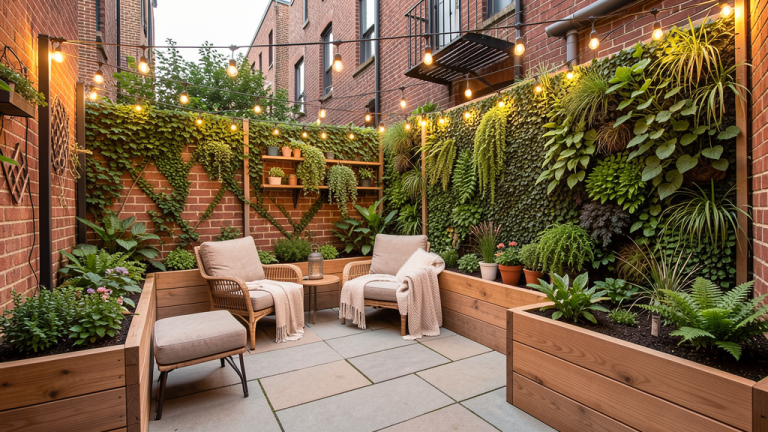
Wind chill is the biggest comfort factor in cold weather. A 10mph wind at 35°F feels like 22°F. Eliminating or reducing that wind effect does more for comfort than any heater. Windbreaks for a patio can be temporary (outdoor curtains, canvas privacy screens) or structural (fence additions, trellises with climbing plants). Even positioning a large planter or firewood rack upwind of your seating area meaningfully reduces the chill.
For temporary windbreaks on a budget, outdoor curtain panels rated for cold weather mounted on a tension rod system between pergola posts work well and can be pulled aside when you don’t need them. They’re not insulating — just wind blocking — but that’s what’s needed. The key is blocking prevailing wind direction, which typically comes from one consistent direction in most regions (northwest in the continental US).
Radiant Heat vs. Convective Heat
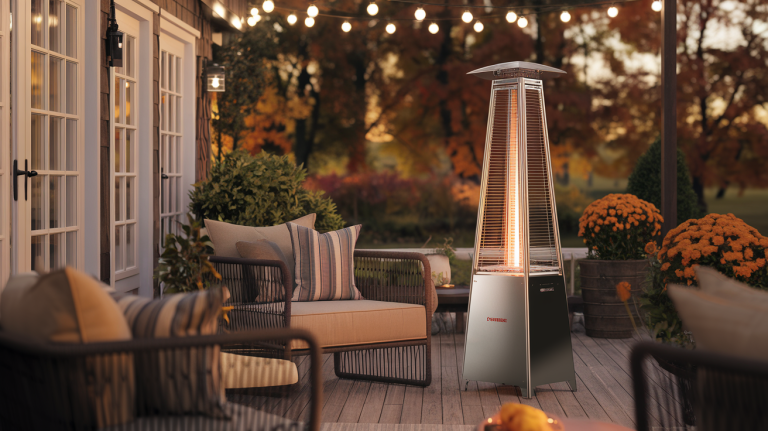
This is where heater selection matters specifically for winter use. Convective heaters — tall propane towers, for example — warm the air. Radiant heaters warm objects directly in their line of sight. In winter, convective heating is largely wasted outdoors because warm air rises and is immediately replaced by cold air. Radiant is more efficient in open spaces.
The Dr. Infrared Heater is the specific product I’d point to for a covered patio in winter. Mounted overhead and angled down toward the seating area, it delivers heat directly to people regardless of air temperature. At 1,500 watts, it costs roughly $0.15–0.18/hour to run — significantly less per hour of warmth than propane. The tradeoff is that it requires a mounted location and an outdoor outlet; if you’re working with an open, uncovered patio, the portable propane option is more practical.
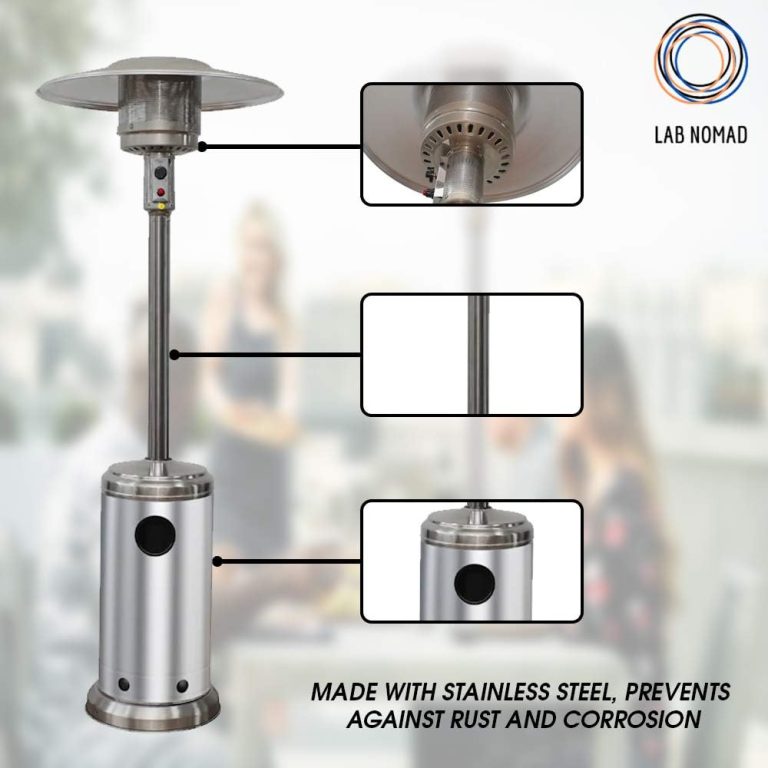
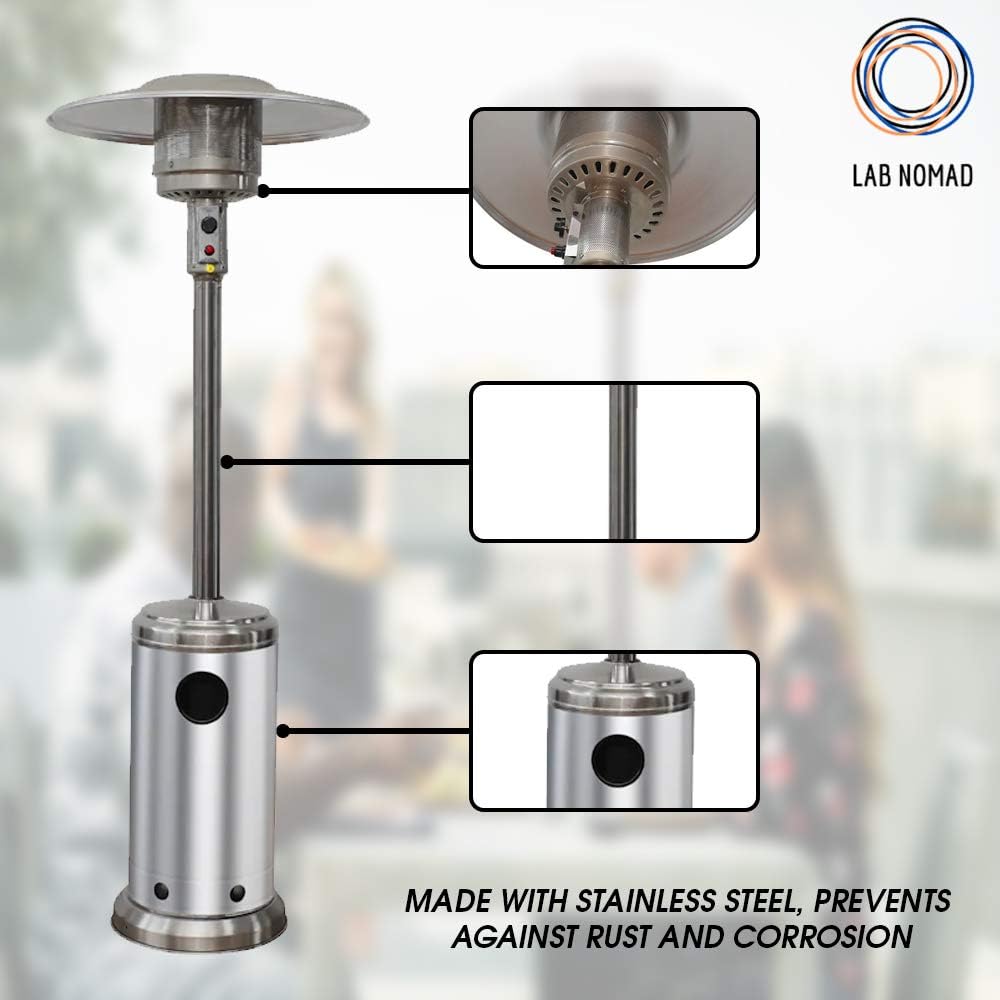
For patios without overhead mounting options, the AmazonBasics 48,000 BTU Propane Tower Heater positioned inside your windbreak zone (not in open space) performs much better than the same heater on an exposed patio. The windbreak concentrates the warmth; without it, you’re just venting propane into the cold.
Furniture and Clothing as Part of the System
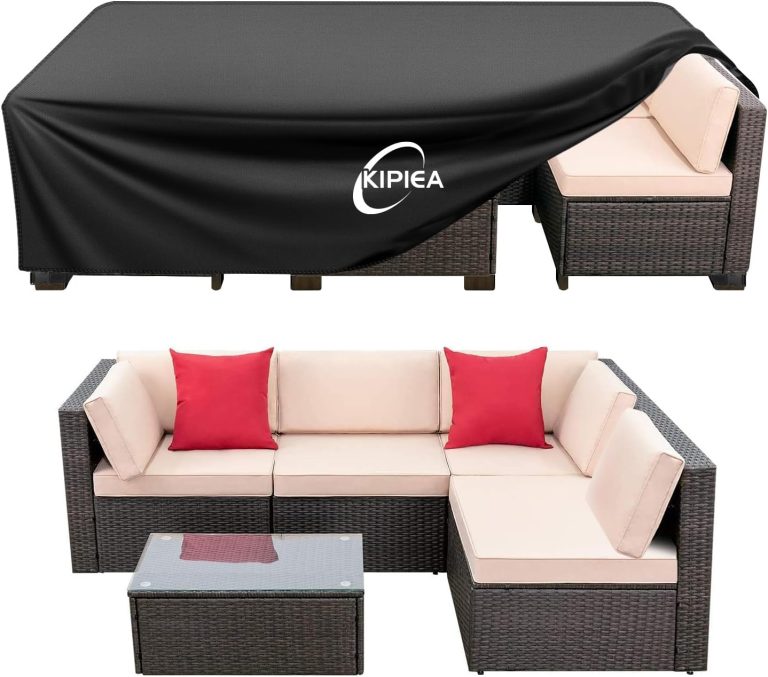
Thermal resistance in your seating matters more than most people acknowledge. Sitting on cold aluminum furniture in January pulls heat from your body through the seat and back faster than most heaters can replace it. Outdoor cushions rated for cold-weather storage, fleece throw blankets, and seat pads rated for all-season use are all part of the warmth equation. Gear up like you would for cold-weather camping: warm base layer, wind layer on top, and the heaters supplement rather than substitute.
What to Expect vs. What’s Realistic
With a windbreak, a mounted radiant heater, and appropriate outdoor furniture, a January patio session in the 25–35°F range is genuinely comfortable for 2–3 hours. Below 20°F, even with all of these systems, you’re probably looking at 60–90 minutes before it stops being enjoyable. Know that ceiling going in and you’ll set up the right expectations for guests. For a complete picture of fall and winter outdoor planning, the guide to propane patio heaters and the full outdoor heater buying guide both have detailed comparisons of models suited to cold-weather use.