Should You Cover Your Patio Furniture or Store It? (Depends on This)
This post contains affiliate links. We may earn a commission at no extra cost to you.
Whether to cover your patio furniture or move it inside depends entirely on what you have, where you live, and how honest you’re willing to be about the quality of your covers. Here’s a material-by-material breakdown so you can stop guessing.
Why This Decision Actually Matters
Bad covers can trap moisture and do more damage than no cover at all. Leaving furniture uncovered in freeze-thaw cycles destroys cushion foam in 1–2 seasons. And dragging a teak sectional into a garage every fall is either impossible or bad for your back. The right answer genuinely depends on what you’re working with.
By Material: What to Do
Teak
Teak is one of the few materials that handles exposure fairly well without intervention. Its natural oils repel water and resist cracking. Covering is optional for frames, but you should still oil or seal teak every 1–2 years. If your teak has cushions, remove and store those — the wood can stay out. Covering a teak frame all winter can actually cause mildew buildup if the cover isn’t breathable.
Aluminum
Powder-coated aluminum handles rain, cold, and UV better than most materials. The frame itself is fine year-round in most climates. Where aluminum fails: sling fabric degrades in UV, and mesh cushion slings can stretch under heavy snow load. Cover or store sling furniture. Solid aluminum frames with removable cushions: cover the cushions, leave the frame.
Wicker / Synthetic Resin Wicker
Natural rattan wicker should never stay outside in wet climates — it swells, cracks, and moldy is an understatement. Always store natural wicker. Synthetic resin wicker (HDPE) is far more durable and handles weather much better, but UV degrades it over time. Cover synthetic wicker for winter. Don’t leave it exposed year-round even though manufacturers claim you can.
Cushions (Any Material)
This is non-negotiable: store cushions indoors. Even “outdoor-rated” polyester fill compresses permanently when wet repeatedly. Sunbrella fabric resists mildew but the foam inside doesn’t. A single freeze-thaw cycle can crack foam cores. Store them in a chest, garage, or indoor closet — anywhere dry. This alone extends cushion life from 2 seasons to 8+.
When Covers Beat Storage
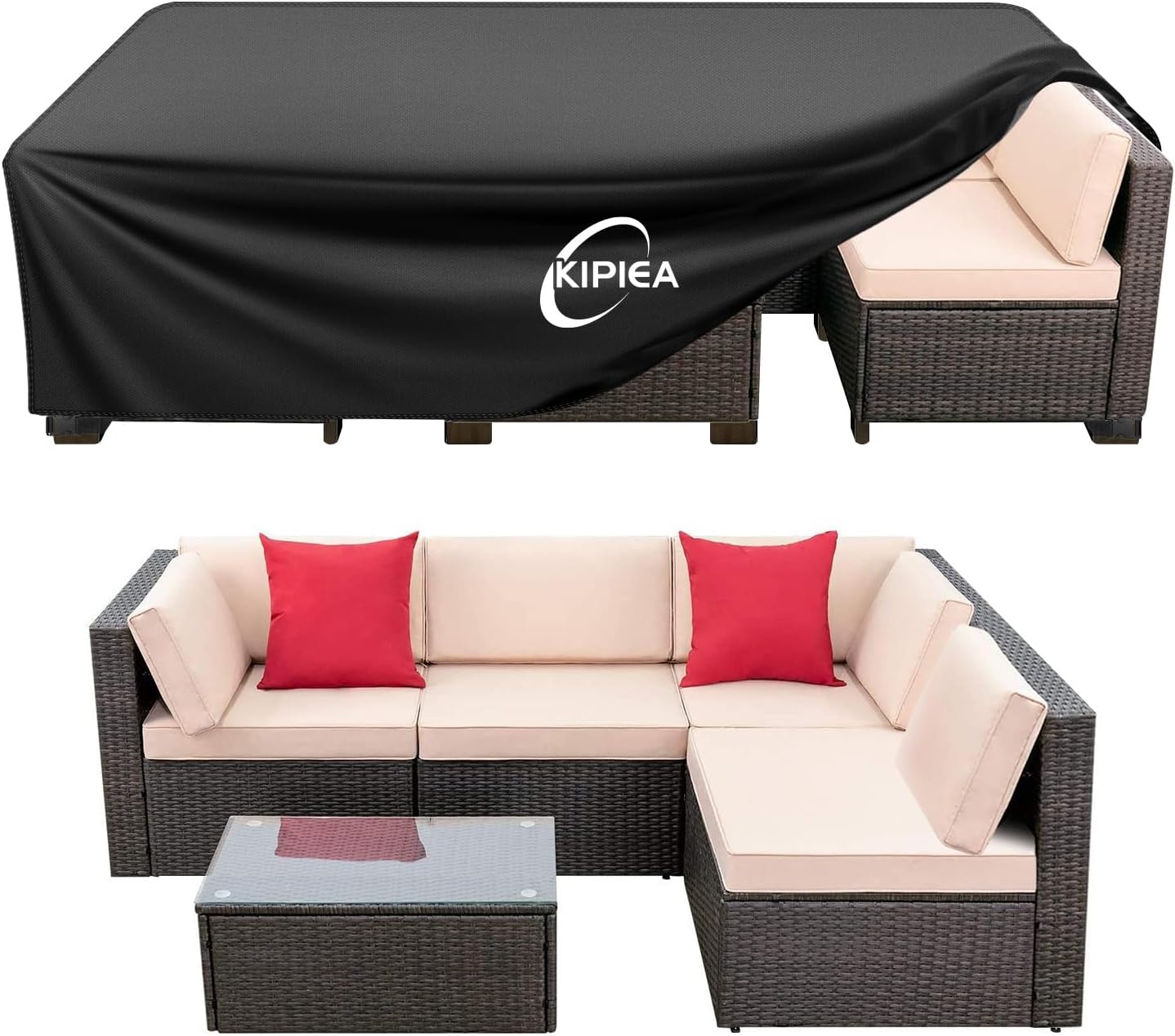
Covers make sense when: you don’t have the indoor space to store furniture, the furniture is too heavy to move easily, or you’re in a mild climate with minimal freeze risk. A quality heavy-duty cover with vented sides and tie-downs — like the waterproof patio furniture covers with air vents — prevents moisture accumulation that kills furniture faster than exposure alone.
What actually fails with covers isn’t the cover concept — it’s cheap covers with no venting. Sealed plastic traps humidity and creates a greenhouse effect that accelerates mildew and rust. Always buy covers with air vents. Always secure them at the base. A cover that blows off in November offers zero protection in December.
See our post on why outdoor furniture covers fail for the most common mistakes people make with cover choices.
When Storage Beats Covering
Storage wins when: you’re in a climate with heavy snowfall (covers fail under ice load), you have space to store things flat (cushions, sling chairs), or the furniture is lightweight enough to move in 15 minutes. If it takes less effort to carry it into the garage than to cover it carefully, just store it.
If you’re doing a full fall outdoor shutdown, pair this with the weekend backyard winterization checklist — covers are only part of the equation.
The Cover Quality Breakdown
- Budget covers ($20–$40): Thin polyester, no vents, poor tie-downs. Lasts 1–2 seasons and fails exactly when you need it. Not worth buying.
- Mid-range ($50–$90): 600D polyester or better, air vents, velcro or drawstring closure. This is the sweet spot for most furniture.
- Premium ($100+): Sunbrella fabric or 900D+ covers with reinforced corners, buckle straps. Worth it for high-value sectionals.
Also consider pairing good covers with properly stored rugs — see our guide to the best outdoor rugs for which materials survive storage best.
Bottom Line
Cover aluminum frames, store wicker indoors if natural or cover if synthetic resin, always store cushions regardless of material, and let teak breathe under a loosely-fitted cover if anything. Buy one good cover rather than three cheap ones. The difference between 2-year furniture and 10-year furniture is usually just how you store it between October and April.
Related Products
As an Amazon Associate we earn from qualifying purchases. Vevor links are affiliate links.