Why Your Fire Pit Smoke Is Blowing in Your Face (And How to Fix It)
This post contains affiliate links. We may earn a commission at no extra cost to you.
Smoke follows you around the fire pit because of physics, and understanding the physics means you can actually fix it instead of just switching chairs all night.
Why Smoke Follows People: The Science
Smoke rises with hot air, then gets pushed by any prevailing air movement. Around a fire pit, the heat rising off the flames creates a low-pressure zone at fire level — cooler air (and people sitting nearby) create a subtle convection current that pulls smoke toward them. If you’re the warmest or largest obstacle near the fire, the airflow pattern bends toward you.
This effect is worst with shallow, open fire pits in low-wind conditions — there’s just enough breeze to direct smoke but not enough combustion draw to pull it straight up. It’s also why rotating chairs rarely helps: the low-pressure system rotates with the group.
Wind Direction vs. Pit Shape
The shape of your fire pit matters more than most people realize. A wide, shallow bowl creates a wide column of rising smoke that disperses slowly and drifts easily. A taller, narrower pit with raised walls creates a chimney effect — air rushes up from the sides, pulling the combustion gases up and out before they have a chance to spread sideways.
Bowl-style fire pits look great but are the worst offenders for smoke-in-face complaints. Ring-style and column-style pits with ventilation at the base perform significantly better because they direct airflow upward through the fuel, not around it.
Wood Type: The Biggest Lever You Have
Nothing produces more smoke faster than the wrong wood. Here’s what matters:
- Green (fresh-cut) wood: High moisture content means incomplete combustion. You get more smoke than fire. Never burn wood cut in the last 6 months without splitting and seasoning it first.
- Seasoned hardwood (oak, hickory, ash): Low moisture, high heat, much less smoke. Properly seasoned wood cracks at the ends and sounds hollow when knocked together.
- Softwoods (pine, spruce): Burns fast, produces resin-laden smoke, and leaves more particulate in the air. Fine for starting a fire, poor choice for the main burn.
- Compressed wood bricks/pellets: Ultra-low moisture, very efficient burn, minimal smoke. Great option if you want to enjoy the fire without the smoke nuisance.
Switching from green softwood to seasoned oak can reduce visible smoke by 70–80%. This is the cheapest fix available and most people skip it.
Fire Structure: How You Build It Matters
A poorly built fire smolders; a well-built fire burns clean. Use a log cabin or upside-down fire structure rather than stacking logs flat. The upside-down method (large logs on bottom, kindling on top) allows the fire to burn down through the fuel with maximum airflow, producing a hotter, cleaner burn from the start.
Keep the fire fed at the right pace — a large, hot fire produces less smoke per unit of heat than a small, struggling fire. Don’t starve your fire with small pieces trying to “conserve” wood. A robust burn is a cleaner burn.
Smokeless Fire Pits: Are They Worth It?
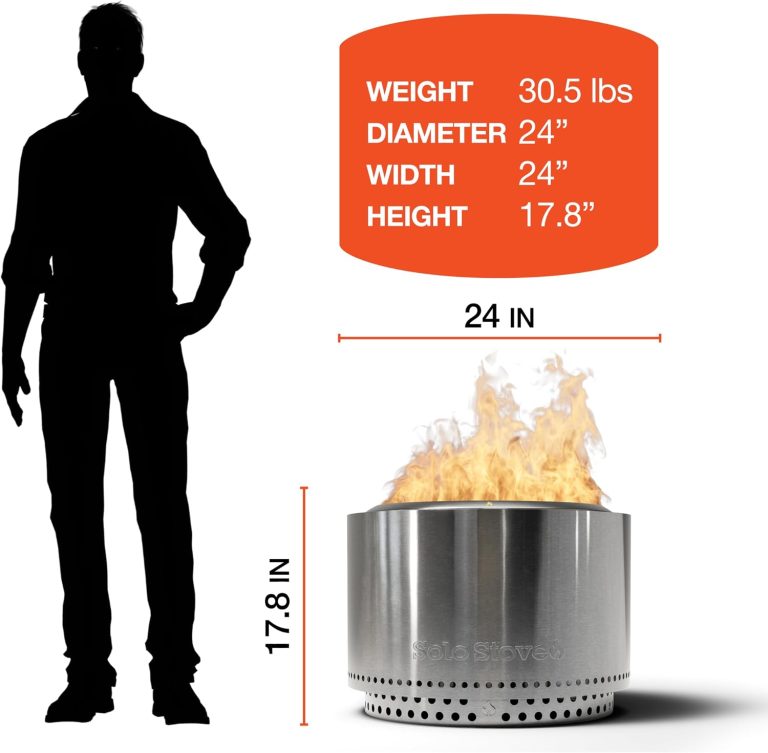
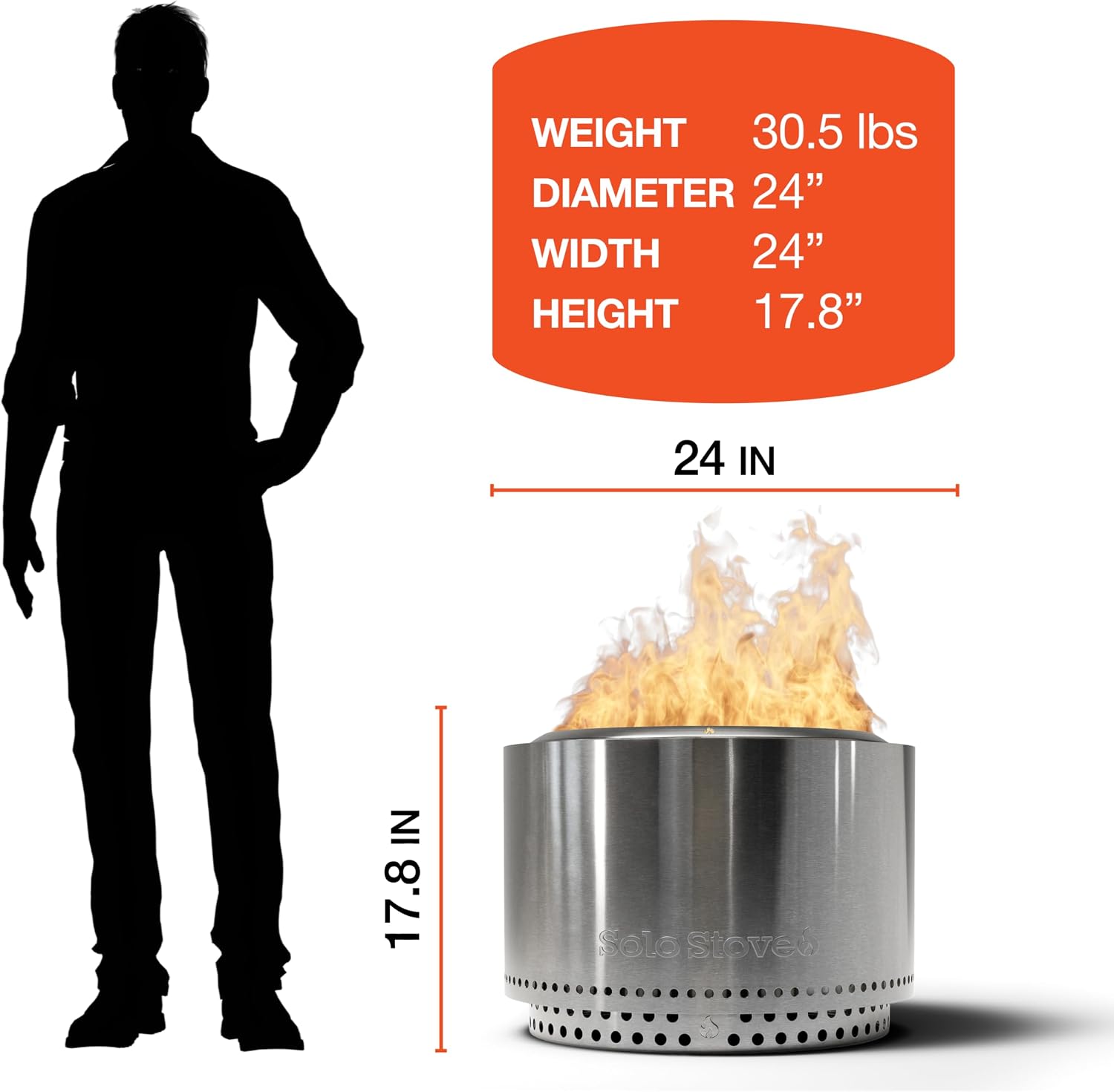
Smokeless fire pits use secondary combustion — they preheat air in channels around the firebox and inject it above the main flame, burning off the particles that would otherwise become visible smoke. The Solo Stove Bonfire is the most well-known example and it genuinely works. On dry seasoned wood, it produces dramatically less smoke than a conventional pit.
The caveats: it works best with dry, dense hardwood. Feed it green wood or pine and you’ll still get smoke — the secondary combustion system can’t fully compensate for high-moisture fuel. It’s also not magic in high-wind conditions.
Is it worth the premium? If you’re consistently fighting smoke issues and you’re already using good wood, yes. If the problem is wood quality, fix the wood first — it’s a $0 solution.
See our best fire pits comparison for how smokeless pits stack up against traditional options on heat output, price, and real-world performance. Also check fire pit burn restrictions by state before setting up — some areas restrict open burning during dry spells.
Quick Diagnostic Checklist
- ✓ Is your wood seasoned and dry? (Test: splits cleanly, sounds hollow, moisture meter under 20%)
- ✓ Are you using hardwood as the primary fuel?
- ✓ Is your fire burning hot enough? (A weak fire always smokes more)
- ✓ Is there adequate airflow under the fuel? (Raise wood off the base with a grate)
- ✓ Is your pit style creating a chimney effect or a smoke bowl?
Fix those five things before spending money on a new fire pit. If you’ve addressed all of them and still have smoke problems, then a smokeless pit like the Solo Stove makes sense. And for the propane-vs-wood debate, see our wood fired vs gas comparison for how smoke profiles differ across fuel types.
Bottom Line
Most smoke problems are wood quality problems. Fix your fuel first. If you’re using good seasoned hardwood and still fighting smoke, a smokeless pit with secondary combustion is a legitimate upgrade — but it won’t save you from bad wood.
Related Products
As an Amazon Associate we earn from qualifying purchases. Vevor links are affiliate links.