Gas vs Infrared vs Propane Patio Heater: How to Actually Decide
This post contains affiliate links. We may earn a commission at no extra cost to you.
Picking a patio heater should take about ten minutes — but most people spend weeks second-guessing themselves because the comparison guides online treat this like a philosophy question. Here’s a practical decision tree based on how you actually use your outdoor space.
Start With Your Space: Covered or Open?
This is the most important question and it eliminates one option immediately. If your patio has a roof, pergola, or overhead enclosure, propane is a non-starter. Combustion heaters need ventilation. Running a propane heater under a low pergola is a carbon monoxide risk — full stop. Your options narrow to infrared electric or natural gas (with proper venting clearance).
If your patio is fully open to the sky, all three types are viable and you move on to the next filter.
How Cold Does It Actually Get?
Patio heaters are measured in BTUs (British Thermal Units), and the math here is simpler than manufacturers make it sound. A general rule: you need roughly 25 BTUs per square foot of outdoor space, adjusted upward for wind exposure.
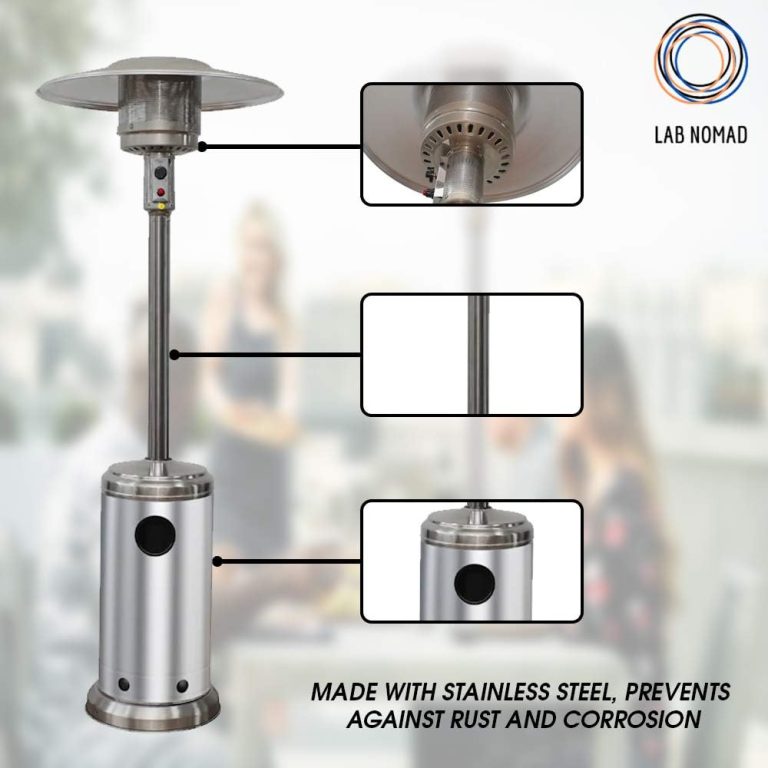
- Under 40°F regularly: You need 40,000+ BTU output. Most quality propane tower heaters hit 40,000–46,000 BTU. The Mr. Heater propane patio heater runs at 46,000 BTU — enough for a 400 sq ft open patio even in cold shoulder-season evenings.
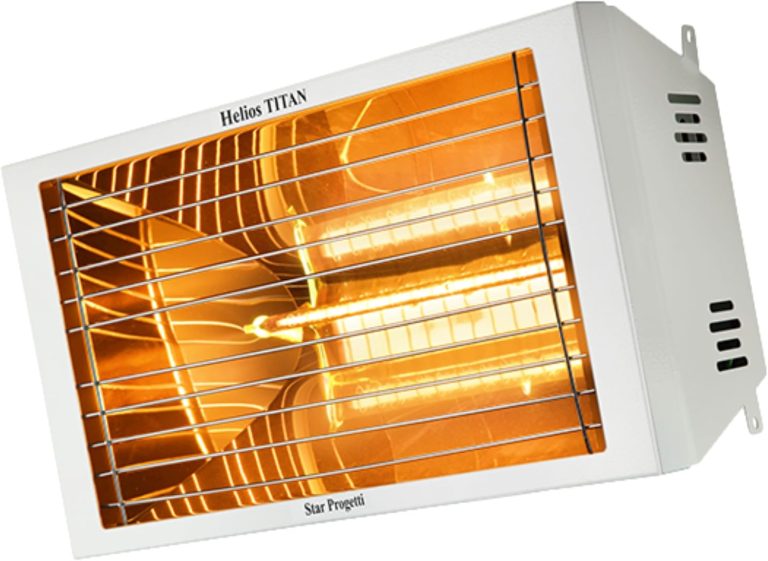
- 40–55°F range: Infrared works well here. The Dr. Infrared outdoor heater uses radiant heat that warms people and objects directly rather than fighting the ambient air — more efficient in that temperature band.
- Above 55°F: Nearly anything works. A smaller electric infrared unit is your most cost-effective and lowest-friction choice.
The Fuel Cost Math
Here’s where “which is cheapest” gets more nuanced. See our full patio heater break-even math breakdown for the numbers, but the short version:
- Propane: ~$0.50–$0.80/hour at peak output, depending on local propane prices. Portable, no installation, swaps tanks in 2 minutes.
- Electric infrared: ~$0.20–$0.45/hour depending on wattage and your utility rate. Requires a nearby 120V or 240V outlet. Zero installation if you have the outlet.
- Natural gas: Cheapest per BTU at ~$0.15–$0.35/hour, but you’re paying $500–$1,500 for a gas line run to the patio. That’s a 2–3 season payback period if you use the heater heavily.
The gas line investment only pencils out if you heat your patio at least 60+ nights a year. Under that number, propane or electric wins on total cost.
The Decision Tree
Covered patio → infrared electric or natural gas (proper clearance required)
Open patio, below 40°F regularly, no gas line → propane tower heater
Open patio, moderate temps, outlet nearby → infrared electric
Open patio, heavy use (60+ nights/year), gas line possible → natural gas
What About Heating Style?
Propane and gas heat the air around you — which means wind blows that warmth away fast. Infrared heats surfaces and bodies directly, so a 1,500W infrared panel can feel warmer than a 40,000 BTU propane heater on a breezy evening.
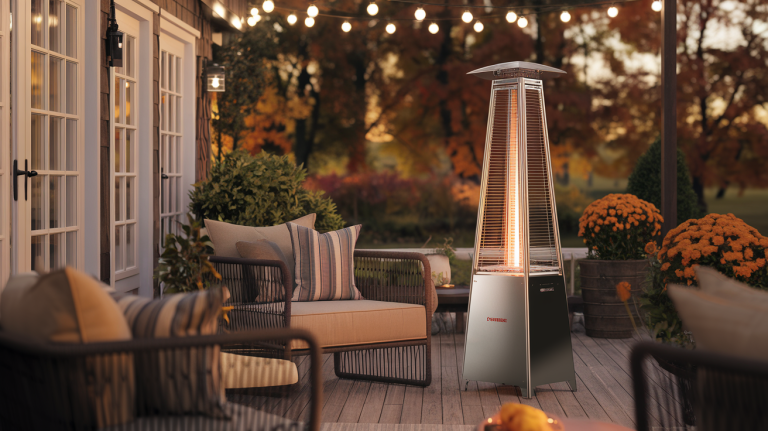
For a full comparison of the top-rated patio heater models, including mushroom-style vs. tower vs. wall-mount, see our picks guide. If propane is your direction, we also have a focused best propane patio heaters guide with side-by-side specs.
The One Thing People Get Wrong
They buy based on BTU rating alone and ignore coverage pattern. A 46,000 BTU mushroom-style heater heats in a 15-foot diameter dome — great for a table of six. A 1,500W infrared panel heats directionally in a 10×8 ft zone — great for two chairs facing it. Neither is universally better. Buy for the seating arrangement, not the spec sheet.
Bottom Line
Gas line + heavy use = natural gas wins long-term. Covered patio = infrared only. Everything else = propane for cold climates, infrared electric for mild ones. The Mr. Heater propane unit is the right call for most people who want flexibility and don’t want to run electrical or plumbing — it works anywhere, stores easily, and puts out serious heat.
Related Products
As an Amazon Associate we earn from qualifying purchases. Vevor links are affiliate links.