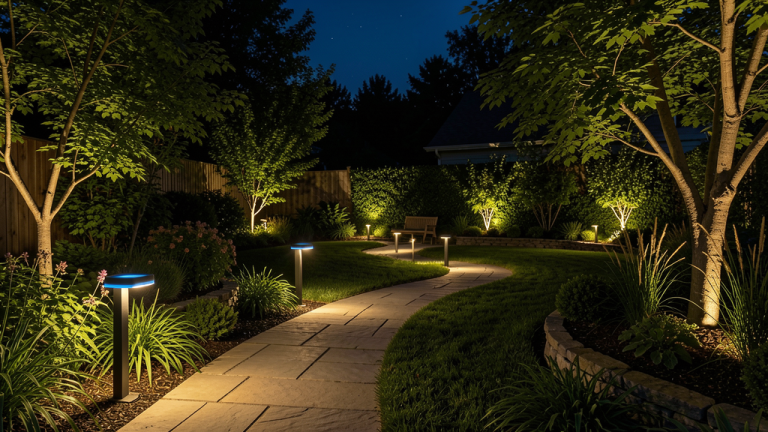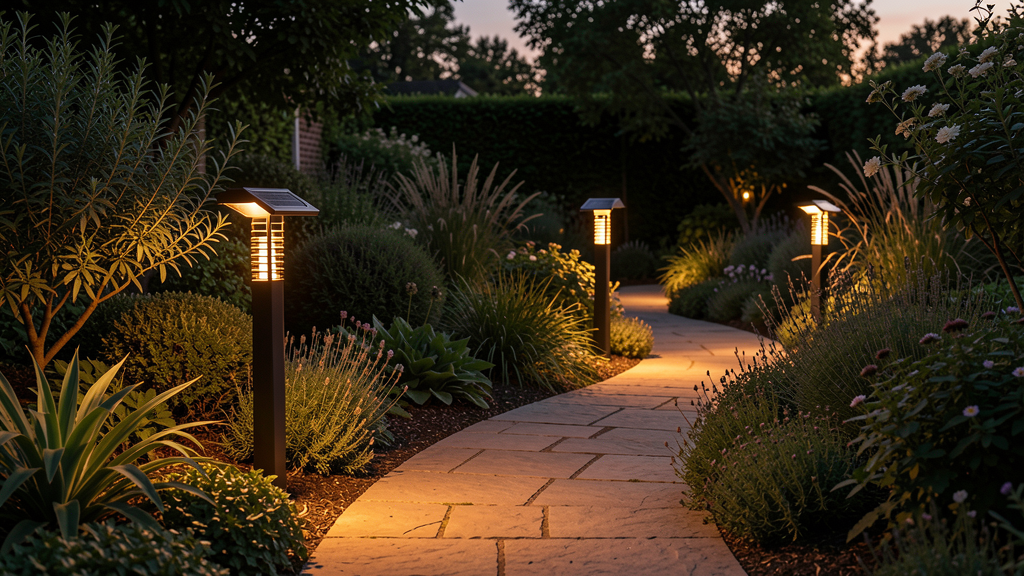
Best Solar Path Lights for 2026 — Bright, Reliable and Zero Wiring
Bottom line up front: GIGALUMI’s solar path lights deliver the best balance of brightness, runtime, and durability at a price that makes lighting a full walkway affordable. Whether you’re outlining a garden bed, guiding guests down a winding driveway, or adding safety lighting along deck steps, today’s solar path lights punch well above their price point. This guide covers the top picks for 2026 across every budget and use case, plus a practical buying guide so you know exactly what to look for.
Why Solar Path Lights Are the Smart Upgrade
Wired landscape lighting requires a transformer, trenching, and hours of installation. Solar path lights: push a stake in the ground. Done. They charge during the day and turn on automatically at night. Modern solar panels and lithium batteries now stay bright all night even in overcast conditions. Beyond convenience, going solar means zero ongoing electricity costs — a modest set of 8–12 lights can pay for itself within the first season compared to running low-voltage wired alternatives. And with no cables to trip over or bury, you can rearrange your layout anytime your garden evolves.
Our Top Picks
1. GIGALUMI Solar Path Lights 8-Pack — Best Overall
Price range: $35–$55 | Best for: Driveways, garden paths, walkways
Stainless steel construction, warm white LED at 15–20 lumens, and a separate solar panel mounted at an angle for maximum sun capture. Runtime 8–10 hours. Under $6 per light in an 8-pack — the most value-per-dollar in this category. This pick is ideal for homeowners who want to line a long driveway or garden border without spending a fortune, and the stainless build holds up well through multiple winters. It’s also a great starter set if you’re new to solar lighting and want to test placement before committing to a permanent layout.
2. Brightech Ambience Pro Solar String Lights — Best Ambiance
Price range: $45–$65 | Best for: Pergolas, patios, deck perimeters
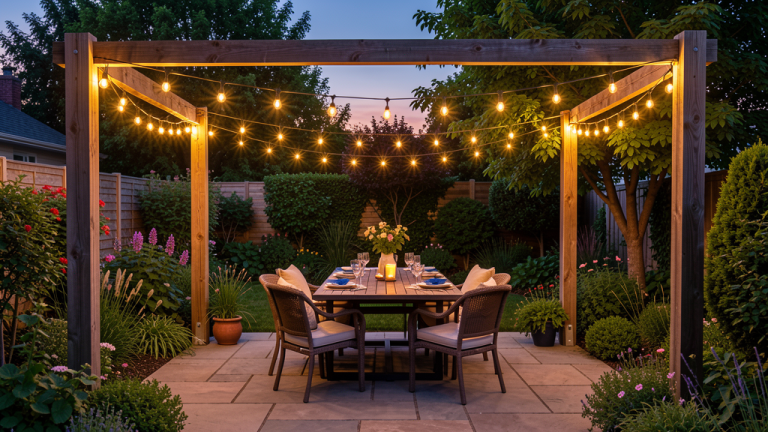
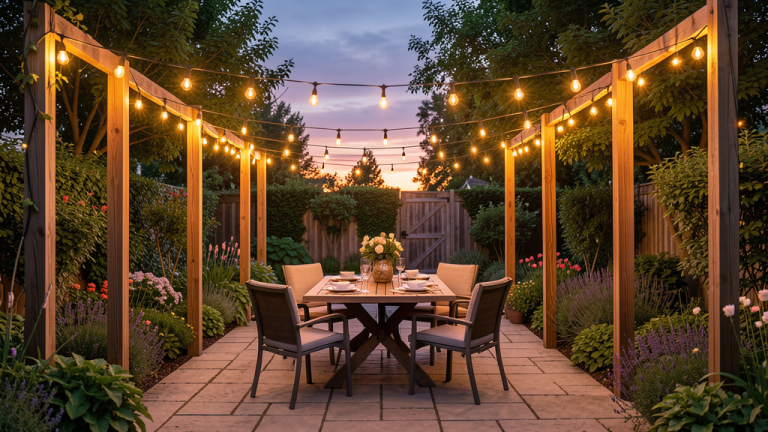
Globe-style Edison bulbs provide warm, flattering overhead light. The 27-foot strand with 12 bulbs gives 6–8 hours of evening light from a 6-hour charge. Fully weatherproof. Hang overhead, along a fence, or through pergola rafters. This is the pick for entertainers who want a bistro-restaurant feel without running extension cords across the yard — the globe style flatters faces and food equally, and friends always ask where you found them. Best suited for patios, outdoor dining areas, and pergola installations where soft ambient glow matters more than task lighting.
3. Sylvania LED Smart Solar Pathway Lights — Best Smart Option
Price range: $79–$99 for 4-pack | Best for: Smart home integration
App-controlled color temperature, scheduled on/off, and motion-triggered brightness modes. Works with Alexa and Google Home. Worth the premium for smart home enthusiasts. If you already have a smart home ecosystem and want your outdoor lighting on the same schedule as your interior lights, this is the only solar path light that truly fits in. You can dim them for movie nights in the backyard or crank them up automatically when motion is detected — making them double as a subtle security feature without looking like a security light.
4. Aootek Solar Outdoor Motion Sensor Lights — Best for Security
Price range: $30–$50 | Best for: Driveways, side gates, dark corners
Wide-angle 270° detection, three lighting modes (always-on dim, motion-bright, motion-only), and 1,200 lumen peak output set this apart from decorative path lights. The separate large solar panel means it charges fast even on partly cloudy days. Best for homeowners who want utility lighting that also deters package theft or late-night foot traffic. Mount it above a gate, garage, or side yard where soft ambiance is less important than a sharp burst of light when something moves.
What to Look For
Not all solar path lights are created equal. Here are the four factors that separate a light you’ll love for five years from one you’ll be replacing next spring.
Lumen Output
10–30 lumens is enough for soft path marking and decorative use — it creates that warm, welcoming glow along a garden walk without blinding anyone. For security or task lighting near steps and gates, look for 100+ lumens. Manufacturer claims are often inflated by 20–30% — read verified reviews and look for real-world photos taken in full darkness. If a listing only shows staged daytime photos, that’s a red flag.
Battery Type and Capacity
Lithium-ion outlasts NiMH by 3–5x and holds charge better in cold weather. Look for at least 600mAh capacity for a full-night runtime. Replaceable batteries extend useful life significantly — once a light stops lasting through the night, a $5 battery swap can give it another 2–3 years of service rather than landfilling the whole unit. Avoid lights that list battery specs vaguely or not at all; that’s usually a sign of low-quality cells inside.
IP Rating and Build Quality
IP44 = splash resistant (fine for covered areas). IP65 = fully weatherproof and suitable for direct rain exposure. For any permanently installed outdoor light, IP65 is worth specifying — it protects against dust, rain, and hose spray. Stainless steel stakes last far longer than plastic in moist soil. Check also whether the lens is glass or plastic: glass holds clarity over years; plastic yellows and dims by season two.
Solar Panel Placement
Integrated top-panel designs are simpler but only work well in full-sun locations. Separate or angled panels can be aimed at the sun independently, making them far better performers in partly shaded yards. If your garden has tree cover or only gets afternoon sun, prioritize lights with adjustable or remote panels. Some premium models even let you mount the panel several feet away from the light stake — a game-changer for shaded garden beds.
FAQ
How long do solar path lights last?
2–4 years before battery degradation reduces runtime. The LED itself lasts 25,000+ hours — it’s always the battery that fails first. Buying a model with a replaceable battery can extend total useful life to 6–8 years, dramatically improving value-per-dollar over the life of the product.
Do they work in partial shade?
Reduced sun means reduced charging. Most need 6–8 hours of direct sun for full overnight runtime. In partial shade expect 4–5 hours of output. If your yard has significant shade, look for lights with a separate adjustable solar panel that you can angle toward whatever sun you do get — it can recover 30–40% of lost charging time compared to a fixed integrated panel.
Can they stay out in winter?
Quality IP65-rated lights can stay year-round. Cold reduces battery performance by 30–40% — expect shorter winter runtime. Lithium-ion batteries handle cold far better than NiMH alternatives. In climates with heavy snow, consider pulling stakes and storing indoors during the deepest winter months to preserve battery health and avoid damage from frozen ground heave.
How many lights do I need per foot of path?
As a rule of thumb, one light every 6–8 feet creates a clean, even guide effect. For narrower paths or purely decorative use, 8–10 feet apart still reads well. Measure your path length and divide by 7 for a starting quantity — then round up to the nearest pack size. Most paths 20–30 feet long are well-served by an 8-pack.
Do solar path lights attract bugs?
Warm white LEDs (2700K–3000K) attract significantly fewer insects than older cool-white or UV-emitting bulbs. Most quality solar path lights use warm white by default, making them a better choice than incandescent or older LED alternatives if bug attraction is a concern around dining areas or seating.
Bottom Line
GIGALUMI 8-pack is the best entry point for path and border lighting — high value, solid build, reliable runtime. Step up to Brightech for overhead ambiance on a pergola or deck perimeter. Choose Sylvania if you want app control and smart home integration. Add Aootek if security lighting with serious lumen output is the priority. Any of these will outperform cheaper no-name alternatives, and all work without an electrician, a trench, or a running electricity bill. Push a stake. Done.
Prices subject to change. We may earn a commission on qualifying purchases.
Related Guides
Disclosure: This post contains affiliate links. As an Amazon Associate and Vevor affiliate, Cabana Culture earns from qualifying purchases at no extra cost to you. See our full affiliate disclosure.
Recommended Products:
solar pathway lights
solar spotlights
landscape solar string lights
solar step lights
solar driveway markers
solar outdoor lights
Solar Step Deck Lights | Solar Driveway Marker Lights | Solar Garden Lights on Vevor