How Much Does It Cost to Run a Patio Heater? (The Real Numbers)
This post contains affiliate links. We may earn a commission at no extra cost to you.
Before you buy a patio heater, you should know what it’s going to cost you every month — not just the sticker price. Most buyers skip this math entirely, then end up surprised when propane bills stack up faster than expected or when they realize a gas line install is three times what they budgeted.
Propane: Cost Per Hour Breakdown
A standard 20 lb propane tank holds about 4.7 gallons. At current national average propane prices (~$2.50–$3.50/gallon), that’s roughly $12–$16 per tank fill. Most 40,000+ BTU heaters burn through a 20 lb tank in 8–10 hours at full blast, or 12–14 hours at 70% output.
That works out to $0.90–$1.50/hour at full output, or $0.60–$1.00/hour at medium heat. Run it 3 hours per evening, 4 nights a week through fall and early spring — that’s about $50–$80/month in propane.
The Mr. Heater propane patio heater is one of the most efficient in this output class — its 46,000 BTU ceiling lets you run it at lower settings most nights, which meaningfully reduces consumption.
Electric Infrared: Cost Per Hour
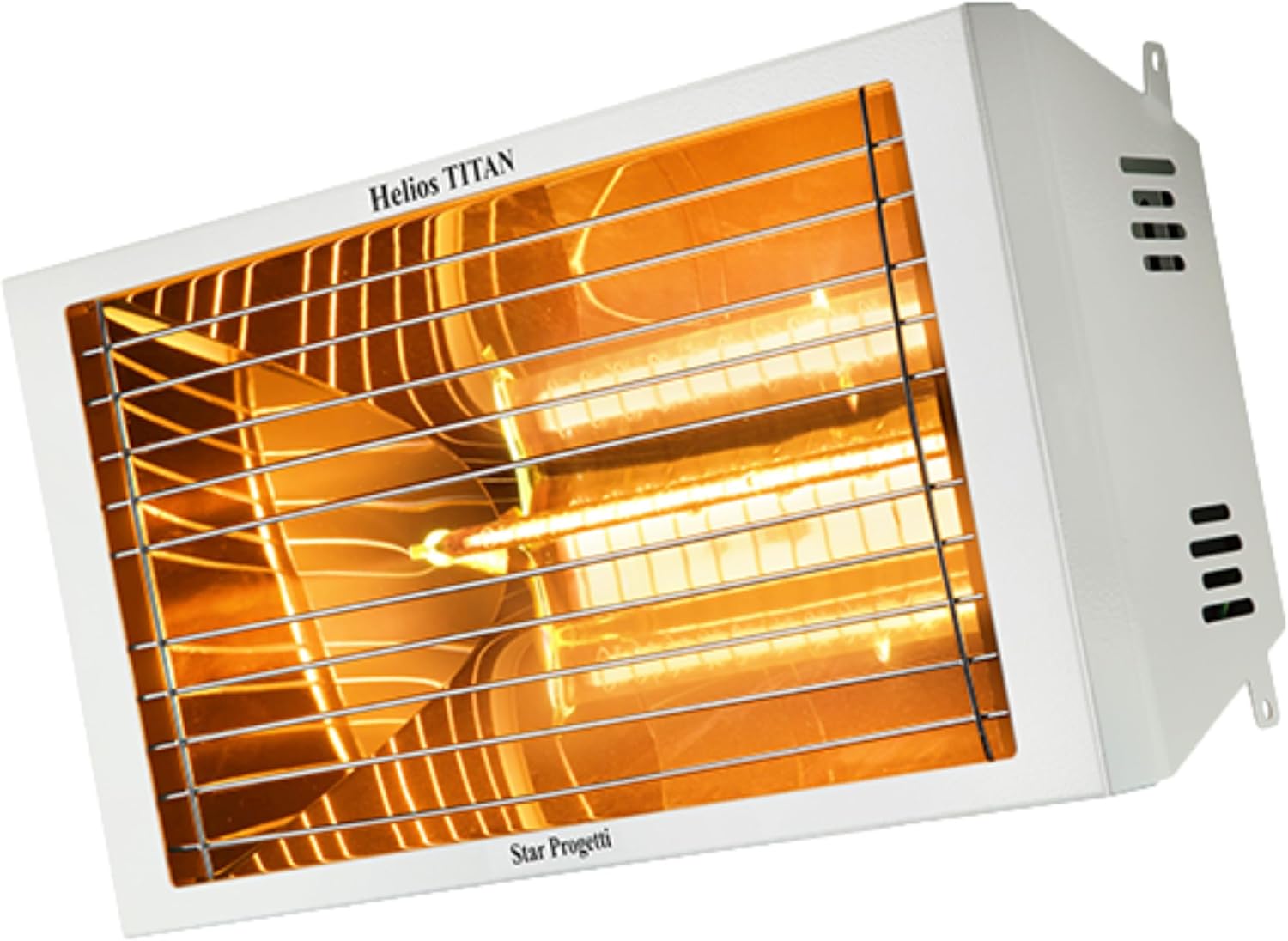
Electric infrared heaters are rated in watts. The Dr. Infrared 1,500W outdoor heater draws 1.5 kWh at full power. With average U.S. electricity at $0.16/kWh, that’s roughly $0.24/hour — dramatically cheaper than propane per hour.
Same usage scenario (3 hours/night, 4 nights/week): about $11–$14/month. That’s a 4–5x savings per hour versus propane. The tradeoff: you need a 120V or 240V outlet nearby, and electric infrared typically doesn’t match propane BTU output in open, wind-exposed spaces.
Natural Gas: The Cheapest Per BTU, But…
Natural gas at $0.012–$0.018 per cubic foot translates to roughly $0.15–$0.25/hour at 40,000 BTU output. That’s the cheapest fuel cost by a wide margin. But here’s the catch: getting a gas line run to your patio costs $500–$1,500 depending on distance and local labor rates. A permit adds $100–$300. Total installed cost: $700–$2,000 before you turn the heater on once.
At $0.20/hour gas vs. $1.10/hour propane, you save roughly $0.90/hour. At 4 hours/day, 4 months/year (about 480 hours), you save $432/year. A $1,200 gas line install breaks even in under 3 years if you use it that consistently. Below 60 nights/year, the math doesn’t work — stick with propane or electric. For the full comparison model, see our patio heater break-even calculator.
Seasonal Total Cost: Real Numbers
| Type | $/hour | Season cost (4 hrs/night, 90 nights) |
|---|---|---|
| Propane | $1.00–$1.50 | $360–$540 |
| Electric infrared | $0.24–$0.35 | $86–$126 |
| Natural gas | $0.15–$0.25 | $54–$90 |
Break-Even vs. Just Closing Off the Patio
Here’s the question nobody asks: at what point does heating the patio cost more than it’s worth vs. simply closing it off for winter?
If you’re spending $450/season heating a patio you use 3x/week, that’s $150/month of usage — most people find that reasonable. But if cold weather drops your patio use to once every two weeks, you’re spending $450 to use the space 10 times — $45/use. At that point, a good outdoor blanket and a chiminea makes more financial sense.
The honest answer: a patio heater earns its keep if you’re using the space at least 2x/week through shoulder season. Below that frequency, you’re better off investing in better cold-weather gear and using the patio differently.
For a look at what heater type fits your specific situation, see our gas vs infrared vs propane decision guide.
Bottom Line
Electric infrared is the cheapest to run per hour, but propane gives you more raw heat for cold climates. Natural gas has the lowest lifetime cost but requires upfront infrastructure. Run the math with your actual usage numbers — don’t let anyone sell you a heater based on list price alone.
Related Products
As an Amazon Associate we earn from qualifying purchases. Vevor links are affiliate links.