Why Your Outdoor Furniture Covers Are Failing (And What to Buy Instead)
This post contains affiliate links. We may earn a commission at no extra cost to you.
Outdoor furniture covers fail for predictable reasons, and once you understand those reasons, you stop wasting money on the wrong solution. The cheap covers fail first, but even mid-range ones fail if they’re designed wrong for your climate.
The Breathability Problem Nobody Talks About
The counterintuitive issue with outdoor furniture covers is that being too waterproof is actually a problem. A fully sealed cover traps moisture against your furniture rather than letting it escape. Rain hits the outside, beads off — great. But morning dew, humidity, and any moisture that gets in during cover removal and re-installation has nowhere to go. The result is a humid microclimate under your cover that’s perfect for mold and mildew. Your cushions rot from below while the cover looks fine from outside.
Quality covers use a breathable outer layer that blocks rain while allowing moisture vapor to pass through — essentially the same principle as waterproof-breathable outdoor clothing. The breathability rating matters here: a cover with too little airflow still traps moisture, and one with too much lets rain penetrate during extended storms. The sweet spot is a cover with ventilation flaps or mesh panels at the base that allow air circulation while keeping bulk rain out.
Why Cheap Covers Trap Mold
The $25 polyester covers from big-box stores are made from a single non-breathable layer, often with UV inhibitors that break down after one season. They seal tight initially — which is why they seem like a bargain. But by spring, you’ll find green streaks on your furniture underneath, cushions that smell musty, and in some cases, mold that’s actually worked into the foam. The cover protected the furniture from rain while slowly destroying it from condensation.
The failure is especially bad in climates with temperature swings. When a cold night follows a warm afternoon, condensation forms on any surface inside the cover. If that surface is a cushion, the moisture is absorbed. If there’s no airflow, it stays there. Repeat this 50 times across a winter and you’ve got a mold problem that no amount of cleaning fully fixes.
What to Look for Instead
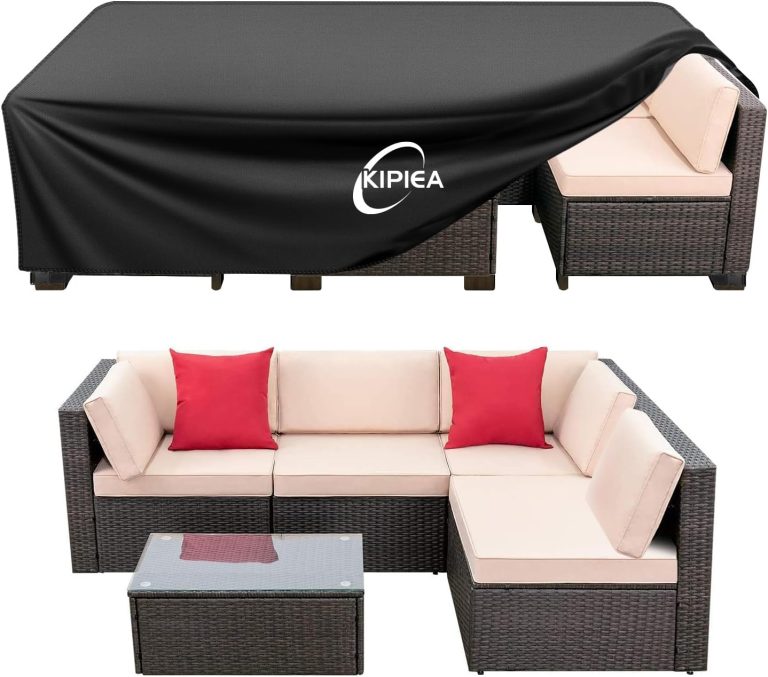
The Classic Accessories Ravenna Patio Loveseat Cover addresses the breathability problem directly — it uses a solution-dyed polyester with vented panels that let moisture escape while still blocking the rain that matters. The fit is tailored rather than generic, which prevents wind from getting under the cover and creating a sail effect. Generic covers fail at the sides; this one cinches down. The seam tape on the stress points also matters — that’s where cheap covers split first after one freeze-thaw cycle.
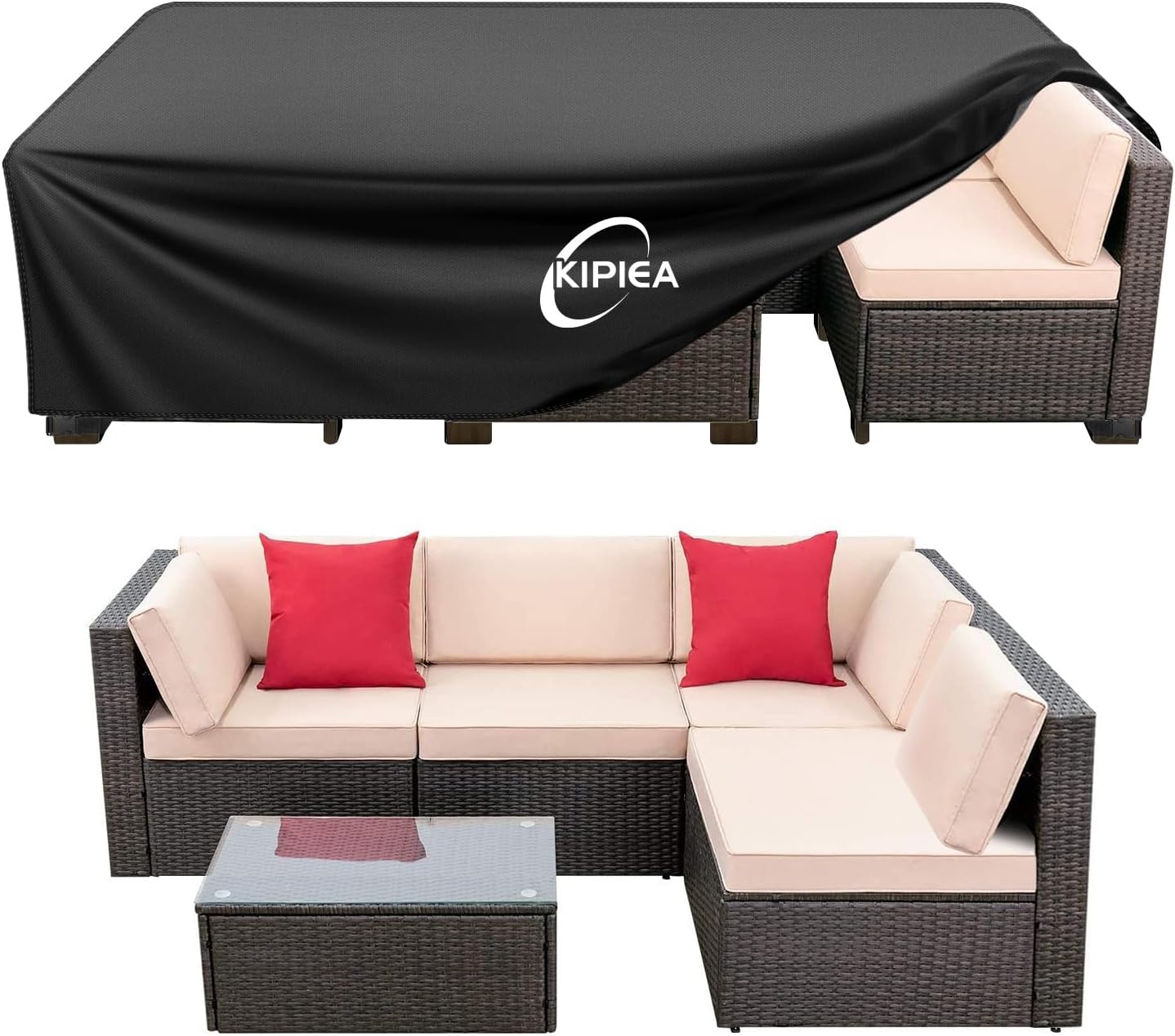
When you’re covering a full outdoor sectional, the approach that actually works is multiple smaller covers rather than one massive tent. Large single covers catch wind, migrate, and eventually fail at the seams from the constant stress of flapping. Smaller, form-fitting covers per section stay put and last longer.
The Installation Detail That Changes Everything
Even the best cover fails if it’s installed with moisture already trapped inside. Before you cover furniture for the winter, dry it completely — especially cushions. If your cushions have removable covers, wash them and store them indoors. If they’re non-removable, leave them uncovered for 24–48 hours after the last rain before covering. A moisture meter (the kind used for wood) will tell you if cushion foam is still wet before you seal it.
Also check the furniture itself. Metal frames that are wet when covered will rust even under a good cover, especially at welded joints. Wipe down all metal before covering, and if you live somewhere that salts the air (coastal or where road salt blows onto your property), a light wipe with WD-40 on metal joints before covering adds real protection.
If you’re doing a full fall prep pass on your outdoor setup, our complete backyard winterization guide walks through the full sequence — covers are one piece of it. And if you’re rethinking your outdoor rug at the same time, the guide to best outdoor rugs for fall covers which materials hold up through wet seasons.
The One Thing Worth Spending More On
If you have high-quality outdoor furniture — the kind that cost $800+ and is worth protecting — the cover is not the place to cut corners. A $60–80 quality cover on $1,000 furniture is a 6–8% insurance premium. The math on a cheap cover failing and letting mold get into good foam cushions is much worse. Buy the better cover once.