Best Outdoor Heaters for Fall Patio Use in 2026 — Extend Your Season
—
# Best Outdoor Heaters for Fall Patio Use in 2026 — Extend Your Season
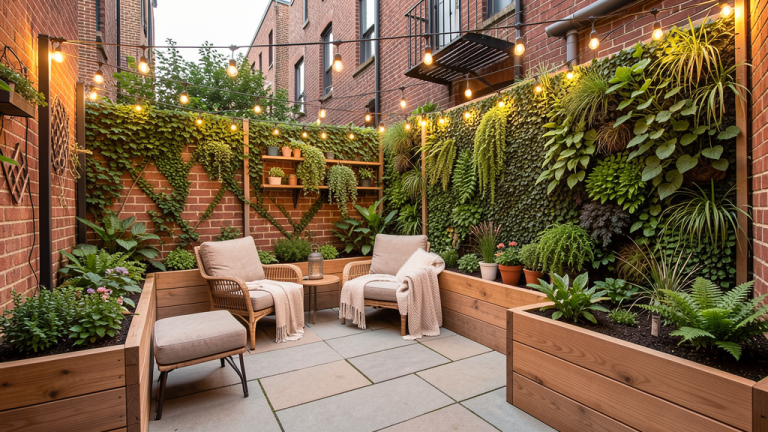
The furniture’s still out. The string lights are up. The evenings are perfect except for one thing: it’s 52 degrees and you’re back inside by 8pm.
An outdoor heater solves this. Not in a “heating the outdoors” sense — that’s not how physics works — but by creating a radiant heat bubble that keeps the people sitting in it comfortable down to temperatures most households would call outdoor season over.
This guide covers the best outdoor patio heaters for fall 2026, with a BTU guide that tells you how much heat you actually need based on your patio size — because undersizing is the most common mistake, and it means you spent $200 on something that doesn’t actually solve the problem.
—
## How Much Heat Do You Actually Need?
BTUs (British Thermal Units) measure heat output. The relationship between BTUs and usable outdoor coverage works like this:
| **Patio Size** | **Conditions** | **BTU Target** |
|—|—|—|
| Small (under 100 sq ft) | Enclosed porch, wind block | 10,000-20,000 BTU |
| Small (under 100 sq ft) | Open patio | 20,000-30,000 BTU |
| Medium (100-250 sq ft) | Partially covered/enclosed | 30,000-40,000 BTU |
| Medium (100-250 sq ft) | Open patio | 40,000-50,000 BTU |
| Large (250-500 sq ft) | Covered | 50,000-60,000 BTU |
| Large (250-500 sq ft) | Open | 60,000+ BTU or multiple units |
**Critical context:** These are guidelines for keeping people *at the heater* comfortable in 35-55°F weather. Wind is the multiplier — a 10 mph wind effectively doubles your BTU requirement. If your patio is in an exposed location, size up.
**Infrared vs. propane output:** Infrared heaters heat objects and people directly (like the sun) rather than heating the air. They’re more efficient in open-air conditions because wind can’t blow the “heat” away. Propane convection heaters heat the surrounding air — less efficient outdoors but familiar and widely available.
—
## Infrared Wall-Mount Heaters: The Best Option for Covered Patios
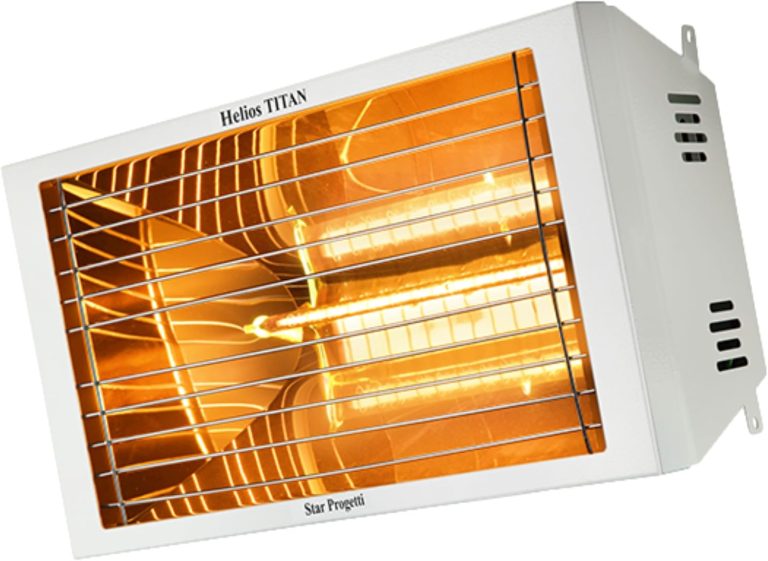
If you have a covered porch, pergola, or patio cover, a wall-mount or ceiling-mount infrared heater is the best possible choice. It’s out of the way, permanent, and delivers focused heat directly down at the people sitting below it.
### Electric Infrared Patio Heater (Wall/Ceiling Mount, 1500W)
A 1500-watt electric infrared heater converts nearly 100% of its energy draw into usable heat. Hardwire or plug-in options are both available — plug-in is easier to install, hardwire is cleaner looking.
The 1500W output is appropriate for a covered patio up to ~150 square feet. For a larger space, run two units or step up to a 2500W model.
What to look for: IP55 rating minimum for outdoor use, aluminum housing (not plastic), and a model with a remote or switch so you don’t have to reach above your head to control it.
infrared patio heater wall mount ceiling 1500W electric outdoor
### Commercial-Grade Infrared Wall Heater (2500W)
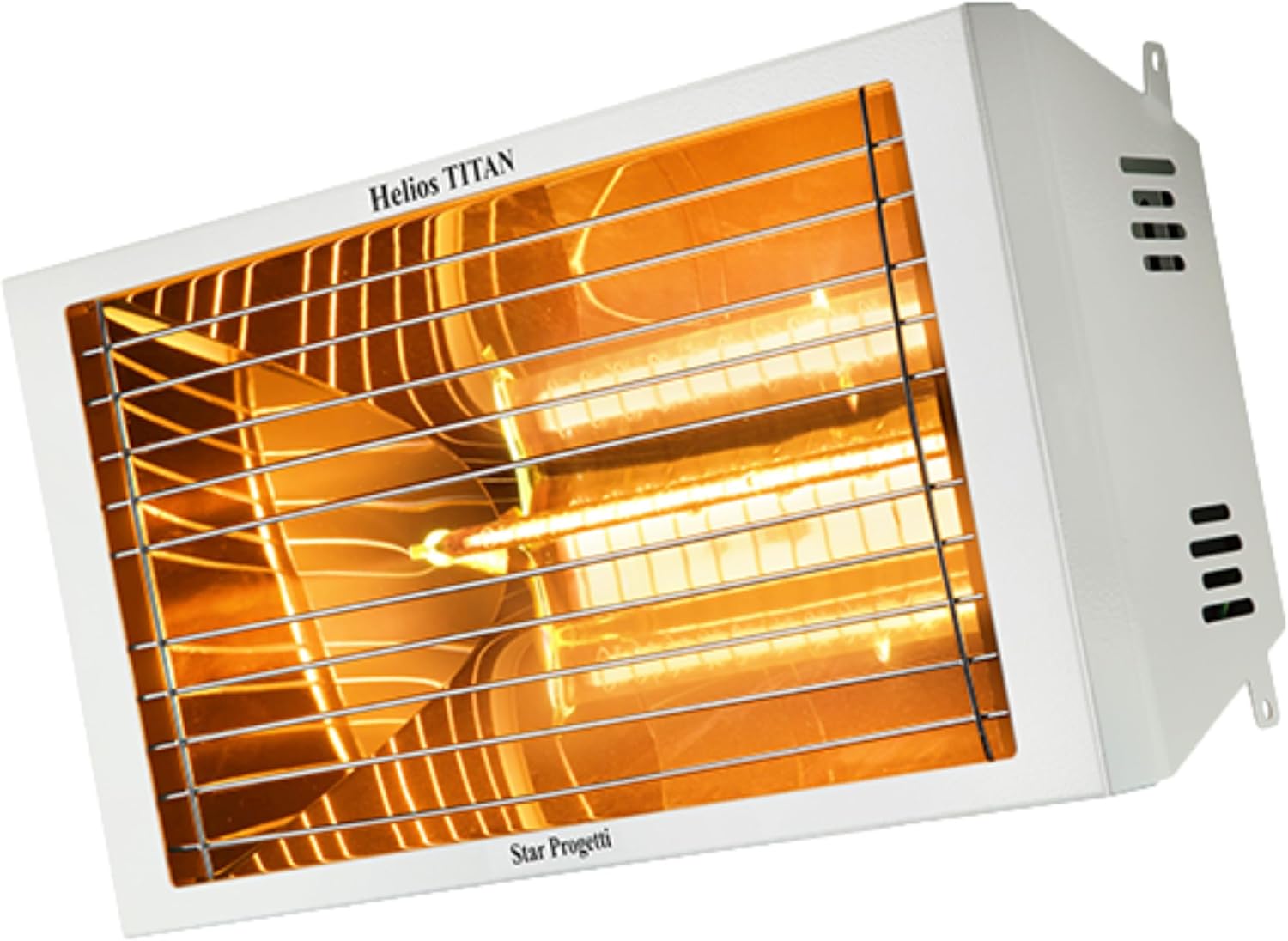
For larger covered patios or spaces where 1500W isn’t enough, the 2500W class produces around 8,500 BTU equivalent — enough for 200-250 square feet in a sheltered setting. Most require a 240V circuit (like a dryer outlet), so factor in electrician cost if you don’t have one nearby.
commercial infrared patio heater wall mount 2500W 240V outdoor
—
## Freestanding Propane Tower Heaters: Maximum Flexibility
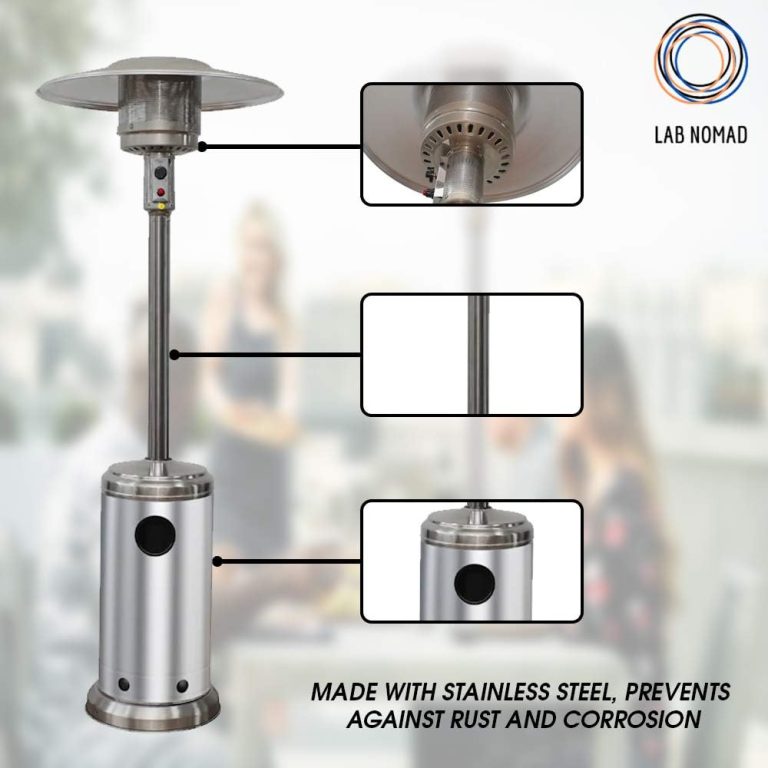
Freestanding propane tower heaters are the most recognizable format — the mushroom-cap or tubular units you see on restaurant patios. The advantage is that they’re not permanently installed: you can move them to where the people are, position them against the wind, or bring them out only for entertaining.
### 46,000 BTU Propane Tower Heater (Stainless)
The standard restaurant-grade propane tower puts out 40,000-46,000 BTU and heats an area of roughly 15-20 feet in diameter in calm conditions. The stainless steel versions hold up to outdoor storage better than the powder-coated aluminum options that start flaking within a season.
Tank fits a standard 20 lb propane cylinder (the BBQ grill tank). Runtime: approximately 8-10 hours per tank on high setting.
freestanding propane patio heater 46000 BTU stainless steel tower
**What undermines freestanding heaters:** Wind. A freestanding tower heater in a 15 mph wind pushes most of its heat horizontally away from people. If wind is a regular issue on your patio, wall-mount infrared or a screened patio setup is a better investment.
—
## Tabletop Propane Heaters: For Smaller Spaces and Portability
Tabletop heaters operate off a 1-lb propane cylinder and produce 4,000-8,000 BTU. That’s not a lot of heat in absolute terms, but at a table where people are 18-24 inches away, a tabletop heater can meaningfully extend comfort.
### Tabletop Propane Patio Heater (7,500 BTU)
The right call for: small balconies, covered spaces where a tall freestanding heater won’t fit, or as a supplemental unit at a dining table alongside a primary heater. Also genuinely portable — takes it from your patio to a camping trip or a football tailgate without issue.
Adapter hoses are available to run these off a 20 lb tank instead of 1 lb cylinders, which dramatically improves the economics ($1.50/tank vs. $0.50/hour from a large tank).
tabletop propane patio heater 7500 BTU portable outdoor
—
## Electric Mushroom Heater: No Propane, No Hardwire
The electric mushroom heater occupies a useful middle ground: it’s freestanding like a propane tower but runs off a standard 120V outlet. No propane tanks to swap, no hardwire installation. The tradeoff is output — most max out at 1500W (about 5,100 BTU equivalent), which is lower than propane but sufficient for a small intimate patio.
### Outdoor Electric Patio Heater (Freestanding Mushroom Style)
Best for: patios with a convenient outdoor outlet, spaces where propane isn’t practical, and anyone who doesn’t want to manage fuel logistics. Pair with a smart plug for scheduled operation.
outdoor electric patio heater freestanding mushroom style 1500W
—
## Heater Accessories Worth Buying
**Propane tank cover:** Keeps the tank from becoming a visual eyesore and protects from UV degradation of the valve. Looks significantly better than a bare silver tank sitting next to patio furniture.
propane tank cover wicker patio outdoor
**Outdoor extension cord (heavy duty):** For electric heaters, you need a 12-gauge outdoor extension cord rated for the wattage. Standard household extension cords are not adequate for a 1500W heater.
heavy duty outdoor extension cord 12 gauge 25 foot
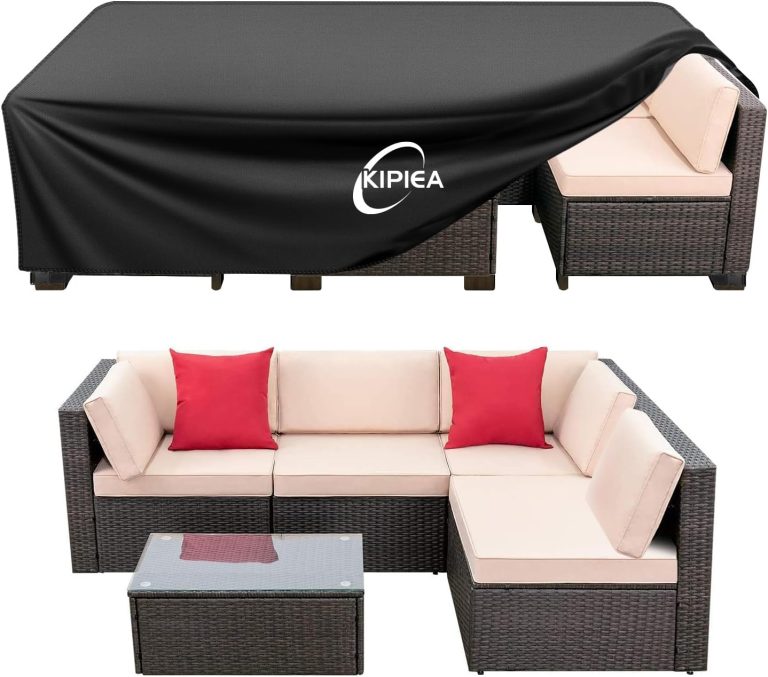
**Heater cover for winter storage:** Protects the heating element and burner from moisture during off-season storage. Specific covers exist for both tower propane and wall-mount infrared formats.
outdoor patio heater cover tower style weatherproof
—
## Buying Guide: What Actually Matters
**Electric vs. propane: the real decision factors**
– If you have a covered patio with an outlet or electrical panel nearby: electric infrared wall-mount is the best long-term investment
– If you need flexibility or don’t have outdoor electrical access: propane freestanding
– If you want low commitment and occasional use: tabletop propane
**Safety specifics:**
– Propane tower heaters need to be on a stable, level surface — they tip in wind more easily than the product photos suggest. Use the provided stake on grass, weight it on hard surfaces.
– Never use a propane heater indoors or in an enclosed space. Patios with solid walls on more than two sides need ventilation.
– Electric infrared heaters must be installed at the manufacturer’s specified clearance from any combustibles (typically 18-36 inches).
**What to expect on heating performance in real conditions:**
A 46,000 BTU propane tower heater in a 45°F evening with no wind will keep people sitting 6-8 feet away comfortably. The same heater in a 10 mph wind may require people to sit 3-4 feet away to feel it. This isn’t a defect — it’s physics. Manage wind exposure with patio screens, privacy walls, or furniture arrangement, and your heater works dramatically better.
—
## FAQ
**How much does it cost to run a propane patio heater per evening?**
A standard 20 lb propane tank costs approximately $20-25 to fill and provides 8-10 hours of runtime at full output (46,000 BTU). That’s roughly $2.50/hour at full output, or less if you run it at medium. Most fall evenings run 3-4 hours, so $7-10 per use. Annual cost for weekly use September through November: $80-120 total.
**Can I leave an outdoor heater outside year-round?**
Electric infrared wall-mounts rated IP55 or better can stay installed permanently — they’re designed for it. Freestanding propane towers should be covered or stored indoors during periods of non-use; the burner assembly is more sensitive to moisture than the marketing suggests. Tabletop heaters should always be stored dry.
**How many heaters do I need for a 300 sq ft patio?**
A single 46,000 BTU propane tower covers 15-20 feet in diameter. For a 300 sq ft open patio, two units placed on opposite sides of the seating area is the standard approach. Alternatively, two wall-mount 1500W electric units — one at each end — provide more even coverage for a covered patio.
**Do outdoor heaters work on a windy patio?**
Propane convection heaters lose significant effectiveness in wind. Electric infrared heaters are substantially more wind-resistant because they heat people directly rather than the air. For a windy patio, infrared is the correct choice, combined with some form of wind screening.
**What’s the difference between near infrared and far infrared outdoor heaters?**
Far infrared (the common outdoor heater type) produces a gentle, deep heat that feels similar to sunlight — warm without the intense brightness of near infrared. Near infrared heaters (glowing red element) produce more intense radiant heat and are effective for faster warm-up but can feel harsh close up. For most residential patio use, far infrared is more comfortable.
—
For outdoor spaces where an open flame is preferred over a heater, a dedicated fire pit provides warmth and ambiance together — see the best fire pits for fall entertaining to compare wood, propane, and smokeless options.
If you’re already investing in extending your outdoor season, a backyard sauna is the ultimate cold-weather addition — and pairs naturally with a heated patio setup.
## Don’t Pack Up the Patio Yet
There are six weeks of genuinely great outdoor weather left in most of the country — October evenings, early November afternoons, the tail end of fall that disappears when everyone gives up and goes inside.
A quality outdoor heater is a one-time purchase that runs for 10-15 years. The cost-per-use math on a season of extended fall entertaining makes these one of the better values in outdoor living.
freestanding propane patio heater 46000 BTU stainless steel tower
infrared patio heater wall mount ceiling 1500W electric outdoor
—
—
Products Mentioned in This Guide
As an Amazon Associate and Vevor affiliate, Cabana Culture earns from qualifying purchases at no extra cost to you.
Need Professional Installation?
Cabana Theory designs and installs premium pergolas, shade structures, and outdoor living spaces across Texas.