Best Shade Sails for 2026 — Triangle, Rectangle and What to Know Before Buying
Quick answer: For most patios and play areas, a 16×16 or 20×20 square sail in HDPE fabric blocks 90–95% of UV rays and installs in an afternoon. For multiple attachment points, three overlapping triangles give you better coverage flexibility than one large rectangle. Whether you’re shading a dining table, a kids’ play zone, or an entire pool deck, there’s a shade sail configuration that fits — and the right one can drop ground-level temperatures by 10–15°F on a hot summer day. This guide covers the best picks for 2026 across every shape and budget, plus a full buying guide to help you choose before you order.
Triangle vs. Square vs. Rectangle: Which Shape?
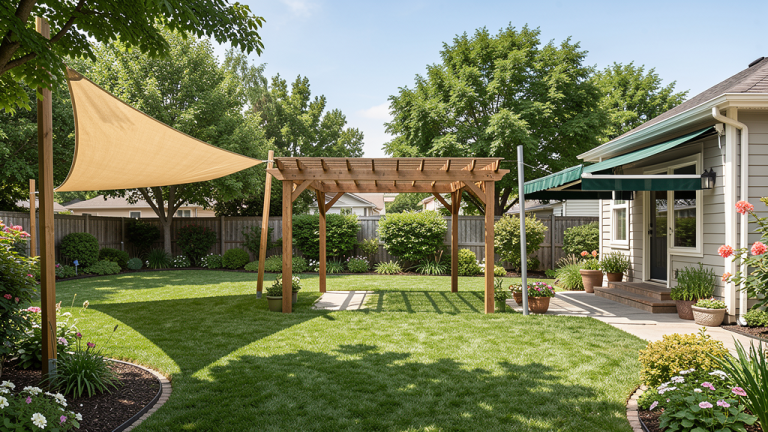
Triangles are the most versatile — three attachment points let you tension the sail correctly on irregular setups, and you can layer multiple triangles to cover odd-shaped areas. Squares and rectangles give you more coverage per sail and look clean over dining areas and pools. The key installation requirement: attachment points must be higher than the sail to allow rain runoff and proper tensioning. Flat installation = pooling water, sagging, and early failure. When in doubt, go with a triangle or a 3-pack of triangles for maximum flexibility; use a square or rectangle when your space has a clear, regular shape and you want clean lines with minimal hardware.
Top Picks for 2026
1. Coolaroo Commercial Grade Shade Sail — Best Overall
Shape: Triangle or square | Material: HDPE | UV block: 90% | Warranty: 10 years
Coolaroo makes the most durable shade sails available at consumer prices. The HDPE fabric is the same material used in commercial applications — it breathes (reducing heat buildup underneath), blocks 90% of UV, and resists mold and mildew. The 10-year warranty is genuine. The stainless steel D-rings at the corners are robust. If you want to buy once and be done, this is it. This sail is ideal for homeowners who want a permanent installation that survives years of sun, wind, and rain without fading, fraying, or sagging — it’s the one to choose if you’re done messing around with flimsy alternatives.
2. Sunnykud 16×16 Square Shade Sail — Best Value Square
Shape: Square | Size: 16×16 ft | Material: 185 GSM HDPE | UV block: 95%
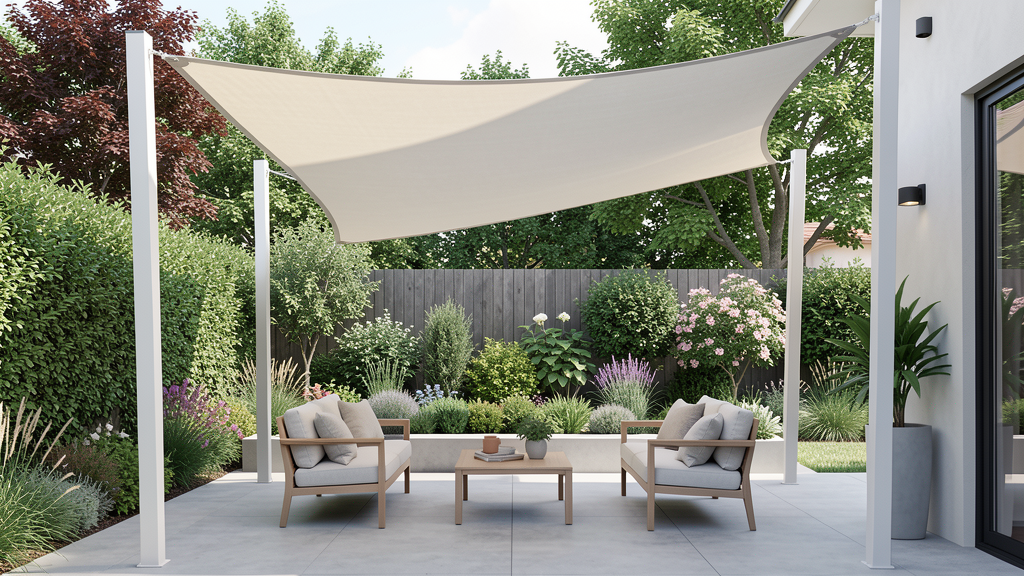
For a dining table or patio furniture area, a 16×16 square gives you clean coverage without the complexity of triangles. The Sunnykud is the best mid-range option — heavier HDPE than budget alternatives, stainless hardware, and available in 12+ colors. The 95% UV block is among the highest in this category. It’s the go-to pick for homeowners who have a square or nearly-square patio and want a tidy, symmetrical look that pairs well with pergolas, posts, or wall-mounted hardware.
3. Tang Sun Shade Sail Triangle 3-Pack — Best for Full Coverage
Shape: Triangle | Pack: 3 sails | Size: 16.5 ft sides | UV block: 95%
Three overlapping triangles can cover nearly any irregular outdoor space and create a layered canopy look that’s more visually interesting than a single large sail. TANG’s 3-pack is the best value for this approach — quality HDPE, included hardware, and the overlapping pattern nearly eliminates gaps. Great for pool areas and large patios. This is the right choice for anyone with an L-shaped patio, a large backyard entertaining area, or a pool deck where a single sail simply can’t reach all four corners without excessive tension.
4. Windscreen4less Sun Shade Sail Rectangle — Best for Pools & Large Areas
Shape: Rectangle | Sizes available: Up to 16×20 ft | Material: 185 GSM HDPE
Rectangles work best over rectangular pools, outdoor kitchens, and dining areas where you need coverage along a single axis. Windscreen4less makes the most reliable rectangle sails — the reinforced edges resist tearing at attachment points, the hardware is stainless, and it’s available in more size combinations than any competitor. This model is the best match for homeowners who have a long, narrow space — think the run from a back door to a seating area — and want a single clean sail rather than multiple overlapping triangles.
5. LOVE STORY Triangle Sail Shade — Best Budget Triangle
Shape: Triangle | Size: 16.5 ft sides | UV block: 95% | Price: Under $50
If you want to test shade sail placement before committing to a permanent setup, or if you need basic coverage on a tight budget, the LOVE STORY triangle gets the job done. The fabric is lighter-gauge than the Coolaroo but still blocks 95% UV, and the price lets you buy multiple sails to experiment with coverage. This is the smart first purchase for renters, first-time shade sail buyers, or anyone who wants to figure out attachment point placement before drilling into their house or setting posts in concrete.
What to Look For When Buying a Shade Sail
Fabric Quality and GSM Rating
GSM (grams per square meter) is the single most useful number when comparing shade sails. Budget sails typically run 160–170 GSM; mid-range sails hit 185 GSM; commercial-grade options go up to 220 GSM. Higher GSM means denser weave, better UV protection, and longer life. Look for HDPE (high-density polyethylene) fabric specifically — it resists UV degradation far better than polyester alternatives. Minimum recommendation for any permanent installation: 185 GSM HDPE.
Hardware and Corner Fittings
The corners are where shade sails fail first. Stainless steel D-rings and attached stainless snap hooks are the minimum you should accept. Cheaper sails use galvanized steel or plastic rings that corrode and break within a season. Also check whether turnbuckles are included — these tensioning devices are essential for keeping the sail taut as the fabric stretches and relaxes with temperature changes. If they’re not included, budget $15–30 for a set of stainless turnbuckles separately.
Size and Coverage Area
A common sizing mistake: people order a sail the exact size of their space, then find they can’t attach it because the anchor points end up at the same height as the sail corners. The working rule is that your anchor points should be 1–2 feet higher than the sail corners, so the sail hangs at a slight angle. This means you need anchor points further out than the sail’s actual coverage footprint. Measure your space, then add 2–3 feet on each side when choosing sail size to ensure proper tension geometry.
UV Protection Rating
Most quality shade sails list a UV block percentage. Anything below 90% isn’t worth buying for sun protection purposes — that’s the minimum threshold for meaningful protection. The best options reach 93–95%. Note that higher UV block doesn’t necessarily mean more shade: a sail’s GSM and weave tightness determine actual coverage, while UV rating measures how much ultraviolet radiation passes through. For maximum protection, look for sails rated UPF 50+ in addition to a UV block percentage.
Installation Tips
The most common mistake: mounting attachment points at the same height as the sail corners. You need the anchor points above the sail corners so rain runs off and the fabric stays taut. Use stainless steel turnbuckles for tensioning — they let you adjust after installation as the fabric stretches. For permanent installations, attach to a concrete footing or structural posts rated for the sail load. In high-wind areas, plan to detach and store your sail during storms — even heavy-duty sails can damage attachment points if left up in 50+ mph gusts. A quick-release clip system makes seasonal removal much easier.
Frequently Asked Questions
How long do shade sails last?
A quality HDPE shade sail from a reputable brand should last 5–10 years with proper care. The Coolaroo commercial grade backs this with a 10-year warranty. Budget sails typically last 2–3 seasons before fading, sagging, or developing holes at the attachment points. The biggest longevity factors: fabric quality (GSM and HDPE vs. polyester), hardware quality (stainless vs. galvanized), and whether you take the sail down during severe storms.
Can shade sails withstand wind and rain?
HDPE shade sails are designed to let wind pass through the weave rather than acting as a solid sail, which reduces load on attachment points. Most can handle moderate wind (up to 25–30 mph) when properly tensioned at an angle. Rain runs off when the sail is installed at the correct angle — a minimum 20-degree slope is recommended. In heavy storms or sustained high winds, it’s best practice to take the sail down. Never install a shade sail flat — it will collect water and either tear or pull out anchor points.
How many attachment points do I need?
Each sail corner needs one attachment point — triangles need 3, squares need 4, rectangles need 4. Each attachment point must be structurally sound: a fence post, pergola beam, exterior wall anchor, or dedicated shade sail post in concrete. The load on each point depends on sail size and wind exposure; a 16×16 ft sail in a moderate-wind area exerts roughly 200–400 lbs of force on each anchor. When in doubt, have a structural engineer review your attachment points before installing a large sail.
Do shade sails block heat as well as UV?
Yes — significantly. A properly installed shade sail can reduce temperatures in the shaded area by 10–15°F compared to full sun. The breathable HDPE weave allows hot air to escape (unlike a solid canopy or patio cover), which prevents heat from building up underneath. For maximum cooling effect, choose a lighter-colored sail (tan, beige, or white) which reflects more heat, and ensure there’s airflow around the perimeter of the sail.
Can I leave my shade sail up year-round?
In mild climates with no severe winter weather, quality HDPE sails can stay up year-round. In areas with heavy snow, ice storms, or frequent high winds, it’s strongly recommended to take them down for winter — snow and ice accumulation on a sail creates extreme load on attachment points and can damage posts, walls, or the sail itself. Most shade sail manufacturers recommend seasonal removal and storage in a dry location to maximize lifespan.
Bottom Line
Shade sails are one of the most cost-effective ways to make a hot, sun-blasted outdoor space actually usable in summer. The Coolaroo Commercial Grade is the best overall choice for durability and longevity; the Sunnykud 16×16 Square is the best value for a clean, simple patio setup; and the TANG Triangle 3-Pack is the best solution for large or irregular spaces. Whatever you choose, prioritize HDPE fabric at 185 GSM or higher, stainless steel hardware, and proper anchor point placement — those three things determine whether your shade sail lasts one season or ten.
Related Guides
🌿 Need Professional Installation in Texas?
If you’re in the DFW, Austin, or Southern Oklahoma area, Cabana Theory specializes in premium shade structures — pergolas, shade sails, retractable awnings, and custom outdoor living builds. Professional installation, top-tier materials, designed for the Texas heat.
Disclosure: This post contains affiliate links. As an Amazon Associate and Vevor affiliate, Cabana Culture earns from qualifying purchases at no extra cost to you. See our full affiliate disclosure.