Blackstone Griddle vs Gas Grill — Which Is Better for Your Backyard in 2026?
If you’re shopping for outdoor cooking equipment in 2026, you’ve probably encountered the heated debate: Blackstone griddle vs. gas grill. Both are trending hard right now, and for good reason—they each bring something unique to your backyard cooking arsenal.
But here’s the truth: they’re not the same thing, and they won’t cook the same way. One specializes in flat-top cooking magic (think smash burgers, hibachi-style vegetables, pancakes, and breakfast), while the other is the classic workhorse for steaks, chicken, and traditional BBQ fare.
In this guide, we’re cutting through the hype and laying out everything you need to know to make the right choice for YOUR backyard. Whether you’re a weekend warrior cook, a backyard entertainer, or someone who just wants to stop eating frozen food, we’ve got the breakdown.
What Is a Blackstone Griddle?
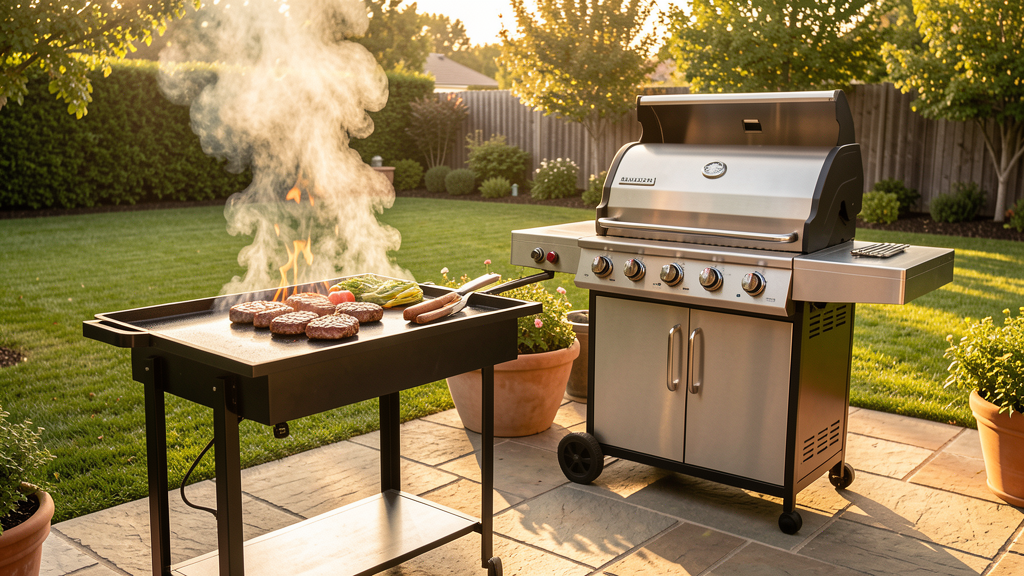
A Blackstone griddle is a flat-top cooking surface, typically made from cold-rolled steel, that heats evenly across the entire cooking area. Unlike a traditional grill with grates, the Blackstone creates a seamless, flat surface that’s perfect for foods that would fall through traditional grates or benefit from direct, even heat.
Here’s what makes it special:
- Flat cooking surface: One continuous steel plate (usually 36 inches or larger on the most popular models)
- Even heat distribution: Heats uniformly across the entire surface, eliminating hot spots common in traditional grills
- Versatile cooking: Pancakes for breakfast, stir-fries for lunch, smash burgers for dinner, fajitas for entertaining
- Oil-based cooking: You season the griddle like cast iron and cook with a light coating of oil, creating naturally non-stick, seasoned surfaces over time
- Fuel options: Most Blackstone models run on propane (portable models) or natural gas (built-in models)
The Blackstone brand has dominated this category since around 2015, but the flat-top griddle concept itself dates back decades—it’s a staple in commercial kitchens and professional kitchens for a reason.
What Is a Gas Grill?
A gas grill is the backyard standard most Americans grew up with. It features a propane or natural gas burner beneath metal or ceramic grates, creating direct and indirect heat zones. The grates sit above the heat source, allowing flames and smoke to make contact with the food.
Gas grill essentials:
- Grate-based cooking: Food sits on metal or ceramic grates, allowing smoke and flame to create the classic grill marks and char
- Heat zones: You can typically control multiple burners independently, creating hot zones and cooler zones for more sophisticated cooking
- Smoke production: Drippings hit the heat source and create smoke, adding flavor
- Sear and char: High direct heat creates perfect crust on steaks and burgers
- Fuel: Propane (portable/small models) or natural gas (built-in, permanent installations)
- Versatile temperature control: Good for low-and-slow smoking (with a smoker box) or high-heat searing
Gas grills range from simple two-burner portable units to massive built-in systems with side burners, rotisserie attachments, and dedicated smoking zones.
Head-to-Head Comparison: Blackstone Griddle vs. Gas Grill
Let’s break down how these two compete across the categories that matter:
| Category | Blackstone Griddle | Gas Grill |
|---|---|---|
| Cooking Surface | Flat steel plate; seamless, no grates | Metal or ceramic grates with space between |
| Heat Control | Single or dual burners; even heat across surface | Multiple independent burners; easy to create heat zones |
| Cooking Styles | Smash burgers, hibachi, pancakes, stir-fries, eggs, small items | Steaks, chicken, traditional BBQ, larger cuts, smoking (with box) |
| Cleanup | Scrape surface after cooking; more involved seasoning routine | Brush grates; quick and easy |
| Learning Curve | Moderate; requires seasoning maintenance and oil management | Low; familiar grill-and-char method |
| Portability | Propane models available; heavier than comparable grills | Highly portable; lightweight propane models readily available |
| Price (Entry Level) | $150–$300 for 28-36″ models | $200–$400 for quality two-burner models |
| Versatility Score | Excellent for breakfast/lunch foods; limited for traditional BBQ | Excellent for traditional grilling; limited for small items |
Cooking Styles: What Each Does Best
Blackstone Excels At:
- Smash burgers: The flat surface lets you press burgers perfectly, creating maximum crust and locking in juices
- Hibachi-style cooking: Griddles were born for this—diced vegetables, shrimp, chicken, all cooked with seasoning and a light char
- Breakfast: Pancakes, eggs, bacon, hash browns—everything cooks evenly on a griddle
- Stir-fries: Keep the Blackstone at medium-high heat, toss in oil, vegetables, protein, sauce—restaurant-quality stir-fry in minutes
- Fajitas and other thin-cut items: Peppers, onions, chicken strips—all benefit from the flat surface
- Small items: Shrimp, scallops, mushrooms that would fall through grates
Gas Grill Excels At:
- Steaks and chops: High direct heat creates the perfect crust while keeping centers medium-rare
- Whole chicken: Rotisserie or indirect heat cooks it evenly; grates handle the weight
- BBQ smoking: With a smoker box and low-and-slow temps, gas grills can produce legitimate smoked meats
- Traditional burgers: Those classic cross-hatch grill marks everyone expects
- Fish and larger cuts: Grates support larger items without risk of sticking
- Vegetables for char: Asparagus, corn, thick zucchini slices all benefit from direct flame contact
Setup and Fuel Considerations
Blackstone Griddle Setup:
Most Blackstone griddles come as standalone units that sit on a cart or stand. Setup is straightforward: connect the propane tank (or natural gas line if built-in), season the cooking surface with oil before first use, and you’re ready to cook. The seasoning process is similar to cast iron—a light coat of oil heated until it smokes, repeated 3–5 times.
Gas Grill Setup:
Gas grills can be portable (propane) or permanent (natural gas line). Portable models need a propane tank and connection. Built-in models require a professional natural gas line installation. Setup is quick—connect fuel, preheat for 10 minutes, brush the grates, and grill.
Fuel cost note: Both run on propane or natural gas. Cost depends on your local fuel prices and how often you cook. Propane tank refills typically range $15–$30, lasting 30–60 hours of cooking depending on temperature and usage.
Cleanup: A Crucial Difference
Blackstone cleanup: While cooking surface is hot (but not actively cooking), use a metal scraper to push food debris to the grease trap. This takes 2–3 minutes. After cooling, you may lightly oil the surface to maintain seasoning. Over time, your griddle builds a naturally non-stick patina like cast iron.
Gas grill cleanup: Turn on the burners, close the lid, let it heat for 10 minutes, then brush the grates with a grill brush. Done in 5 minutes. Most grills have a grease trap below that needs occasional emptying, but the routine is simple.
Winner for quick cleanup: Gas grill.** But Blackstone cleanup is manageable once you get the routine down.
Cost Breakdown: Real Numbers
Blackstone Griddles:
- Blackstone 28″ Tabletop: ~$150 (propane, great for small spaces)
- Blackstone 36″ Freestanding: ~$300 (propane, most popular size)
- Blackstone 36″ Built-in (natural gas): ~$400–$500 (permanent installation, no tank)
Gas Grills:
- Weber Spirit E-210 (two-burner): ~$350 (industry standard)
- Char-Broil Performance (three-burner): ~$300–$400
- Premium built-in (four-burner+): $600–$1,500+
Verdict: Both are similarly priced at entry level. Premium models in either category can get expensive.
When to Buy a Blackstone Griddle
Choose a Blackstone if:
- You love breakfast—pancakes, eggs, hash browns are on the menu weekly
- You’re into entertaining and want high-volume, fast-cooking capabilities
- Your family loves hibachi-style cooking or stir-fries
- You want to cook items that don’t work well on traditional grates (shrimp, eggs, small vegetables)
- You have limited space and want to maximize cooking versatility
- You’re tired of food falling through grates
- You want restaurant-quality smash burgers (flat top = maximum surface contact = perfect crust)
When to Stick With a Gas Grill
Choose a gas grill if:
- Steaks and traditional BBQ are your priority
- You want the classic grill marks and flame-charred flavor
- You like the simplicity of grab-and-grill; minimal maintenance appeals to you
- You’re cooking whole chickens, large cuts, or traditional BBQ regularly
- You want a learning-curve-free cooking experience
- You’re entertaining mixed groups (kids who want hot dogs, adults who want steaks—a gas grill handles it all)
- You want smoking capability without additional equipment
Can You Have Both? (Yes, and Here’s Why)
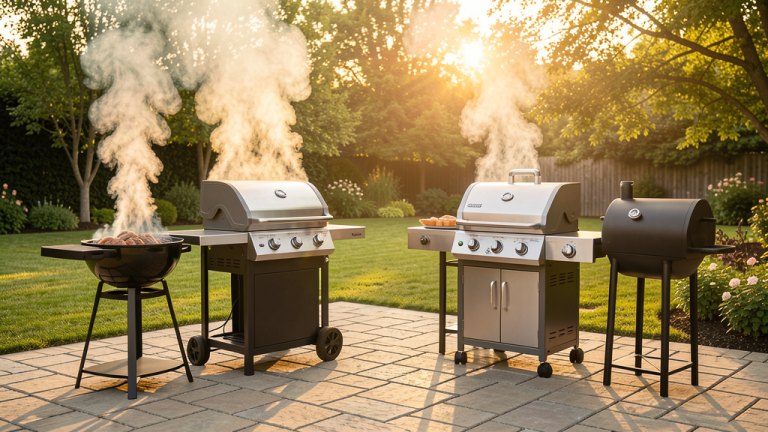
Real talk: the best backyard cooks have BOTH.
A Blackstone and a gas grill serve different purposes and actually complement each other perfectly:
- Host a brunch: Blackstone for pancakes, eggs, bacon; gas grill for breakfast sausages
- Weekend entertaining: Gas grill for steaks and chicken; Blackstone for appetizers and sides
- Weeknight dinners: Blackstone for quick stir-fries; gas grill for traditional grilled proteins
- Small spaces: A tabletop Blackstone (28″) takes up minimal room and pairs perfectly with a portable propane grill
Pro tip: Many serious outdoor cooks treat their Blackstone and gas grill as a “cooking suite”—the grill handles protein and char, the griddle handles everything else. It maximizes your cooking options and cooking speed when you’re feeding groups.
Our Top Picks — Griddles and Grills for 2026
Best Blackstone Griddle Overall
Blackstone 36″ Freestanding Griddle — The sweet spot for home cooks. Large enough to cook for a family or small gathering, the flat 36-inch surface offers plenty of space for multiple items at once. Comes on a freestanding cart with storage below. Most popular model for a reason.
Check current prices on Amazon
Best Compact Blackstone
Blackstone 28″ Tabletop Griddle — Perfect for apartments, small patios, or RVs. Don’t let the smaller size fool you—a 28-inch griddle still cooks plenty. Great for couples or small families, and the compact footprint is a game-changer for space-limited settings.
Check current prices on Amazon
Best Premium Griddle — Vevor Outdoor Flat-Top Griddle
Vevor 36″ Commercial-Grade Griddle — If you want something even more robust than Blackstone, Vevor’s commercial-grade griddles offer restaurant-quality construction. Heavy-duty steel, professional temperature control, and built-in grease management.
Best Gas Grill — Portable Two-Burner
Weber Spirit E-210 — The gold standard in portable gas grills. Two independent burners, durable construction, reliable heating, and it’s backed by Weber’s reputation. If you only buy one grill, make it this one.
Best Budget Gas Grill
Char-Broil Performance Series — Solid entry-level option with three burners, durable cast-iron grates, and a reasonable price. Not as premium as Weber, but a reliable workhorse for the money.
Check current prices on Amazon
Best Built-In Gas Grill — Vevor Professional Series
Vevor 4-Burner Built-In Gas Grill — If you’re building a permanent outdoor kitchen, Vevor’s built-in grills offer professional-grade performance at reasonable prices. Stainless steel construction, multiple burner zones, and integrated grease management.
Browse Vevor outdoor cooking equipment
Griddle vs. Grill: Final Thoughts
The “Blackstone griddle vs. gas grill” debate isn’t really a vs. situation—it’s an and situation.
If you have room for only one, choose based on how you actually cook:
- Choose the griddle if you love breakfast, entertaining with appetizers, or Asian-inspired cooking
- Choose the gas grill if steaks, traditional BBQ, and classic grilling are your main moves
But if you can make room, owning both elevates your backyard cooking game to a level that impresses friends and family. Each tool excels at what it was designed for, and together they cover virtually every outdoor cooking situation.
Explore our complete guide to the best grills and smokers of 2026 for more options, or check out our best outdoor gas grills under $500 for wallet-friendly options.
FAQ
Can I cook steaks on a Blackstone?
Yes, absolutely. High heat on a Blackstone creates a beautiful crust on steaks. However, you won’t get the flame-charred flavor and cross-hatch grill marks you get from a gas grill. For classic steakhouse experience, gas grill wins. For clean, high-heat seared steaks, Blackstone works great.
Can I use a gas grill for breakfast?
Technically yes, but it’s not ideal. Items like eggs and pancakes can fall through grates or stick. You *can* use a cast iron skillet on the grill, which gives you griddle-like functionality on a gas grill—so some serious outdoor cooks do this.
Which is easier to clean?
Gas grill wins here. Brush the grates and done. Blackstone requires a scraping routine and seasoning maintenance. Both are manageable, but gas grills are simpler.
Do Blackstone griddles rust?
The cold-rolled steel *can* rust if not properly maintained, which is why seasoning is important. Keep the surface oiled after each use, and store it covered in winter. A well-maintained Blackstone will last decades. Neglected ones will develop surface rust.
Can I use my Blackstone in winter?
Yes, but it requires extra care. Cold temperatures make seasoning more challenging. If you cook year-round, consider a cover to protect the surface when not in use.
What’s the lifespan of each?
Both, when properly maintained, last 10–15+ years. A Blackstone requires more hands-on seasoning care. A gas grill is more forgiving but also has moving parts (ignition, burners) that may need eventual replacement. Vevor and Weber grills are both known for longevity.
Can I convert a gas grill to griddle cooking?
Not directly, but you can place a cast iron griddle or flat-top cooking surface on top of your gas grill grates. This is actually a common hybrid approach and gives you some of the benefits of both. It’s a solid compromise if space is limited.
Which has better heat retention?
Griddles. The flat steel surface heats evenly and retains heat well. Gas grills with grates don’t retain heat quite as efficiently because heat escapes between the grates.
Make Your Choice and Start Cooking
Whether you go Blackstone griddle, gas grill, or both, you’re elevating your backyard cooking game. The key is choosing the tool that matches how you actually cook—and your favorite foods.
Ready to grill? Start with our best pellet grills for 2026, explore our outdoor pizza oven guide, or dive into our full grills and smokers comparison.
Disclosure: This post contains affiliate links. As an Amazon Associate and Vevor affiliate, Cabana Culture earns from qualifying purchases at no extra cost to you. See our full affiliate disclosure.
Disclosure: This post contains affiliate links. As an Amazon Associate and Vevor affiliate, Cabana Culture earns from qualifying purchases at no extra cost to you. See our full affiliate disclosure.
Real-World Usage Comparison — Cooking Scenarios
Understanding how Blackstone griddles and gas grills actually perform in real cooking situations helps you make the right choice. Here are five common backyard cooking scenarios and which tool handles each best:
Scenario 1: Saturday Brunch for Six
Menu: Pancakes, eggs, bacon, fresh fruit, and breakfast sausages
Blackstone wins decisively. A 36-inch Blackstone lets you cook all components simultaneously — pancakes on one side, bacon in the middle, eggs on the other. You control heat precisely for each item. A gas grill forces you to use cast iron skillets, limiting your ability to cook multiple items at different temperatures. Verdict: Blackstone cuts cooking time in half.
Scenario 2: Evening Dinner — Steaks and Sides for Four
Menu: Two ribeye steaks, grilled asparagus, corn on the cob, and garlic bread
Gas grill wins. High direct heat creates the cross-hatch crust steaks demand. The grill grates handle thick cuts securely. Asparagus and corn benefit from flame contact. A Blackstone can cook the steaks acceptably but won’t achieve that restaurant-quality char and smoke flavor. Verdict: Gas grill delivers steakhouse results.
Scenario 3: Weeknight Stir-Fry for Two
Menu: Diced chicken, peppers, onions, mushrooms, soy sauce, served over rice
Blackstone wins easily. The flat surface lets you toss and stir ingredients constantly — exactly what stir-fry requires. Oil moves freely across the cooking surface. On a gas grill, you’d need a wok or skillet attachment, defeating the purpose of outdoor cooking. Verdict: Blackstone handles this like a professional kitchen.
Scenario 4: Backyard Entertaining — Mixed Grill for 10 People
Menu: Burgers, hot dogs, chicken breasts, veggie skewers, and grilled pineapple
Gas grill with Blackstone combo wins best. If you have both, the gas grill handles proteins (burgers, hot dogs, chicken) while the Blackstone manages veggie skewers and pineapple. Without both, gas grill edges out Blackstone slightly because it’s faster for high-volume burger cooking. Verdict: Ideally you use both tools.
Scenario 5: Casual Fish and Chips Dinner for Two
Menu: Fish fillets, shrimp skewers, and grilled zucchini
Blackstone wins for fish. The flat surface handles delicate fish fillets without sticking or breaking apart like grill grates would. Shrimp benefits from the flat cooking surface too. A gas grill requires careful handling of fish. Verdict: Blackstone’s non-stick advantage shines with seafood.
Which Should You Buy? Decision Guide
Use this decision tree to determine which tool fits your actual cooking style and budget:
Question 1: What’s Your Top Priority?
If you answered: \\”Maximum cooking versatility\\” → Go Blackstone 36\\” for $250-300. You’ll use it more often than you expect because it handles breakfast, lunch, and dinner.
If you answered: \\”Traditional grilling and BBQ\\” → Go Weber Spirit E-210 or equivalent gas grill for $300-400. It’s the familiar tool that every backyard chef knows.
If you answered: \\”I want both, but limited space\\” → Start with Blackstone 28\\” tabletop ($150) and add a portable two-burner gas grill ($200) later. The tabletop Blackstone takes minimal deck space.
Question 2: How Often Do You Cook Outside?
If: Weekends only in summer → Gas grill. Simpler maintenance, lower barrier to use. Grab it on Friday, grill, done.
If: 3+ times per week, any season → Blackstone. The cooking variety keeps entertaining fresh. You’ll use it for breakfast and dinner multiple times weekly.
If: Year-round, any weather → Both. Serious outdoor cooks own both because they solve different problems.
Question 3: What’s Your Cooking Style?
Breakfast/brunch person: Blackstone. You’ll cook pancakes every weekend.
Traditional BBQ/steakhouse vibes: Gas grill. That’s where your passion is.
Asian cuisine enthusiast: Blackstone. Stir-fries and hibachi dishes are your thing.
Outdoor entertainer (mixed crowds): Both if possible. Gas grill if not — more flexible for mixed menus.
Question 4: How Much Space Do You Have?
Small balcony/patio: Blackstone 28\\” tabletop ($150). Lightweight, stores easily, still plenty of cooking surface.
Medium deck or patio: Blackstone 36\\” freestanding ($300) OR gas grill ($300-400). Your choice based on cooking preference.
Large backyard with outdoor kitchen: Both. Get a freestanding Blackstone 36\\” AND a built-in gas grill. This is the dream setup.
Question 5: What’s Your Maintenance Comfort Level?
I want zero fuss: Gas grill wins. Brush grates, done. No seasoning, no oil management, minimal maintenance.
I don’t mind a routine: Blackstone. The seasoning routine becomes part of your cooking ritual — many people enjoy this aspect.
I want premium durability: Go Vevor commercial-grade griddle or built-in gas grill. Higher upfront cost but lasts decades.
Expanded Conclusion
The Blackstone griddle vs. gas grill question has been settled thousands of times over by backyard cooks across America, and the answer is always the same: there’s no loser because they solve different problems.
Gas grills are the reliable workhorse. They do what they’ve done for 30 years — deliver perfect steaks, burgers, and traditional BBQ with minimal fuss. If you want the familiar, proven approach that any guest can figure out in seconds, gas grill wins.
Blackstone griddles are the versatility player. They’ve exploded in popularity because they unlock cooking possibilities gas grills can’t touch — restaurant-quality stir-fries, fluffy pancakes, smash burgers with maximum crust, and appetizers that impress. They require slightly more hands-on care, but that maintenance is part of the charm for enthusiasts.
The real insight: the best backyard setup includes both. A gas grill for traditional grilling and your partner’s favorite foods, a Blackstone for your cooking adventures and entertaining flexibility. Together, they transform your backyard into a genuine outdoor kitchen that handles any cooking situation.
Start with whichever matches your primary cooking style — then add the other when your budget allows. You’ll be glad you did.